Do you think the Buggery Law should be?

The Safe House Homeless LGBTQ Project 2009 a detailed look & more


In response to numerous requests for more information on the defunct Safe House Pilot Project that was to address the growing numbers of displaced and homeless LGBTQ youth in Kingston in 2007/8/9, a review of the relevance of the project as a solution, the possible avoidance of present issues with some of its previous residents if it were kept open.
Recorded June 12, 2013; also see from the former Executive Director named in the podcast more background on the project: HERE also see the beginning of the issues from the closure of the project: The Quietus ……… The Safe House Project Closes and The Ultimatum on December 30, 2009
Showing posts with label HIV Issues. Show all posts

Saturday, April 15, 2017

PEPFAR may pull HIV funding from hard-hit Caribbean countries ..........

0 comments


The United States is terminating its funding to several of the Caribbean countries hardest hit by the HIV/AIDS epidemic. Directors of the US President’s Emergency Fund for AIDS Relief (PEPFAR), America’s global fund to fight AIDS around the world, said that they could no longer justify supporting the upper middle-income countries of the Caribbean, and have ordered fund terminations from as early as this year.


 President Reagan AIDSGATE years


I saw a series of reports out there recently on the decrease of PEPFAR to the Caribbean and it came to me that this is starting to feel like the US President Reagan years when the White House then simply ignored the calls for proper funding for research for a relatively new disease being HIV then known as SIDS and which was pegged as a gay disease or gay plague. 


Thanks to the Act UP campaign and vigorous advocacy in those days.

Upon the rumours and fears expressed by mostly American AIDS experts that funding for HIV prevention work and treatment and care it has come home to action by the Trump administration, obviously playing to his base as he is the most unpopular president in years.

The Bahamas — which has the highest population prevalence of HIV in the English-speaking Caribbean, at just over 3% — will have its funding cut entirely in September 2017, followed by Barbados in 2018. Meanwhile, Guyana, Suriname and Trinidad & Tobago will have their funding slashed to historic lows for two years, before their allocations end in 2019.

Of the middle-income Caribbean countries, only Jamaica will be spared from cuts, but under strict conditions. Far fewer people living with HIV in Jamaica receive treatment than in the other upper-middle income Caribbean countries, and estimates are that more than 3 in 10 Jamaican men who have sex with men are HIV positive. 


To address this, PEPFAR will move 67-75% of its Caribbean regional budget to the island between 2017 and 2019. In exchange, Jamaica will have to meet ambitious targets to curb its epidemic, or PEPFAR will leave the English-speaking Caribbean region entirely, including the member countries of the Organisation of Eastern Caribbean States.


In the Caribbean, PEPFAR contributes to the cost of HIV prevention programmes, drug procurement, and the treatment, care and psychosocial support of people living with HIV and AIDS. The Fund also works with community organisations to target HIV prevention and care to LGBT people and commercial sex workers who are on the periphery of direct government programmes. PEPFAR’s interventions are further supported by health experts at US diplomatic missions, where some vacant posts have already been frozen as a result of the clawback.

PEPFAR’s moves now increase the burden on regional governments to bring their HIV/AIDS epidemics under control, even as public finances in several of the affected countries are already stretched. With the exception of Haiti, which will retain its PEPFAR funding entirely, a complete regional pullout would leave a US$9m gap¹ in financing for the Caribbean’s response to HIV and AIDS, based on PEPFAR’s 2014/15 expenditure levels.

Despite some progress, the picture of the Caribbean’s HIV/AIDS response is mixed. Prevention messages that focus on abstinence and condom use are mainstays of national health campaigns, and costly interventions such as drug prophylaxis to prevent HIV infection are off the radar for most. Moralistic views and discrimination against the LGBT community are effective barriers to healthcare, and the prevalence of HIV among these marginalised groups can often run times higher than in the general population.

Strong progress and adoption of international best practices, such as Barbados’ decision to treat all people living with HIV, regardless of the stage of their disease, have been largely supported by PEPFAR funds. Central governments will now have limited time to ensure sustainability of these gains and to finance gaps after the departure of US aid.

While PEPFAR’s Directors made no explicit link between their decisions and President Trump’s dictates to cut America’s levels of foreign aid, the repeal of PEPFAR’s reach in the Caribbean follows the administration’s decisions to cut funding to the United Nations Food and Population Fund, as well as its removal of federal dollars from Planned Parenthood and other international development programmes.

The US Congress recently passed the US-Caribbean Strategic Engagement Act, which an analysis featured in this publication deemed to be an important opportunity for advancing the Caribbean’s interests to the Trump administration. As at press time, sources tell Antillean that health and social development imperatives were not among the priorities advanced by CARICOM for the shaping of the future US engagement policy, despite CARICOM’s ambassadors in Washington and New York being briefed on PEPFAR’s decisions.


Thanks to the Antillean Media Outlet for this one (photos added for this post), in a another related story see: Trump administration cuts all future US funding to UNFPA

Thursday, April 13, 2017

Behaviour change interventions in HIV prevention: is there still a place for them?

0 comments

Face-to-face interventions work best says Gus Cairns

Jump to
Background to the analysis
Results
Devising a modern behavioural intervention
Reference


A meta-analysis of studies of brief interventions to reduce HIV risk behaviour in HIV-negative gay men has concluded that there is evidence that such techniques did have a significant impact on the behaviours they were designed to change.

It also found evidence that the best way to conduct such interventions was face-to-face, i.e. not via the internet, telephone or phone apps, and that immediately or shortly after HIV testing was an ideal “learning moment” to conduct them.

Interventions that helped participants set goals for themselves, and ones that helped them understand and restructure self-justifying or contradictory thinking, were the ones most likely to result in behaviour change. Programmes worked better if they involved participants feeling differently about themselves and their behavioural risk, rather than receiving new information. Interventions worked better if they were based explicitly on a theory of behaviour change.

However, while the analysis did find positive evidence for such interventions producing behaviour change, the writers also conclude that the HIV prevention “landscape” has changed radically in the last few years. The studies were published between 2002 and 2014 and probably gathered their data at least two years before their publication date. None included as measurable outcomes serosorting or seropositioning (i.e. basing condom use or sex role on a partner’s perceived status), pre-exposure prophylaxis (PrEP) use, decisions based on partners’ viral load, or the use of negotiated safety arrangements, even though the authors tried to find studies that measured these.

There was just one outcome measure that was sufficiently universal across the studies for the authors to make a statistical generalisation about study effectiveness: whether the interventions reduced condomless anal sex. Even though this was measured in various ways (number of condomless acts, number of condomless sex partners, whether they occurred with primary or casual partners, the HIV status or assumed status of the partner, and so on) and was measured over different time periods, the general reduction in condomless sex acts after the eleven interventions was 25%.

Background to the analysis

Compared with the comprehensive effectiveness of both PrEP and immediate HIV treatment as prevention, this may sound like a small reduction in HIV risk. But, as lead author Paul Flowers of Glasgow Caledonian University told aidsmap.com: “Behaviour change interventions boost and complement biomedical technologies rather than competing with them. Getting people on to PrEP and getting people to test regularly is what behaviour change interventions can and should be doing.”

He explained that the impetus behind this meta-analysis of behaviour-change interventions was that he and other academics were involved in writing two sets of new prevention guidelines, for the British Association for Sexual Health and HIV (BASHH) and for Health Protection Scotland.

They were confronted with the lack of an up-to-date evidence base that would indicate how and when to use such interventions to help people at risk of HIV reduce their risk. As well as much of the research being out of date, the field suffers from the fact that most of the research has been done in the US, where effective behavioural interventions are collated at a site run by the US Centers for Disease Control and Prevention (CDC).

Because of this, they were commissioned by the UK’s National Institute for Health Research (NIHR) to investigate the evidence for what worked and then devise an intervention based on that evidence, which could be 'transferable' enough to produce positive effects on other behaviours such as PrEP use or testing.

There have been a fair number of meta-analyses of behaviour change interventions published. Flowers and colleagues counted 19 published since 2000. These vary by the publication date of the studies they included, by whether they only included specific populations, and by whether they only used certain methods. Because of this, they vary enormously in size, from a systematic review of three studies using cognitive behavioural therapy (CBT) in US gay men who inject drugs, to a huge 2005 synthesis of 354 studies that were published between 1988 and 2003.

Results

Flowers and colleagues drew tight criteria for inclusion in their meta-analysis. They only included studies in which at least 60% of participants were HIV-negative men who have sex with men; they only included studies published since 2000, as they wanted to exclude studies conducted in the days before effective antiretroviral therapy (ART) became available; and they only included studies of brief interventions, which meant five sessions or fewer. The latter was because the commissioning call from NIHR required the evidence for brief interventions.

They found eleven studies in all, which varied greatly in their methodology. Some were online and/or used novel intervention strategies: a graphic novel, a telephone intervention, or an informational video added to counselling sessions. Others were face-to-face. Six out of the eleven studies used a version of Personalised Cognitive Counselling (PCC), an adaptation of CBT for single or brief interventions, designed to be used at the time of or close to HIV testing. In addition to the six PCC-based interventions, there were two peer-delivered interventions where the basis of the intervention is not stated. Four were delivered at an HIV testing appointment (three after the negative result was given, one while waiting for the result); two were given during or after testing to both HIV-positive and negative test recipients; and four, primarily the online interventions, were given to people who recorded themselves as being HIV-negative and not at a testing appointment. The follow-up period over which the effect of the intervention was measured varied from two to ten months, with six studies using six months.

As we said above, the eleven studies produced an overall reduction in condomless sex (measured in various ways) of 25% (95% confidence interval, 9% to 38%). Six out of the eleven produced statistically significant reductions.

This agrees well with the second-largest meta-analysis of behavioural interventions, which included 102 studies and was published in 2013: this found a 27-30% reduction in condomless sex among its study recipients, which included HIV-positive and HIV-negative gay and heterosexual men. The largest meta-analysis, the 354-study one mentioned above, found a 38% reduction in condomless sex among recipients of ‘active’ prevention methods, i.e. ones with a counselling component, and 19% in ones without a counselling component such as videos and information sessions.

Flowers’ findings were therefore broadly in line with these. The problem is, however, that the behaviours that interventions may wish to change are now different. The crucial question then, is whether the skills and rethinks taught by the studies involve the kind of learning that might also encourage people to seek and adhere to PrEP, test for HIV regularly, and so on.

As clues to devising an intervention that could reinforce these behaviours as well as condom use, Flowers’ team did some sub-analyses of factors associated with significant reductions in condomless sex.

They found that two methods were associated with significant reductions. The first was using goal-setting and action-planning as part of the method, to get recipients to set behavioural targets. The second was using methods that drew attention to contradictions and justifications in participants’ thinking and thus helped them to feel more understanding, positive and capable about their ability to change. Taken together, these methods were 34% effective. Other methods such as information-giving, social support and an emphasis on threat or danger were not associated with effectiveness.

Interventions delivered via telephone or online were not effective. In contrast interventions delivered face-to-face were 34% effective. If the intervention was delivered immediately after receiving a test result, the average effectiveness was 36%; delivered longer after the result, interventions were not effective.

Although these factors were not quantified, the study found also that interventions were effective if they were delivered by professionals, but ones with clear and contemporary knowledge of the gay scene and MSM sex.

Devising a modern behavioural intervention

As a result, Flowers and colleagues drew up a specification for a suggested modern behavioural intervention for gay men.

It would include:
An initial ‘peer-oriented visual aid’ which would not just talk about health risk but also address the complexity of modern HIV risk and talk about emotions and feelings, serosorting, condomless sex, PrEP, treatment as prevention and drug and alcohol use.

This would segue into a one-to-one counselling session that would:
Focus initially on a single event seen by the client as risky or unhelpful (not using a condom, missing a PrEP dose, etc)
Refer back to the visual aid to put the client’s actual risk and the processes that led to taking a risk (emotional need, intoxication, being too busy, etc) in perspective
Invite the client to think about weighing up the pros and cons of different behaviours/strategies and how they might do things differently
Help the client draw up an action plan to help reduce risk or encourage health-seeking behaviours for the future.

Paul Flowers and colleagues are hopeful that this intervention could be the subject of a study of a behavioural intervention truly adapted to the new world of HIV prevention.

“We definitely think it is time for studies to embrace diverse outcome measures – it’s long overdue. We can’t speak for NIHR but we think it’s worth considering post-test interventions to increase frequent testing among those who need it and to encourage the consideration of PrEP. There will be challenges as HIV testing diversifies into self-testing and so on and we’ve written another paper on that.

But an HIV test represents a ‘teachable moment’ for some people and we want to help them sustain positive changes they might be motivated to make at that moment.”

Reference

Flowers P et al. The clinical effectiveness of individual behaviour change interventions to reduce risky sexual behaviour after a negative human immunodeficiency virus test in men who have sex with men: systematic and realist reviews and intervention development. Health Technology Assessment 21(5): DOI 10.3310/hta21050. See full report here.

Wednesday, March 1, 2017

Zero Discrimination Day 2017 ...... #zerodiscrimination

0 comments

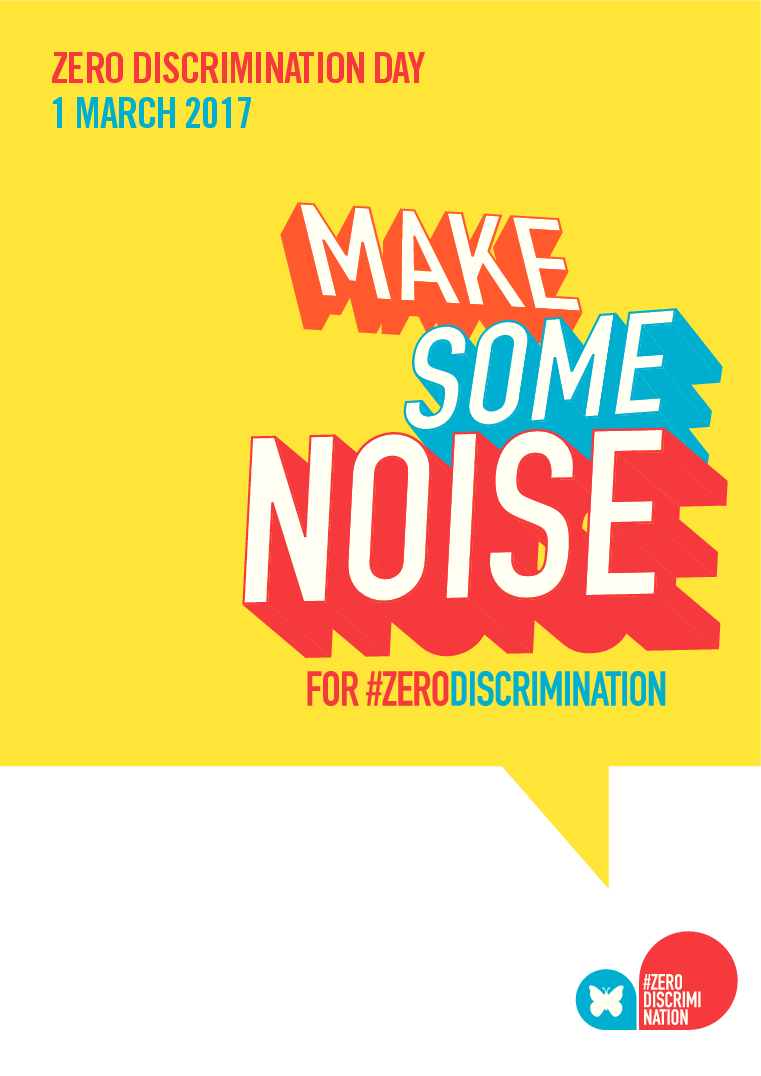
Zero Discrimination Day


1 March 2017


On 1 March, people around the world join together to celebrate Zero Discrimination Day.

The UN first celebrated Zero Discrimination Day on March 1, 2014, after UNAIDS, a UN program on human immunodeficiency virus (HIV) and Acquired Immune Deficiency Syndrome (AIDS), launched its Zero Discrimination Campaign on World AIDS Day in December 2013.

Discrimination remains widespread—gender, nationality, age, ethnic origin, sexual orientation or religion can all unfortunately be the basis for some form of discrimination. In only four out of 10 countries worldwide do equal numbers of girls and boys attend secondary school and 75 countries have laws that criminalize same-sex sexual relations.

“When the most marginalized and vulnerable face discrimination and abuse, all of us are diminished,” said United Nations Secretary-General Ban Ki-moon. “The United Nations is strongly committed to upholding human rights and dignity for all.”


Discrimination in health-care settings also continues to be widely reported. Imagine a young woman newly diagnosed with HIV being told by her doctor that she must be sterilized, a sex worker facing violence or abuse from a nurse, a disabled person denied access to proper advice about their sexual health, a gay man frightened of disclosing his sexuality to medical staff, a person who injects drugs dying after being refused treatment or a transgender person attempting suicide after being turned away from a clinic.


Health-care settings should be considered as safe and caring environments, however, such cases are happening too frequently throughout the world. Any obstacles that inhibit access to health-care facilities, including to testing, treatment and care services, must be removed. Access to health must be open to everyone.

also:

PRESS RELEASE

UNAIDS URGES EVERYONE TO MAKE SOME NOISE FOR ZERO DISCRIMINATION

GENEVA, 23 February 2017—Everyone will have experienced discrimination of some kind during their lives; however, non-discrimination is a human right. Equally, states and individuals have a legal obligation not to discriminate. This year, on 1 March, Zero Discrimination Day, UNAIDS is urging people to make some noise around zero discrimination, to speak up and prevent discrimination from standing in the way of achieving ambitions, goals and dreams.

Discrimination has many forms, from racial or religious discrimination to discrimination based on gender, sexual orientation or age, and to bullying at school or at work. In only three out of 10 countries worldwide do equal numbers of girls and boys attend upper secondary school, and people living with disabilities are nearly three times more likely to be denied health care than other people.

“Everyone has the right to be treated with respect, to live free from discrimination, coercion and abuse,” said Michel Sidibé, Executive Director of UNAIDS. “Discrimination doesn’t just hurt individuals, it hurts everyone, whereas welcoming and embracing diversity in all its forms brings benefits for all.”

Zero discrimination is an integral part of UNAIDS’ vision and for this year’s Zero Discrimination Day UNAIDS is calling for zero discrimination in health-care settings. The right to health is a fundamental human right that includes access to affordable, timely and quality health-care services for all, yet discrimination remains widespread in health-care settings, creating a serious barrier to access to HIV services.

“Health-care settings should be safe and supportive environments. It is unacceptable that discrimination is inhibiting access to care today,” said Mr Sidibé. “Eliminating discrimination in health-care settings is critical, and we must demand that it become a reality.”

Data from 50 countries from the People Living with HIV Stigma Index show that one in eight people living with HIV report being denied health care. Around 60% of European Union/European Economic Area countries report that stigma and discrimination among health-care professionals remains a barrier to the provision of adequate HIV prevention services for men who have sex with men and people who inject drugs.

This year, UNAIDS is calling on everyone to make some noise for #zerodiscrimination. Zero Discrimination Day is an opportunity to highlight how everyone can be part of the transformation and take a stand for a fair and just society.

UNAIDS

The Joint United Nations Programme on HIV/AIDS (UNAIDS) leads and inspires the world to achieve its shared vision of zero new HIV infections, zero discrimination and zero AIDS-related deaths. UNAIDS unites the efforts of 11 UN organizations—UNHCR, UNICEF, WFP, UNDP, UNFPA, UNODC, UN Women, ILO, UNESCO, WHO and the World Bank—and works closely with global and national partners towards ending the AIDS epidemic by 2030 as part of the Sustainable Development Goals. Learn more at unaids.org and connect with us on FacebookTwitterInstagram and YouTube.

ENDS

Peace & tolerance

H

Friday, February 17, 2017

Integrase Inhibitor Bictegravir Matches Dolutegravir for First-Line HIV Treatment

2 comments

from CROI 2017

Bictegravir, an investigational integrase inhibitor from Gilead Sciences, was highly potent, well tolerated and worked as well as dolutegravir (Tivcay) in a Phase 2 clinical trial, according to study results presented at the 2017 Conference on Retroviruses and Opportunistic Infections (CROI) this week in Seattle and published online in The Lancet HIV.


Integrase inhibitors, also known as integrase strand transfer inhibitors (INSTIs), are a class of antiretroviral drug designed to block the action of integrase, a viral enzyme that inserts the viral genome into the DNA of the host cell. Since integration is a vital step in retroviral replication, blocking it can halt further spread of the virus. Integrase inhibitors were initially developed for the treatment of HIV infection, but they could be applied to other retroviruses.

The discovery and development of integrase inhibitors led to the first integrase inhibitor approval by the U.S. Food and Drug Administration (FDA) on October 12, 2007, for raltegravir (brand name Isentress). Research results published in the New England Journal of Medicine on July 24, 2008, concluded that "raltegravir plus optimized background therapy provided better viral suppression than optimized background therapy alone for at least 48 weeks."

Since integrase inhibitors target a distinct step in the retroviral life cycle, they may be taken in combination with other types of HIV drugs to minimize adaptation by the virus. They are also useful in salvage therapy for patients whose virus has mutated and acquired resistance to other drugs.

Due to their high potency and good tolerability, integrase strand transfer inhibitors are an increasingly important part of initial antiretroviral therapy and are included in most recommended regimens for first-line treatment in U.S. and European HIV treatment guidelines.

Bictegravir (formerly GS-9883) is an investigational integrase inhibitor that can be taken once-daily and does not require a booster -- unlike Gilead's older integrase inhibitor elvitegravir, which must be boosted with cobicistat.

As previously reported, bictegravir demonstrated high potency against wild-type and resistant strains of HIV, favorable pharmacokinetics, and an improved resistance profile compared to older integrase inhibitors. In a 10-day monotherapy study, it rapidly reduced viral load by more than 2 login people with HIV.

At CROI Joseph Custodio from Gilead reported that bictegravir was safe and well-tolerated at doses ranging from 5 mg to 600mg in healthy volunteers. Bictegravir inhibits renal tubule transporters, which lowers creatinine levels and leads to a decline in estimated glomerular filtration rate, but it does not cause actual kidney function impairment, he explained.

Bictegravir is metabolized equally bythe CYP3A4 and UGT1A1 pathways. Custodio said it has low potential to be either a "victim" or "perpetrator" of drug-drug interactions. Bictegravir levels rose by more than 300% when administered with both CYP3A4 and UGT1A1 inhibitors, and fell by up to 75% when given with both CYP3A4 and UGT1A1 inducers. The drug had a half-life of approximately 18 hours, indicating it is suitable for once-daily dosing. Bictegravir had no effect on a common oral contraceptive or ledipasvir/sofosbuvir (Harvoni) for hepatitis C, and administering it 2 hours before or after minimises interactions with antacids.

Paul Sax of Brigham and Women's Hospital in Boston and colleagues conducted a Phase 2 placebo-controlled clinical trial comparing bictegravir to dolutegravir for initial HIV therapy.

The study included 98 previously untreated adults. Almost all were men, more than half were white, and the median age was about 32 years. They generally had asymptomatic HIV infectionwith a median CD4 T-cell count of approximately 450 cells/mm3 and a median viral load of about 4.4 log copies/mL at baseline. They had normal kidney function and people with hepatitis B or C coinfection were excluded.

Participants in this double-blind study were randomly assigned (2:1) to receive 75 mg bictegravir or 50 mg dolutegravir, each with matching placebos. Both drugs were combined with 25 mg tenofovir alafenamide (TAF) and 200 mg emtricitabine, taken once daily with or without food for 48 weeks. The primary endpoint was the proportion of people with HIV RNA below 50 copies/mL at 24 weeks.

Results
Both treatments were highly effective.

97% of participants in the bictegravir arm and 94% in the dolutegravir arm achieved viral suppression at 24 weeks.

97% and 91%, respectively, had undetectable HIV RNA at 48 weeks.

Given the small number of patients, these differences were not statistically significant and this study was not powered to determine full non-inferiority.

1 person in the bictegravir arm and 2 in the dolutegravir armhad HIV RNA >50 copies/mL, but no significant resistance was detected in either arm.

CD4 cell gains were 258 cells/mm3 in the bictegravir arm compared 192 cells/mm3 in the dolutegravir arm, not a significant difference.

Both regimens were generally safe and well-tolerated, with no treatment-related serious adverse events and no deaths.
The most frequent adverse events were diarrhea (12% in each arm) and nausea (8% with bictegravir and 12% with dolutegravir).

1 bictegravir recipient with a previous history of allergic dermatitis stopped treatment early due to hives after 24 weeks.

Estimated glomerular filtration rate declined by -7.0 mL/min in the bictegravir arm and -11.3 mL/min in the dolutegravir arm at week 48, but there were no discontinuations due to kidney-related adverse events and no cases of tubulopathy.

Bictegravir and dolutegravir taken with TAF and emtricitabine "both demonstrated high virologic response rates at week 24 that were maintained at week 48," the researchers concluded. "Both treatments were well tolerated, and no significant safety signal was detected in either arm."

These results were promising enough to proceed with Phase 3 trials using a single-tablet regimen of bictegravir, TAF, and emtricitabine. Custodio noted that optimising the formulation allowed for a lower 50 mg bictegravir dose in the coformulation.

Sax said that 4 Phase 3 studies are now fully enrolled; 2 of these are similar to the current study but will use the bictegravir single-tablet regimen rather than separate pills. Another is comparing the bictegravir single-tablet regimen against a coformulation of dolutegravir, abacavir, and lamivudine (Triumeq).

"The high virologic response rates seen in this study show that the pairing of bictegravir with [TAF/emtricitabine] could potentially offer patients and physicians a new HIV treatment option with pre-clinical data supporting few drug interactions and a high barrier to resistance," Sax said in a Gilead press release.

2/14/17

Sources

H Zhang, JM Custodio, X Wei, et al. Clinical Pharmacology of the HIV Integrase Strand Transfer Inhibitor Bictegravir. Conference on Retroviruses and Opportunistic Infections. Seattle, February 13-16, 2017. Abstract 40.

P Sax, E DeJesus, G Crofoot, et al. Randomized Trial of Bictegravir or Dolutegravir with FTC/TAF for initial HIV therapy. Conference on Retroviruses and Opportunistic Infections. Seattle, February 13-16, 2017. Abstract 41.

PE Sax, E DeJesus, G Crofoot, et al. Bictegravir versus dolutegravir, each with emtricitabine and tenofovir alafenamide, for initial treatment of HIV-1 infection: a randomised, double-blind, phase 2 trial. The Lancet HIV. February 14, 2017 (online ahead of print).

Gilead Sciences. Gilead Presents New Phase 2 Data on Bictegravir, an Investigational Integrase Strand Transfer Inhibitor for the Treatment of HIV. Press release. February 13, 2017.

Saturday, December 10, 2016

Lesbians do not factor in HIV prevention that much, bisexuals still seen as only a ‘bridge’............

0 comments


The more things change the more they stay the same and then expectations are out there to gain positive results when the nonsense continues as the farce thrives; in the face of new information, data driven work and so on, old entrenched thinking trumps (no pun intended) sensibility.

One would have thought with the expansion of the understandings of sexuality, the now more than ever urgent need to filter out subgroups alongside their sex seeking behaviours and psychologies associated with same we would have gotten passed this nonsense of omitting what some see as lower risk groups for HIV infections hence they need not be included. The lumping of transgender persons into MSM studies for example in times past seems not to be recognized as yet and accepted by the establishment as the 32% rate being bandied about from then is often referred to despite the error has been quietly seen. The figures are obviously flawed to begin with, one does not have to be a genius to see it; in the days when words such as “pre-operative” was not a dirty word in transgender realms and represented ‘transitioning’ suggestions were made to separate such persons out of the study as some trans did not pursue such but who identified as gay and found some comfort in the gay community

I find it most odd that it has to take a gay man like myself to be writing on this. It also stems from two greater conclusions I have drawn several years now, first being much more could have been achieved if not for forward thinking and action and secondly some of the very folks at the helms are the actual obstacle to said achievements to materialise. Frankly I am getting tired of the itty-bitty achievements it is time for monumental if not better positives and outcomes on a much larger scale after all these years, when the potential exists for forward movement.

As World AIDS Day came to a close and the cogs of HIV settled back to business as usual an old discussion came up via social media about risk for women on the strength of a post and article on transgender persons in Jamaica who were said to be HIV positive. In making the rounds on various platforms and literally examining the content over a host of presentations, a myriad of radio interviews, television appearances, hash-tagging and so on literally not a word came out on certain types lesbian sex as risky for HIV and or sexually transmitted diseases. A rather young bright young lady asked a potent question on Facebook as to why women seem missing or very low on the radar for prevention messaging saved and except for commercial sex workers and the emphasis that the rates had fallen in that category. The group she was in froze for a minute suggesting pause for thinking I assume and then the flood of answers/comments came mostly espousing words to the effect that she may be right in a sense. The omission if not invisibility of same gender loving women in HIV prevention especially in today’s world is telling yet again that the more things change the more they stay the same.

Trouble is the bureaucrats and board of governors of many of these HIV outfits are still mostly male or if women are there they are heterosexual and cannot speak to some issues directly from a space of real world experience along with an elitist chip on their shoulders (the males that is) despite some bragging that they have now employed more women in their midst but still have a gay male driven mindset by just mere observation in public policy/advocacy. They refuse to take ‘telling’ as country people would say from non elitists and experts while HIV infections dilly dally although it is known and accepted as a challenge in the gay community in terms of rates the lumping of transgender folks. The near total omission of bisexuals where they are only seen as a ‘bridge’ for infections and lesbians’ near total annihilation from the interventions altogether despite so called new women’s’ groups in operation still is too gay male and mainstreamed if not hetero-normatively focused. These new groups and advocacies if not added bureaucracies are more interested on the comfort of social media these days and really hardly do real work as one person puts it with ‘real people’ and issues, then it is no wonder the messages are flawed and overlook certain groups. Older outfits such as Womenforwomen, WFW seem all but dead publicly and offered not even a dribble in the department of HIV risk and women who have sex with women, hash-tagging and instagramming if you will are the latest crazes but while such platforms can work when you’re up against altered or bettered versions of individuals profiles including the very NGO republic hiding the actualities to give a near perfect of not falsified appearance then where it the truth to credibility to make the message more effective and lasting hence omission and oversight may be less.

an example of Tribadism

We now know of practices such as Tribadism probably the most risky of them all in sex between women and or the seeming increase in use of sex toys as evidenced by the very retailers within the same gender loving community who have said their sales have increased exponentially and their buyers are mostly women. The sex industry and or the human trafficking illegality that often forces women who are straight into lesbian sex by just mere observation has been clearly incorporating women on women action in bars, so called massage parlours that are really a front for ‘Madame’ services and so on, by virtue of those considerations alone it warrants more forward thinking on the part of the programs and new if not ‘outside the box’ thinking and not just typical responses. It’s all about the money for managers of these establishment and the old hetero-based restrictions are out the window as the rules of the game changes. A tip in the thousands of dollars for such entertainment is the norm today and not just the kissing touchy-feely eroticism but more raunchy presentations on stage to include Tribadism for example.

Tribadism is one of the most risky of all, a point I have been driving at for some years now in previous posts, effectively it is sex between two women where the clitoris and indeed the vaginal openings are made to come together to create friction in a kind of X pattern formed by the participants. The act can be very intense for the parties and led to multiple orgasms often with no barriers such as a dam, cut opened condom or so on. The theory that hairs if not shaven can act as an intervening item to create openings on the skin or the labia minora. We know that cuts and exposure to blood of an infected person can facilitate passing of the infection and given the literal receptiveness of a vagina by virtue of its shape this is grounds for reference at least or stronger advocacy at best.

The practice in particular is now more evident at strip clubs than ever before with often dancers/strippers/performers who may not even be lesbians but the job may require some lesbian sex as management may demand same to make a profit as more male patrons and indeed other lesbians such as butch identified women like this kind of thing and tip heavily, the possibility however slight or low is still a risk no matter what, risk is risk. The typical message for women has to be amended even in the commercial sex work category in the face of a reduction in the prevalence rates. It is well accepted that high knowledge of condom use is out there but conversion to action is another matter but as to the specifics for other groups that is woefully lacking so the messages flies over those groups heads as it feels as if it is not for them to follow as they may not see themselves as at any risk at all. When are the programs people going to include in the narrative wider messages to boldly and specifically (if not in raw language) mention plasticizing bisexuals you too are to consider safer sex options and not just rely on the hetero-normative mainstreamed sanitized near nonsense anymore.

Lesbians and bisexuals aside specifically there are also other nuances often overlooked as the response also miss even sub group practices under the MSM umbrella. Cruisers alone is where I’ll zoom in as cruisers as it were not only include gay or bisexual men but also other men who either experiment, are exposed to gay sex of some sort by way of prison (substitutional sex/situational homosexuality), jail houses or correctional facilities but who when released back into general society over time may pursue sexual experiences via this route as it tends to attract more masculine types who avoid any hint of effeminacy and self identification as ‘gay’ a term seen in their eyes as a man wanting to become a woman and is too loaded psychologically for those men. These are often men who have ‘baby-mothers’, girlfriends and so on and in a type of behavioural bisexuality pattern. Condoms if there is any anal penetration to be had (as mostly oral and hand action are the preferred practices) are not an option as it can be seen as the one suggesting condom use may be HIV positive and or the engaging party is also positive which can lead to serious violent reactions in a blame game. Most men who I have interacted with in this arena simply avoid any mention of condoms just in case as the reaction from the other party is unpredictable. The more raunchy the sex the better it is for some men to include bare-backing, cream-pie action and so on; HIV prevention seems to totally overlook these psychologies when contemplating tailoring the response.

Omissions, oversights cannot continue as the norm not in this day and age alongside hetero-normative sanitized narratives must fast become a thing of the past (a call made some 8 years ago), if it is some expect to bring down infection rates. Risk is risk however small and despite the groups involved. Everywhere else is somehow able to address their prevalence rates save and except for some sub-groups yet here we are wasting time.

Peace & tolerance

H


also see:

Wednesday, December 7, 2016

Switching course, Gilead markets HIV drug for prevention ..........

0 comments


Gilead Sciences Inc has begun marketing its HIV treatment Truvada in a way thousands of consumers already use it – to prevent infection with the virus that causes AIDS.

The company introduced Truvada to the U.S. market in 2004 for HIV treatment. In 2012, Gilead won approval to market it for prevention after two large, peer-reviewed studies showed it also was effective at preventing infections in healthy people.

But the company decided against promoting the drug as a preventative treatment, deferring to patient advocates who feared it could encourage promiscuity and unsafe practices, such as having sex without condoms.

Even without Gilead's help, many consumers learned Truvada was more than 90 percent effective in tests at preventing HIV infection. In 2014, the U.S. Centers for Disease Control and Prevention recommended it as an option for people at high risk for HIV infection.

As many as 90,000 people in the United States used the drug for prevention, or pre-exposure prophylaxis (PrEP), last quarter. That's up from 60,000 to 70,000 earlier this year, the company said. Usage also is growing in France, where about 2,000 people have been prescribed Truvada for prevention since January.

In July, the drugmaker began marketing Truvada for PrEP to doctors through professional publications, digital advertising and other channels, including the website PreventHIV.com.

And this fall, the drugmaker began marketing directly to consumers with print advertisements in publications geared toward the lesbian, gay, bisexual and transgender community, including OUT, Advocate and SWERV. It plans soon to expand to social media and digital.

Gilead said it wants to reach people whose doctors are either unaware or reluctant to prescribe Truvada for prevention.

The marketing "is primarily driven by demand by patients," said David Piontkowsky, Gilead's vice president of HIV Medical Affairs, in an interview.

Attitudes toward Truvada started to change a couple years ago as doctors, AIDS activists and potential users saw its effectiveness, he said. The "criticism now is we're not saying enough."

Truvada is helping bolster Gilead's profits as sales of its biggest moneymakers – treatments for hepatitis C – decline.

U.S. net product sales of Truvada for the first nine months of 2016 were $1.8 billion compared with $1.5 billion for the same period in 2015. The company said in its earnings report that the gain was driven by price increases as well as "increased usage of Truvada for PrEP."

"We expect PrEP to continue to be a significant part of Gilead's growth in HIV going forward, particularly in the U.S.," Gilead Chief Operating Officer Kevin Young recently told investors.

The new Truvada campaign has been well received, even by those who once opposed promoting the drug for prevention. They include David Duran, a writer and HIV advocate, who helped popularize the term "Truvada Whore" in a 2012 article describing his fear that it would encourage people to have sex without condoms.

Duran began rethinking that concern about a year later in light of newer research showing that PrEP helped prevent more cases of HIV, without a rise in other sexually transmitted disease, which suggested people were using condoms.

"I'm thrilled they are starting to pump some money into marketing and awareness," Duran said. "There is a solid base of folks who know about PrEP, but it's still not a topic the country as a whole knows about."

GROWTH POTENTIAL

As a preventive measure, the blue Truvada pill is taken once daily. Some people experience nausea, vomiting or headaches during the first few weeks on the drug.

Users must be tested every three months to ensure they don't have HIV or other sexually transmitted diseases and to monitor kidney function and bone density.

Some Medicaid programs and most private insurance cover the treatment, which lists for $1,500 a month before any negotiated discounts. With greater awareness and favorable coverage for preventative treatments, the number of Americans using Truvada could rise, said the company and healthcare providers.

An estimated 50,000 new U.S. HIV infections are diagnosed each year.

The CDC estimated in 2015 that about 1.2 million Americans were at substantial risk of HIV infection and could benefit from PrEP.

That includes men who have sex with men, transgender women who have sex with men, partners of people who are HIV-positive and intravenous drug users who share needles.

The number of high risk groups "is much broader than one might think," said Dr. Jennifer Childs-Roshak, president and CEO of Planned Parenthood League of Massachusetts. "It is not just men with multiple partners. There are a whole host of folks who could benefit."

At least 15 patients have gone on Truvada for prevention since Planned Parenthood's six Massachusetts clinics began offering it this fall. Planned Parenthood of New York City plans to offer the treatment to all of its 50,000 patients, said Julia Sullivan, associate director of quality management.

Wider use also could buffer Gilead when Truvada, the only drug currently approved in the United States for PrEP, loses patent protection in 2021. Gilead has a successor treatment in the works. The once-daily F/TAF (emtricitabine/tenofovir alafenamide) has been approved for HIV treatment and is under study as a preventative.

"PrEP is indeed a significant part of Truvada," said Leerink Partners analyst Geoffrey Porges. "It can certainly keep Truvada relatively flat but the key question is, when will they show that TAF works for PrEP?"

In the meantime, the concept of taking an HIV drug to prevent infection is making inroads in popular U.S. culture. It came up in an episode of "Transparent," the Emmy award-winning Amazon series about a family with a transgender parent, when a character was contemplating sex with an HIV-positive partner.

"We were trying to make the conversation reflect what happens in real life," said a writer on the show who works under the name Our Lady J. "PrEP is a big part of that conversation. As an HIV positive person, I'm struck with the level of ignorance around PrEP."

(Reporting By Jilian Mincer; Editing by Michele Gershberg and Lisa Girion)

Thursday, December 1, 2016

On World AIDS Day ....

0 comments


As another World AIDS Day comes again we are left to ponder the loss of friends, colleagues and such from the related illnesses that have come over the years. Thankfully the days of said categories of persons dropping like flies in the late 1980s and 90s, when ones funeral clothes almost became uniforms as there was a service or two every month literally; the stores in downtown for example such as the now closed Rock-bottom or Hannah’s Better Buy, Lerner Shops, Ammars, Amart and others the staff could almost recognise some of us by virtue of our regular visits looking black shirts/pants/ties, dresses/hats (alongside women friends as a ‘guise to buy) for drag queens/cross-dressers and early trans-women. Some of us got so used to wearing black it became depressing, it is one of the reasons why I do not do funerals or candlelight vigils so much anymore that much as they remind me too much of those who have gone before. Like previous years we will have vigils and such again but in my near 25 years on this I am wondering if they have lost their usefulness or it is weariness on my part? Not sure, it’s starting to feel monotonous as the human component seems lost in translation but more so target meeting imperatives, statistics and analytics with social media explosion and despite these avenues rates are still high in MSM/transgender groups.

Once someone was missing from the social scene especially the folks from the lower socio-economic strata and displaced of homeless and one enquired, if the answer was there are at ward three of the Kingston Public Hospital, KPH or at the Chest Hospital for respiratory challenges, at UHWI or at someone’s house withering away as the host(s) watch helplessly then the colloquial adage would follow “dem have big A mi luv” (they have the big A as in AIDS my dear) or “dem a guh dung” (they are going down) and the inevitable would be forthcoming. The drugs or treatment courses then were not so effective then so quality of life was low, hence life expectancy as most persons I know who were taken were in their twenties or early thirties. KPH at one point became almost a holding pattern facility for persons at end stages of the disease intertwined with staff discrimination complicating matters. Some change has come since but the stigma still sits somewhere there and every now and again it rears its ugly head.


At least one of the redeeming events of the year is the clearing of the ‘Patient zero’ (above) legacy and years of negative press where he was blamed for being the sole carrier and disseminating HIV in the US hence a spread. Why it took so long to right-size is yet to be properly and truthfully explained.


The side effects of the older generations of ARV or HAART such as Combivir AZT helped some but doomed others but the present first, second and third line courses are much better namely Atripla or Truvada with Efivarenz (EFV), the administration of the treatment courses especially from the regional health authorities through type 5 clinics and social workers is much to be desired frankly. The aforementioned Tenofovir as part of Atripla or Truvada in the form of Disoproxil Fumarate (TDF) is an issue for some, the newer Tenofovir Alafedamide (TAF) however that was presented as a better alternative with little migratory side effects from one to the other according to some experts was mysteriously left to the realm of treatment naive users only after much hype for the release of newer brands such as Genvoya. Many raised hopes around the world were dashed as persons who could afford it through their practitioners were exploring the migration from TDF to TAF. What has also happened to the much touted second generation maturation inhibitor that was to come to address the end stage of HIV replication and a major development in research in years? We are now hearing complaints of funding issues with research and development yet vaccine exploration in guinea pig land our dear Africa are on yet again.

The sudden stuttering of the support group meetings in St Catherine, Manchester and further westwards is one such issue also for me in terms of adherence and overall well-being, oh that continuity problem again. An pilot of sorts named ‘Brothers’ Positive on Positive’ was introduced in the lost or no-meeting times to compensate for not only continuity gap but also the missing depth of the meetings via the social workers as it turns out they are all but one evangelical Christians hence certain other sensitive subject matters are either not dealt with or are off limits and are not ventilated. Meanwhile patients are also now being asked to travel sometimes long distances to pharmacies outside their parish to fill prescriptions as dispensaries at clinics and hospitals are limiting who they are responding too albeit for the disabled, injured or critically ill persons is understandable. But ‘able-bodied’ persons as one social worker told one person recently have to go as directed to fill their prescriptions. The Drug Serv pharmacies which were designed to help offset costs are already crammed by the elderly mostly who wait for long hours as early as 5am or pay someone or ask someone to hold a space to have an early number to coincide with the 8am openings at Portmore, Union Square in Cross Roads for diabetic and hypertensive drugs mainly.

The availability of other supportive materials such as Iron tablets, B-complex capsules, Co-Trimoxazole (Bactrim) for infections of skin and so on is fickle; more amore complaints come to hand as prescriptions carry over with them not acquired although the kind doctors still write them on the list and suggest buying them. Trouble is not everyone can although they may be considered ‘cheap’ the announcement on Jamaica Information Service, JIS that more pharmacies will be added to the National Health Fund, NHF and HIV drugs to offer cheaper drugs seems calming for some but if the aforementioned clinics and dispensaries are not doling out the drugs generally and the overburdened Drugserv outlets I wonder how the government is going to fund the co-payment for private pharmacies facilitate this new dispensation according to the present health minister when we hear criticisms by even doctors of general shortages linked to or caused by “free healthcare” zapping monies from taxes. Many of us are still weary via announcement-ti-tis from previous announcements and that pharmacies closer to the patients will be made available instead of out of parish trips to fill prescriptions.

Of course the usual all is well nice rosy picture is painted by some complete with a please puss smile and altered or bettered versions individuals and entities that all is well and functioning near perfectly. Everyday some new group is around yet all of them combined cannot make one functioning unit, yet the rates are stagnant; while ‘experts’ boast about achievements on flowery worded radio and television interviews complete with farcical hypocrisy. And why are most of persons living with AIDS PLWHAs not feeling the presence of some of these groups on the ground?

Remembering good folks ................


Persons such as Leonard Officer my best friend and literally the voice for Jamaica AIDS Support (before the name adjustment of “For Life”) added at the end, hence JASL, one would call the office and his calming voice would answer the phone, even if your day was down at the time of the call the reassurance was comforting always given a warm customer experience in engaging the entity when they meant something for all intents and purposes, many can attest to this. Other friends such as former party promoter Donald “Fay Donnaway” Johnson who left us Good Friday 2001 was also one of those bubbly persons who jumped around and helped others then, including me in my difficult years 1996 post the short incarceration and three year court case on buggery; a total stranger to me prior but he turned up at Half Way Tree Court during my preliminary hearings and stuck with us (my co-accused) until the end and we with him as he died at home peacefully.

World AIDS Day indeed Human Rights work and observances of days have become monotonous to some including me, the stridency that once obtained in terms of prevention seems too relaxed and indeed populations have become too complacent given the lack of shock outcomes if you will to jolt persons into safety. As AIDS and related illnesses outcome can be controlled way better life expectancy has effectively doubled so people get or feel they can be reckless without serious consequences. But even as those matters attend ‘HIV blaming’ is also still an issue it seems as a pending court case has brought to bear. A pending court ruling slated for December 9 of a beheading case in 2012 has returned the issue front and centre.

As for the rates of infections in the midst of ever changing nongovernmental organizations growing in numbers, be they social media based or on the ground but they cannot seem to be in one accord to reduce said rates. The juxtaposing of bureaucracies, carrot baiting funders and such continue with no end in sight as the rates do not change. 32% effectively is the set number for the past 8 years since the snowball study in 2007 of MSM in Kingston in terms of prevalence rate and another 32,000 plus in the general populations are said to be unaware of their status with a prevalence rate of 1.6%, female sex workers coming from 25% down to 2.5% Mandeville and St Andrew of 201 subjects.

Homelessness via stigma, forced evictions and homophobia has surfaced at every phase of that study and others hence yet the NGO republic as is being cynically described in some circles of the intelligentsia have simply watched the problem fester and mature to a stinking sore in predominantly Kingston and elsewhere, yet very little by way of welfare has come but when HIV studies are to be conducted suddenly the populations are found and put to good use for reports and such. Then they are left to continue where they left off prior to the privileged visits. Strange that homelessness existed even before the formation of many of these NGOs some 25 years ago yet no serious answer yet, interest or the lack thereof is the elephant in the room interspersed with tokenistic gestures as feeding programs or care packages and after consuming the content the population is right back where they were found.

Coming from the days when fat lies were told to suggest MSM cannot be reached by interventions as the buggery law will interfere with such suggesting the facilitation of illegality which played right into the hands of the fanatic Christian right movement, and that issuing condoms will give a go ahead for anal sex that is illegal then we wonder why the prison riots of 1997 came to be when suggestions were made to have condoms in prisons, that has now been debunked thankfully, outside of that is the politics internationally (Tenofovir developments – TDF/TAF switch-a-roo for example) that is another matter, and as for PrEP (the chemical condom psychology ethics) that is unfolding even as I type meanwhile less persons are dying but with newer figures coming out recently of so called concerns on transgender infections rates the old figures have always been questioned especially by me, other early transgender activists and allies as the traditional ‘lumping’ of transgender in the MSM mapping as they are absorbed as gay or present as gay (male to female) and are made invisible by default or under the radar in terms of detailing specific (sub) groups. There is also the business of internal stigmatizations as for example persons are still doing this practice of taking photos of their negative test results and then cussing out or ‘bitching’ others who are positive which may help to complicate the matter if getting persons to test and safer sex eventually.

The aforementioned bureaucracy comes in here yet again as the lack of sensible programs when transgender were never engaged in any meaningful way until recently could explain why the rate was so high and stayed so for so many years. Specific groups require ‘outside the box’ responses and not the typical textbook and superficial interventions. The pigeon-holing every now and again of bisexuals as “a bridge for the virus” by epidemiologists past and present over the years outside of the creative responses and implied biphobia, bi-stigma yet bi-omissions, not to mention very little dribble regarding lesbians and risk for from program development or LGBT advocacy is just simply ridiculous and then we wonder why the rates won’t budge downwards since whenever. Simply relying on the mainstream spinoffs from traditional social marketing and adverts; commendable yes but the ‘high knowledge’ but little reactive actions problem persists. We all know that we must use condoms and while yet still very little push on abstinence or delaying sex messages, the sex industry is obviously not being engaged properly as evidenced in a recent dubious utterances by someone inside the family planning agency who are now the ones rolling out the HIV program. The P.L.A.C.E, Priorities for Local AIDS Control Efforts methodology for example has been adopted from a successful 2006 pilot which I was one of the outreach officers to cover street venues, adult clubs, tertiary level campuses, and plazas then but somehow the tailoring to our unique situations seems missing as it is just being rolled out as the text verbatim says with very little forward thinking by the powers that be, namely the country control mechanism for Jamaica and the Global Fund. Simply just having condom booths at LGBT events or hosting parities is not enough but if the people who are designing some of this are hardly not even from the populations how can they understand the issues when they refuse to learn as well.

What is next? Is the fundamental question though not openly asked by those who control the levers of the cogs of HIV, many continue the political correctness farce as a front; something has to give somehow and soon if any change is to come. When one can hear even younger folks cynical commenting “watch them” suggesting hypocritical pretence then one has to wonder what is really going on.

More anon

Peace & tolerance

H

Monday, November 28, 2016

What’s happening with “HIV blaming” driven violence?

0 comments


As World AIDS Day approaches on December 1 annually and there is also talk about on gender equality work and addressing intimate partner violence there is hardly any reference to the ‘HIV blaming’ piece of it, it seems. The pending court ruling of the March 2012 scheduled for December 9 beheading case has raised the subject as the motive by the male partner of the victim who beheaded him effectively killed the man as he accused him of infecting him with HIV or in the language used AIDS. This is separate from willful targeting persons and having unprotected sex in revenge to suggest the already infected won’t be the only one with the infection; it seems what drives that level of deception is the feeling that HIV is still a death sentence when it is not so in the age of improved treatment and research; as to whether both are keeping pace with making them available is another matter.

Some strange discussions is the only way I can describe it have emerged on various media platforms with reference to two previously popular episodes as well in St James and Kingston, the latter unfolded at a party after the individual doing the blaming arrived with tests results with as we say ‘blood in his eyes’ it also shows that maybe the post test counselling in that matter was not effective enough or may not have been done if any. There is a deficiency in the support group meeting department as they are not continuous and are sometimes haphazard and in response a soon to be concluded pilot called ‘Brothers’ Positive on Positive’ tried to address and better unpack with a small group of persons. It sought to fill in some of the gaps that the only hour long sessions elsewhere do not address some of the situations adequately.

Revenge via HIV blaming ought to be a thing of the past given the strides in terms of the high knowledge of safer sex and indeed post positive treatment adherence and diet alongside the support systems now available in the national program. They still need to get the medication collection part straightened out as long waits at dispensaries outside of the social workers collecting for really ill patients or disabled persons is ridiculous. An announcement via Jamaica Information Service, JIS recently though suggests that more pharmacies will be added to the mix to offer ARVs, CART and HAART prescription filling at a discounted price, the clip never mentioned the other supportive drugs for opportunistic infections such as Co-Trimoxazole to control basic infections and skin maintenance or vitamins and so on. Probably the emphasis has been too much on condom use and or prevention and not equally on sustained quality of life. Condom pinching came up as well in an online discourse which was a bit surprising to me as we thought we had gotten over that problem but apparently not.

As persons await the judgement of the pending case many have condemned the accused men; be it the partner and his roommate who he forced to assist him in dumping the body under pain of violence as well which came out in the trial and his unsworn statement. Mistakes can happen, condoms can break, less vigilance in the heat of the moment, using oil based materials as lube or when persons realise flaw but continue through to the climax while hoping for the best can be some of the avenues for facilitating transmission; outside of assaults and non consent. Overseas cases of deliberate infections have been addressed by some countries passing legislation to deal with it but this is after the fact. A recent case with an African American man just showed the madness that can flow from such matters.

An infamous incident on the outskirts of Emancipation Park in New Kingston some years ago where a man and his supposed partner ended up in an awful clash that led to security interventions and subsequently the police in 2013; yet more evidence how sensitive matters can spill out into the streets with unneeded attention or results. Accepting the positive test results as not a death sentence and that suspected infidelity or cheating needs to be and can be dealt with more effectively via conflict resolution measures and third party possible professional interventions. Fighting or violence is not the way out, if lovers really love each other even said cheating and sometimes surprise HIV positive results they should find a way out, if not they were not lovers to begin with, in the true sense but merely in a ‘spirit tek’ farce or tolerated relationship for matters of convenience and or co-dependency.

Then with talk of transgender persons now factoring supposedly more in HIV infection rates when really they always did as far as I am concerned, given transwomen (male to female) often have integrated themselves in the men who have sex with men umbrella group as invisibility of the trans population in HIV prevention prior was almost normative. The previous results there in HIV infection rate surveys are not brought into serious doubt if not disrepute as if the lumping was so pronounced as we are now beginning to find out then a whole new rethink will have to go into the design of the HIV response to marginalised groups. The violence that may attend to that may also have to be researched properly in the ever tendentious quest for ‘evidenced based advocacy’ but if the data and collection is already flawed how does the relevant agencies solve those concerns and arrive at the true situation or as close to it?

The conflation of drag queens with gay men only when feminization forced or unforced leads to the feminine aesthetic has been an issue leading to advocates, NGOs and even funders themselves misreading the landscape. More needs to be done in conflict resolution as stated above. Legislation may have to be considered for some of this but the gay/bi male populations may get left out seeing we are already marginalised by way of an archaic 485 year old piece of theocracy in a buggery law. If we do not have legitimacy in everyday life then why focus of issues affecting us via formal governmental structures.

Then there is the matter of assault driven willful infections in the MSM/transgender mismatch as the latter is seen as gay without any reassignment surgery to boot; so many stories often unconfirmed of said abuse and assault with HIV positive alleged perpetrators and yet the reporting to police is virtually nonexistent as the gross indecency or buggery charges may attend if one tries to. This is why the amendment of buggery in as far as rape is concerned between men as rape already in law covers women as a case I often referred to in former dancehall artist Zebra who has been serving a thirty year sentence after he raped and sodomised a young lady so the jury gave him 20 years for the rape and the full 10 years for buggery.

More anon

Peace & tolerance

H


also see:

Sunday, November 27, 2016

Concerns Mount As Transsexual Adolescents Push Up Jamaica's HIV Rates ................

0 comments


As usual the transgender community is still being lumped with MSM either by the response and by populations overall it seems and it makes the previous studies on MSM HIV prevalence rates of 32% in 2007 and others since problematic while it may be higher trans-persons who merge into the MSM community get counted as gay. The article below touches the very conflation and to think the very named agency is partly guilty of not making the stark differences between the groups even as trans voices screamed to them to pay attention.

The Gleaner carried this:

As a HIV-positive transgender youth, 22-year-old *Tory belongs to the at-risk group that is considered to be most in need of intervention if Jamaica has any hope of seeing further reductions in the number of persons living with HIV/AIDS.

According to a study that was released last week by the Jamaica AIDS Support for Life (JASL), transgender persons who are HIV-positive are more likely to experience homelessness, stigma, forced sex and physical violence. Of the 71 transgender participants polled, more than 52 per cent were involved in sex work for accommodation and food, among other things.

"Now we are seeing where they are at increased risk more than gay men, and more than sex workers, of course, and so it's really just about how we are going to ensure that our programmes are attending to the needs of these persons," said executive director of JASL, Kandasi Levermore.

A UNAIDS report ahead of the commemoration of World AIDS Day on December 1 warned that 15-24 years is a dangerous time for women. It noted that an estimated 45 per cent of all new HIV infections globally in 2014 were among members of key populations and their sexual partners, and warned that new HIV infections are continuing to increase among people who inject drugs and men who have sex with men. The report went on to say that HIV was not declining in sex workers and transgender people.

Tory, a male who identifies as a female, has found himself in several of these categories. He became homeless at 16 years old and became a sex worker shortly after to provide for himself. His clients were mostly professional men, and at 18, he decided to go and live with a police officer who he said was a "regular buyer". He said he contracted HIV from the lawman.

"Being 16 and a sex worker, you get more clients because you are young, because you are new, because they like young people because they think you are not very smart. But I was very smart. Why I was homeless is because I was kicked out of high school because of my sexual orientation," he told The Sunday Gleaner.

MISTREATMENT AT CLINIC

He said due to the mistreatment he received at the first clinic he visited after his diagnosis, he did not take any medication for the first year. He, however, went to a different clinic where the attitude of health professionals was better, and he has since seen vast improvement in his health. He said he is now focused on becoming stable because his greatest desire now is to have a child, although he admitted that he had never had sexual intercourse with a woman.

"I am gay because I won't be in a long-term relationship with a woman," said Tory, before explaining that he is open to having sex with a woman for the sake of having a child.

"I want a child with my genes. Adoption is so hard in Jamaica at this point. She can be a lesbian or she can also be positive and virally suppressed, like myself. So there is a lot of hope to get a child if I want a child when I am ready," he said.

According to a report released recently by JASL, which was funded by the Canadian Institute of Health Research, there is very little knowledge about the HIV prevalence among transgender women in Jamaica.

However, the National HIV/STI programme noted that, "In contrast with the estimated HIV prevalence of 0.4 and 0.5 per cent reported in adolescent girls and boys aged 15-19 at the national level through the UNAIDS 2014 estimates, the HIV prevalence among gay and bisexual adolescent boys is estimated to be 14 per cent, while HIV prevalence in transgender adolescents is estimated to be 27 per cent."

Renae*, who came out as a transgender at 21 years old, said he is concerned that HIV is highest among transgender youths, and blamed this on the fact that those who adopt this lifestyle were often stigmatised or forced to engage in transactional sex.

"Being gay is a taboo, but being transgender is a greater taboo, and because of that, you have a lot of parents who actually do put out their children for these type of things, and you are out on the streets, you have no formal education, you have no way to really provide for yourself," he said.

"So you have to come up with means and ways to provide for yourself, and one of those methods is to become prey to sexual predators out there, or to offer yourself up as collateral, and oftentimes it is to persons who maybe know that they have the virus, but they don't care."

Although Renae was born male, he identifies as a female and is now an advocate for those living in the transgender community. He believes that while there have been improvements in access to treatment for those who are HIV-positive, stigma and discrimination are still forcing some to go underground instead of seeking help.

"That's why I work so hard within the health sector to make things better for trans people on a whole," he said.

[* Names changed to protect identity]

ENDS

And the signs continue to show us that the forward thinking in as far as the NGOs are concerned is still lacking and why are more persons being captured way better given the resources?

The more things change the more they stay the same.

Peace & tolerance

H

also see:

Related Posts with Thumbnails

AddThis

Podcasts You may have missed or want to re-listen


A look at the fear of the feminine (Effemophobia) by Jamaican standards & how it drives the homo-negative perceptions/homophobia in Jamaican culture/national psyche.


and


After catching midway a radio discussion on the subject of Jamaica being labelled as homophobic I did a quick look at the long held belief in Jamaica by anti gay advocates, sections of media and homophobes that several murders of alleged gay victims are in fact 'crimes of passion' or have jealousy as their motives but it is not as simple or generalized as that.

Listen without prejudice to this and other podcasts on one of my Soundcloud channels

More uploads


Aphrodite’s PRIDE JA tackles gender identity, transgender misconceptions .....


Nationwide New Network, NNN devoted some forty five minutes of prime time yesterday evening to discuss the issue and help listeners to at least begin to process some of the information coming from the most public declaration exercise as done by Jenner. Guests on the show were Dr Karen Carpenter Board Certified Clinical Sexologist and Psychologist, ‘Satiba’ from Aphrodite’s P.R.I.D.E Jamaica of which I am affiliated and Lecturer (Sociologist) and host of Every Woman on the station Georgette Crawford Williams (sister of PNP member of parliament Damian Crawford); one of the first questions thrown at Satiba by host Cliff Hughes was why has Jenna waited so long at 65 years old to make such a life changing decision?

Satiba responded that many transwomen have to hide their true identity in life .... given her life when she was younger she was a star athlete she would have been under tremendous precious to stay in from the expectations by the public and her team etc, also owing to the fact that she had a family as a man with children one may not want to upset the flow at that time until the kids are old enough. There is a lot of burden of guilt that some persons carry in weighing the decisions of coming out or transitioning so suppression of one’s true self is the modus operandi.

Dr Carpenter cautioned after a heated exchange:

“We really must remember as professionals we must stay in our lane I will never pronounce as a Sociologist cause I am not a Sociologist ............When we have an opportunity to speak publicly we must be careful of what we say unless it is extremely well informed......”


Aphrodite's P.R.I.D.E Jamaica, APJ launched their website


Aphrodite's P.R.I.D.E Jamaica, APJ launched their website on December 1 2015 on World AIDS Day where they hosted a docu-film and after discussions on the film Human Vol 1


audience members interacting during a break in the event


film in progress

visit the new APJ website HERE

See posts on APJ's work: HERE (newer entries will appear first so scroll to see older ones)

Dr Shelly Ann Weeks on Homophobia - What are we afraid of?


Former host of Dr Sexy Live on Nationwide radio and Sexologist tackles in a simplistic but to the point style homophobia and asks the poignant question of the age, What really are we as a nation afraid of?


It seems like homosexuality is on everyone's tongue. From articles in the newspapers to countless news stories and commentaries, it seems like everyone is talking about the gays. Since Jamaica identifies as a Christian nation, the obvious thought about homosexuality is that it is wrong but only male homosexuality seems to influence the more passionate responses. It seems we are more open to accepting lesbianism but gay men are greeted with much disapproval.

Dancehall has certainly been very clear where it stands when it comes to this issue with various songs voicing clear condemnation of this lifestyle. Currently, quite a few artistes are facing continuous protests because of their anti-gay lyrics. Even the law makers are involved in the gayness as there have been several calls for the repeal of the buggery law. Recently Parliament announced plans to review the Sexual Offences Act which, I am sure, will no doubt address homosexuality.

Jamaica has been described as a homophobic nation. The question I want to ask is: What are we afraid of? There are usually many reasons why homosexuality is such a pain in the a@. Here are some of the more popular arguments MORE HERE

also see:
Dr Shelly Ann Weeks on Gender Identity & Sexual Orientation


Sexuality - What is yours?

Promised conscience vote was a fluke from the PNP ........


SO WE WERE DUPED EH? - the suggestion of a conscience vote on the buggery law as espoused by Prime Minister (then opposition leader) in the 2011 leadership debate preceding the last national elections was a dangling carrot for a dumb donkey to follow.

Many advocates and individuals interpreted Mrs Simpson Miller's pronouncements as a promise or a commitment to repeal or at least look at the archaic buggery law but I and a few others who spoke openly dismissed it all from day one as nothing more than hot air especially soon after in February member of parliament Damian Crawford poured cold water on the suggestion/promise and said it was not a priority as that time. and who seems to always open his mouth these days and revealing his thoughts that sometimes go against the administration's path.

I knew from then that as existed before even under the previous PM P. J. Patterson (often thought to be gay by the public) also danced around the issue as this could mean votes and loss of political power. Mrs Simpson Miller in the meantime was awarded a political consultants' democracy medal as their conference concludes in Antigua.


War of words between pro & anti gay activists on HIV matters .......... what hypocrisy is this?


War of words between pro & anti gay activists on HIV matters .......... what hypocrisy is this?

A war of words has ensued between gay lawyer (AIDSFREEWORLD) Maurice Tomlinson and anti gay activist Dr Wayne West (supposed in-laws of sorts) as both accuse each other of lying or being dishonest, when deception has been neatly employed every now and again by all concerned, here is the post from Dr West's blog

This is laughable to me in a sense as both gentleman have broken the ethical lines of advocacy respectively repeatedly especially on HIV/AIDS and on legal matters concerning LGBTQ issues

The evidence is overwhelming readers/listeners, you decide.


Fast forward 2015 and the exchanges continue in a post from Dr Wayne West: Maurice Tomlinson misrepresents my position on his face book page and Blog 76Crimes

Tomlinson's post originally was:


Urgent Need to discuss sex & sexuality II


Following a cowardly decision by the Minister(try) of Education to withdraw an all important Health Family Life, HFLE Manual on sex and sexuality

I examine the possible reasons why we have the homo-negative challenges on the backdrop of a missing multi-generational understanding of sexuality and the focus on sexual reproductive activity in the curriculum.

also see:

and


Calls for Tourism Boycotts are Nonsensical at This Time


(2014 protests New York)

Calling for boycotts by overseas based Jamaican advocates who for the most part are not in touch with our present realities in a real way and do not understand the implications of such calls can only seek to make matters worse than assisting in the struggle, we must learn from, the present economic climate of austerity & tense calm makes it even more sensible that persons be cautious, will these groups assist when there is fallout?, previous experiences from such calls made in 2008 and 2009 and the near diplomatic nightmare that missed us; especially owing to the fact that many of the victims used in the public advocacy of violence were not actual homophobic cases which just makes the ethics of advocacy far less credible than it ought to be.

See more explained HERE from a previous post following the Queen Ifrica matter and how it was mishandled

Newstalk 93FM's Issues On Fire: Polygamy Should Be Legalized In Jamaica 08.04.14


debate by hosts and UWI students on the weekly program Issues on Fire on legalizing polygamy with Jamaica's multiple partner cultural norms this debate is timely.

Also with recent public discourse on polyamorous relationships, threesomes (FAME FM Uncensored) and on social.

Some Popular Posts

Are you ready to fight for gay rights and freedoms?? (multiple answers are allowed)

Did U Find This Blog Informative???

Blog Roll

What do you think is the most important area of HIV treatment research today?

Do you think Lesbians could use their tolerance advantage to help push for gay rights in Jamaica??

Violence & venom force gay Jamaicans to hide


a 2009 Word focus report where the history of the major explosion of homeless MSM occurred and references to the party DVD that was leaked to the bootleg market which exposed many unsuspecting patrons to the public (3:59), also the caustic remarks made by former member of Parliament in the then JLP administration.

The agencies at the time were also highlighted and the homo negative and homophobic violence met by ordinary Jamaican same gender loving men.

The late founder of the CVC, former ED of JASL and JFLAG Dr. Robert Carr was also interviewed.

At 4:42 that MSM was still homeless to 2012 but has managed to eek out a living but being ever so cautious as his face is recognizable from the exposed party DVD, he has been slowly making his way to recovery despite the very slow pace.

Thanks for your Donations

Hello readers,

Thank you for your donations via Paypal in helping to keep this blog going, my limited frontline community work, temporary shelter assistance at my home and related costs. Please continue to support me and my allies in this venture that has now become a full time activity. When I first started blogging in late 2007 it was just as a pass time to highlight GLBTQ issues in Jamaica under then JFLAG's blogspot page but now clearly there is a need for more forumatic activity which I want to continue to play my part while raising more real life issues pertinent to us.

Donations presently are accepted via Paypal where buttons are placed at points on this blog(immediately below, GLBTQJA (Blogspot), GLBTQJA (Wordpress) and the Gay Jamaica Watch's blog as well. If you wish to send donations otherwise please contact: glbtqjamaica@live.com or lgbtevent@gmail.com


Activities & Plans: ongoing and future
  • Work with other Non Governmental organizations old and new towards similar focus and objectives

  • To find common ground on issues affecting GLBTQ and straight friendly persons in Jamaica towards tolerance and harmony

  • Exposing homophobic activities and suggesting corrective solutions

  • Continuing discussion on issues affecting GLBTQ people in Jamaica and elsewhere

  • Welcoming, examining and implementing suggestions and ideas from you the viewing public

  • Present issues on HIV/AIDS related matters in a timely and accurate manner

  • Assist where possible victims of homophobic violence and abuse financially, temporary shelter(my home) and otherwise

  • Track human rights issues in general with a view to support for ALL
Thanks again for your support.

Tel: 1-876-841-2923


Peace

Information & Disclaimer


Individuals who are mentioned or whose photographs appear on this site are not necessarily Homosexual, HIV positive or have AIDS.

This blog contains pictures that may be disturbing. We have taken the liberty to present these images as evidence of the numerous accounts of homophobic violence meted out to alleged gays in Jamaica.

Faces and names withheld for the victims' protection.

This blog not only watches and covers LGBTQ issues in Jamaica and elsewhere but also general human rights and current affairs where applicable.

This blog contains HIV prevention messages that may not be appropriate for all audiences.

If you are not seeking such information or may be offended by such materials, please view labels, post list or exit.

Since HIV infection is spread primarily through sexual practices or by sharing needles, prevention messages and programs may address these topics.

This blog is not designed to provide medical care, if you are ill, please seek medical advice from a licensed practitioner

Thanks so much for your kind donations and thoughts.

As for some posts, they contain enclosure links to articles, blogs and or sites for your perusal, use the snapshot feature to preview by pointing the cursor at the item(s) of interest. Such item(s) have a small white dialogue box icon appearing to their top right hand side.

Recent Homophobic Cases

CLICK HERE for related posts/labels and HERE from the gayjamaicawatch's BLOG containing information I am aware of. If you know of any such reports or incidents please contact lgbtevent@gmail.com or call 1-876-841-2923

Peace to you and be safe out there.

Love.


What to do if you are attacked (News You Can Use)


First, be calm: Do not panic; it may be very difficult to maintain composure if attacked but this is important.

Try to reason with the attacker: Establish communication with the person. This takes a lot of courage. However, a conversation may change the intention of an attacker.

Do not try anything foolish: If you know outmaneuvering the attacker is impossible, do not try it.

Do not appear to be afraid: Look the attacker in the eye and demonstrate that you are not fearful.

This may have a psychological effect on the individual.

Emergency numbers

The police 119

Kingfish 811

Crime Stop 311

Steps to Take When Contronted or Arrested by Police


a) Ask to see a lawyer or Duty Council

b) Only give name and address and no other information until a lawyer is present to assist

c) Try to be polite even if the scenario is tensed) Don’t do anything to aggravate the situation

e) Every complaint lodged at a police station should be filed and a receipt produced, this is not a legal requirement but an administrative one for the police to track reports

f) Never sign to a statement other than the one produced by you in the presence of the officer(s)

g) Try to capture a recording of the exchange or incident or call someone so they can hear what occurs, place on speed dial important numbers or text someone as soon as possible

h) File a civil suit if you feel your rights have been violated. When making a statement to the police have all or most of the facts and details together for e.g. "a car" vs. "the car" represents two different descriptions

j) Avoid having the police writing the statement on your behalf except incases of injuries, make sure what you want to say is recorded carefully, ask for a copy if it means that you have to return for it

What to do


a. Make a phone call: to a lawyer or relative or anyone

b. Ask to see a lawyer immediately: if you don’t have the money ask for a Duty Council

c. A Duty Council is a lawyer provided by the state

d. Talk to a lawyer before you talk to the police

e. Tell your lawyer if anyone hits you and identify who did so by name and number

f. Give no explanations excuses or stories: you can make your defense later in court based on what you and your lawyer decided

g. Ask the sub officer in charge of the station to grant bail once you are charged with an offence

h. Ask to be taken before a justice of The Peace immediately if the sub officer refuses you bail

i. Demand to be brought before a Resident Magistrate and have your lawyer ask the judge for bail

j. Ask that any property taken from you be listed and sealed in your presence

Cases of Assault:An assault is an apprehension that someone is about to hit you

The following may apply:

1) Call 119 or go to the station or the police arrives depending on the severity of the injuries

2) The report must be about the incident as it happened, once the report is admitted as evidence it becomes the basis for the trial

3) Critical evidence must be gathered as to the injuries received which may include a Doctor’s report of the injuries.

4) The description must be clearly stated; describing injuries directly and identifying them clearly, show the doctor the injuries clearly upon the visit it must be able to stand up under cross examination in court.

5) Misguided evidence threatens the credibility of the witness during a trial; avoid the questioning of the witnesses credibility, the tribunal of fact must be able to rely on the witness’s word in presenting evidence

6) The court is guided by credible evidence on which it will make it’s finding of facts

7) Bolster the credibility of a case by a report from an independent disinterested party.

Sexual Health / STDs News From Medical News Today

VACANT AT LAST! SHOEMAKERGULLY: DISPLACED MSM/TRANS PERSONS WERE IS CLEARED DECEMBER 2014


CVM TV carried a raid and subsequent temporary blockade exercise of the Shoemaker Gully in the New Kingston district as the authorities respond to the bad eggs in the group of homeless/displaced or idling MSM/Trans persons who loiter there for years.

Question is what will happen to the population now as they struggle for a roof over their heads and food etc. The Superintendent who proposed a shelter idea (that seemingly has been ignored by JFLAG et al) was the one who led the raid/eviction.

Also see:
the CVM NEWS Story HERE on the eviction/raid taken by the police

also see a flashback to some of the troubling issues with the populations and the descending relationships between JASL, JFLAG and the displaced/homeless GBT youth in New Kingston: Rowdy Gays Strike - J-FLAG Abandons Raucous Homosexuals Misbehaving In New Kingston

also see all the posts in chronological order by date from Gay Jamaica Watch HERE and GLBTQ Jamaica HERE

GLBTQJA (Blogger): HERE

see previous entries on LGBT Homelessness from the Wordpress Blog HERE

May 22, 2015 update, see: MP Seeks Solutions For Homeless Gay Youth In New Kingston


THE BEST OF & Recommended Audioposts/Podcasts


THE BEST OF & Recommended Audioposts/Podcasts 


The Prime Minister (Golding) on Same Sex Marriages and the Charter of Rights Debate (2009)


Other sides to the msm homeless saga (2012)


Rowdy Gays Matter 21.08.11 more HERE


Ethical Professionlism & LGBT Advocates 01.02.12 more HERE


Portia Simpson Miller - SIMPSON MILLER DEFENDS GAY COMMENT 23.12.11


2 SGL Women lost, corrective rape and virtual silence from the male dominated advocacy structure


Al Miller on UK Aid & The Abnormality of Homosexuality 19.11.11


Homosexuality is Not Illegal in Jamaica .... Buggery is despite the persons gender 12.11.11 MORE HERE 


MSM Homelessness 2011 ...my two cents


Black Friday for Gays in Jamaica More HERE


Bi-phobia by default from supposed LGBT advocate structures?


Homeless MSMs Saga Timeline 28.08.11 (HOT!!!) see more HERE


A Response to Al Miller's Abnormality of Homosexuality statement 19.11.11


UK/commonwealth Aid Matter & The New Developments, no aid cuts but redirecting, ethical problems on our part - 22.11.11


Homophobic Killings versus Non Homophobic Killings 12.07.12


Big Lies, Crisis Archiving & More MSM Homlessness Issues 12.07.12


More MSM Challenges July 2012 more sounds HERE


GLBTQ Jamaica 2011 Summary 02.01.12 more HERE


Homosexuality Destroying the Family? .............. I Think Not!


Lesbian issues left out of the Jamaican advocacy thrust until now?


Club Heavens The Rebirth 12.02.12 and more HERE


Should gov't provide shelter for homeless msm?


National attitudes to gays survey shows 78% of J'cans say NO to buggery repeal


1st Anniversary of Homeless MSM civil disobedience (Aug 23/4) 2012 more HERE


JFLAG's rejection of rowdy homeless msms & the Sept 21st standoff .........


Atheism & Secularism may cloud the struggle for lgbt rights in Jamaica more HERE


Urgent Need to discuss sex & sexuality II and more HERE


MSM Community Displacement Concerns October 2012


The UTECH abuse & related issues


Beenieman's hypocrisy & his fake apology in his own words and more HERE


Guarded about JFLAG's Homeless shelter


Homophobia & homelessness matters for November 2012 ................


Cabinet delays buggery review, says it's not a priority & more ...........................(November 2012) prior to the announcement of the review in parliament in June 2013 More sounds HERE


"Dutty Mind" used in Patois Bible to describe homosexuals


Homeless impatient with agencies over slow progress for promised shelter 2012 More HERE


George Davis Live - Dr Wayne West & Carole Narcisse on JCHS' illogical fear


Homeless MSM Issues in New Kgn Jan 2013 .......


Homeless MSM challenges in Jamaica February 2013 more HERE


JFLAG Excludes Homeless MSM from IDAHOT Symposium on Homelessness 2013


Poor leadership & dithering are reasons for JFLAG & Jamaica AIDS Support’s temporary homelessness May 2013 more HERE


Response To Flagging a Dead Horse Free Speech & Gay Rights 10.06.13