Do you think the Buggery Law should be?

The Safe House Homeless LGBTQ Project 2009 a detailed look & more


In response to numerous requests for more information on the defunct Safe House Pilot Project that was to address the growing numbers of displaced and homeless LGBTQ youth in Kingston in 2007/8/9, a review of the relevance of the project as a solution, the possible avoidance of present issues with some of its previous residents if it were kept open.
Recorded June 12, 2013; also see from the former Executive Director named in the podcast more background on the project: HERE also see the beginning of the issues from the closure of the project: The Quietus ……… The Safe House Project Closes and The Ultimatum on December 30, 2009

Monday, April 29, 2013

Sexual Assault Awareness Month .................

0 comments


As Sexual Assault Awareness Month draws to a close and no other source locally seems to have taken on the issue frontally on as same gender loving women's issues get overlooked for other matters as usual over these many years I decided to do a list of tips to remind our SGL sisters in particular and their children perhaps to be on the look out for. These are not hard and fast rules but just a guide as one can fill in the rest easily based on ones own defence mechanism and monitoring of personal space etc. 


Vigilance is key these days and with several reports of missing sisters who are said to be part of the community concerns are rising by a few especially a new group called Quality Citizenship Jamaica who say their main focus is on older lesbian and bisexual women.


A short online survey they recently conducted suggested that there are many under-reported issues of sexual assault by women from their representative community. In a recent comment on Facebook by one of its founders claimed that 42% of those who participated experienced some sort of sexual violence. They are yet to publish the full results to substantiate this claim but I would not doubt it altogether.

My early years with other organizations I observed a steady rise in corrective rape (lesbians raped in a supposed bid to heterosexualize them) and other non penetrative acts they are forced to perform on their abusers as so called punishment for not wanting a man via Jamaican standards.

Two women were also featured in a documentary shot over a year ago by Selena Blake where one recounted her episode where she was forced to perform lewd acts on her attacker. The hush about this problem is not helping any and we must call it out in the open but with a male dominated LGBT advocacy or in this scenario GLBT still insensitive to the SGL female community needs fully what is one to do. A rape/sexual assault victim who is lesbian or bisexual might not want to sit in an incident report taking session and rehash her horrific experience done by other men to another man, sometimes the gender of the crisis intervention professional is crucial in service delivery.


Wonderful that a "We are Jamaicans Video Campaign" is on now but how is that going to help the women who do not see themselves being fully represented especially those from the lower socio economic strata? The figures for female Same Gender Loving persons being assaulted is indeterminate as many asborb the pain and recover very slowly over time without ever sharing the information and with a stigma surrounding rape on a whole as with victims many just clam up and are afraid to find a trusted professional or friend to share and seek help.

With the main advocacy group itself going through its bouts of internal challenges including its reeling from being evicted from its offices earlier this month along with its parent entity how are the programs going to be executed? when it is all about manipulating the foreign LGBT support to cover up the ineptitude and lack of good leadership.

Here are some tips however one could consider to be on the safe side:

No woman wants to be raped. 

Yet we live in a society in which the myth of "she’s asking for it" still exists. Avoiding rape and sexual assault is a concern for many women, especially college-aged students; they're the group at highest risk of being sexually assaulted. The belief that most rapes occur at the hands of a faceless stranger in a dark alley couldn't be further from the truth.. Most rapes involve someone the victim knows.

But these common sense tips offer practical advice for everyone. They can help any woman or girl minimize risk, improve safety and protect herself from situations that have the potential to become dangerous. Awareness of possible risks goes a long way in keeping women safe.

Trust your instincts and go with your gut. If a situation makes you feel uncomfortable or unsafe, do what you need to do to get yourself out of there. Don't worry about what others may think or try to be polite so as not to offend others. Your safety is top priority.

Carry your cell phone and make sure it's charged.

Plan ahead and use your phone as an extra measure of safety. Know who you'd contact if a situation makes you uncomfortable; have their number programmed so you can send a quick text for backup or help. If you're going out with friends, decide in advance where you'll meet at the end and at what time, so if your phone dies you'll still be able to connect with them.

Think twice about what you put on Facebook or Foursquare. 

When you use social media to share where you are or where you're going, friends can find you but others may be able to track you as well. Use common sense and ask yourself -- would you give this information to a stranger? If not, then don't share it online.

Your safety takes priority over someone else's hurt feelings. 

You're with someone or you're in a situation that makes you feel unsafe. There's nothing wrong with lying to extricate yourself from what's going on. Make up an excuse as to why you have to leave and get yourself to a safer place. It's easier to patch up someone's hurt feelings (if you've misinterpreted the situation) later on than deal with the aftermath of rape or sexual assault.

Don't keep quiet if you see something happening. 

Perpetrators are much less likely to act if their actions are being observed. If you see something questionable or believe another woman's safety is at risk, speak up, step in, draw others' attention to what's happening, or call for help. If you speak up and intervene, you've prevented one sexual assault crime from occurring and reduced the possibility of five other women being victimized in the future.

Friends don't let friends leave alone. 
If you and your friends are going out for the evening or headed to a party, go together. Arrive as a group, keep in contact with each other throughout the night (either face to face or by texting) and leave together. There's safety in numbers, so avoid going off alone. If you do decide to leave your friends, tell them where you're going and who you're going with.

Watch that drink and stay within limits. 
Whether you're consuming wine, beer, liquor or sipping non-alcoholic beverages, keep your hand on your drink and be aware of it at all times. Drink tampering has become all too common and often leads to sexual assault. Don't accept a drink or open can or bottle from someone you don't know or trust. If you end up leaving your drink unattended for some reason, throw it out and get a new one. In a bar, watch your drink being prepared. At a party, get your drink yourself or prepare it yourself and open up your own can or bottle; don't let somebody else do it. Don't drink from common open containers like punch bowls. If you're drinking alcohol, know your limits and how much you can consume without losing control or awareness of what's going on around you.

Make sure you've got your friends' backs and vice versa. 
Watching out for your friends -- and knowing that you can trust them to watch out for you -- is a key factor in preventing rape and sexual assault. If a friend seems out of it, is acting completely different from her normal behaviour  or appears much more intoxicated than she should be based on the amount of alcohol she's consumed, take care of her and get her to a safe place. If you think she's been drugged -- or you feel you've been drugged -- call the police. Don't hesitate or think that because alcohol was involved, no one will believe you or that you'll be blamed. When you see a medical professional, explain exactly what happened and any apparent symptoms or behaviours so that they can administer the correct tests.

One has to be also mindful of who one lets into your circle persons can present themselves as friendly with ulterior motives as I always say via this blog "Be Vigilant, Be Safe"

Peace and tolerance

H

(includes sections from women's issues on About.com)

Friday, April 26, 2013

French Gay Marriage Happenings - French President Calls For Calm

0 comments

There were many celebrations in France during the evening of Tuesday 23rd April and that date will go down in history as the day that the large European country became the 14th nation in the world to legalize marriage laws for same-sex couples.

The French National Assembly in Paris passed the equal marriage bill on Tuesday afternoon with 331 MP’s voting in favour of the bill, 225 against and there were 10 abstentions. According to many, the country could see the first gay marriages taking place towards the end of June.

The new legislation also awards adoption rights for same-sex couples, is expected to be approved by the Constitutional Council and then rapidly signed into law by President Francois Hollande, who made it a manifesto pledge whilst he was trying to become president and is a keen supporter of equality.

“I hope people across the country will celebrate this moment,” marriage equality campaigner Martin Gaillard told the media.

Justice Minister Christiane Taubira told legislators on Tuesday evening the law was “very beautiful reform.”

The good news from Paris has been welcomed by many gay groups throughout Europe, Evelyne Paradis, executive director of ILGA-Europe, said: “We congratulate the French parliamentarians and the French nation for this historic step. The country whose motto is ‘Liberté, égalité, fraternité’ has finally fully applied it to all citizens when it comes to marriage.

“We also hope that this latest development in France will inspire other European countries to take concrete steps to eliminate discrimination and to ensure equal rights to same-sex partners and their families.”

“Equality cannot be partial, if a country is serious about equality for same-sex partners and their families, it means removing all legal obstacles and differences, it means equal access to marriage and adoption entitlement.”

I am delighted for my French brothers and sisters that will now have the opportunity to tie the knot in public, in front of their friends and family. It is a great step forward, not just for the gay population of France, but also for gay people all around the world. Slowly and surly marriage equality is coming to many countries and the more nations that legalize same-sex marriage the easier it will be to campaign in favour of equality. No longer can those that oppose marriage equality be able to say it will destabilise and cause the destruction of traditional marriage values, as just even a courtesy glance at the 14 nations that allow same-sex marriage, prove otherwise. Change is coming, marriage equality is coming, one nation at a time!


President Francois Hollande of France has publicly condemned the displays of homophobic violence that have occurred in the country over the recent days and weeks at an alarming rate.


“Homophobic acts, violent acts have been committed. The right to protest is recognised by our constitution and accepted by the French. But no protest must degenerate,” said President Hollande on Thursday 18th April, speaking after France’s Interior Ministry had confirmed that four people had been detained on suspicion of carrying out a vicious attack at a gay bar in Lille. The bar owner blamed the incident on the mounting “tensions” in the country over the same-sex marriage bill currently going through the French National Assembly.

There is growing concern over the levels and ferocity of an increased number of homophobic attacks and abuse in France over the last two weeks. Several anti-gay protests have turned violent in many cities across the country. A protest on Wednesday turned ugly when several thousand anti-gay protesters damaged cars, vandalised public property and attacked police officers and journalists.

Many gay activists and pro marriage equality supporters have reported threats of violence directed at them and according to gay groups monitoring the situation, reports of anti-gay and homophobic violence has gone up by a staggering and shocking 30% this year alone.

Manuel Valls, the Interior Minister is believed to have held meetings with representatives of security forces in order to “reinforce security measures surrounding protests following the excesses of the past days”. He has also verbally pledged to prevent further homophobic assaults.

French Prime Minister Jean-Marc Ayrault has also condemned the violence and has called for calm. “These protests have a right to take place, we are in a republic. But calls for violence, calls to hate, must be condemned,” he said earlier last week.

Thursday, April 25, 2013

Legal Notes - Homophobia and human rights abuses

0 comments

Malene Alleyne

NOT in this Cabinet. Not in this Charter. Not in this country. This seems to be the sentiment in Jamaica towards Lesbian, Gay, Bisexual and Transgender (LGBT) persons. Indeed, LGBTs continue to experience discrimination on the basis of their sexual orientation and gender identity; intolerance is tolerated and discrimination seems to receive mild justification.

Sentiment aside, however, there can be no justification in law for this treatment. Jamaica has a positive obligation under applicable international human rights instruments to respect and ensure the human rights of all persons, including LGBTs. These obligations include, among other things, adopting laws that protect against discrimination and prevent or change discriminatory practices. Below is an overview of how LGBT discrimination is treated under national laws and of how these laws compare to international standards. This overview should be of importance to all Jamaicans since it concerns the subject of human rights, which is everyone's business.

The Constitution, as revised by the Charter of Fundamental Rights and Freedoms ("Charter"), guarantees the right to freedom from discrimination on the grounds of "being male and female" as well as "race, place of origin, social class, colour, religion or political opinions". This language is problematic in that it does not explicitly prohibit discrimination based on sexual orientation or gender identity. This is a significant departure from relevant international human rights instruments, which contain wider and more inclusive language.

Under the International Covenant on Civil and Political Rights ("ICCPR"), for example, each State Party has an obligation to ensure to all individuals the rights recognised in the ICCPR, without distinction of any kind such as "sex". The ICCPR also requires that national laws prohibit any discrimination and guarantee to all persons equal and effective protection against discrimination on any ground such as "sex".

This category of "sex" has been interpreted by relevant jurisprudence as including gender identity and sexual orientation. The inclusion of this category is therefore legally significant. In fact, when Jamaica was revising its Constitution, the Constitutional Commission recommended that the revised Bill of Rights explicitly refer to discrimination on the ground of sex. The United Nations Human Rights Committee also expressed a hope that this recommendation would be implemented. The subsequent exclusion of this category in the revised Constitution therefore seems to be less of an oversight and more of a deliberate statement — not in this Charter.

Another constitutional guarantee of relevance to this discussion is the right to equality before the law. Equality is also enshrined in applicable international human rights instruments and is a fundamental principle in international law. In Jamaica, however, there are laws which are arguably discriminatory in their treatment of same-sex couples. An example that has received widespread attention is the Offences Against the Persons Act which criminalises the "abominable act of buggery." This law also punishes men who commit any "act of gross indecency" with another male in public or private.

Another example is the Property Rights of Spouses Act which effectively denies same-sex couples the property rights afforded to heterosexual couples due to the limited definition of "Spouse". Spouse, under this act, is defined as including "a single woman who has cohabited with a single man as if she were in law his wife for a period of not less than five years" and vice versa.

Based on the above, it seems that some of Jamaica's laws not only fail to guarantee to LGBTs equal and effective protection against discrimination, but also actively perpetuate discriminatory practices. Even if these laws can stand under the scrutiny of the limited language of the Constitution, they are still in breach of Jamaica's obligations under applicable international human rights instruments such as the ICCPR. It is important to state in this regard that, under international law, Jamaica has a legal duty to honour its treaty obligations in good faith. It should also be noted that under the Vienna Convention on the Law of Treaties, a State cannot use domestic law, including the Constitution, as an excuse for failing to honour its treaty obligations. Lastly, I would argue that the principle of non-discrimination is a norm of jus cogens under international law from which no derogation is permitted.

In conclusion, it is recognised that the scope of LGBT rights is a very sensitive topic in Jamaican society and that religious, cultural and moral views have played a central role in the debate. In fact, the beauty of living in a free and democratic society is that each person is free to form his/her own views on this controversial topic. However, from a legal standpoint, these views cannot be allowed to translate into actions that violate the human rights of any person. While cultural sensitivity is important, Jamaica is nonetheless bound by international human rights obligations which must be honoured as a matter of law. Most importantly, despite our fears or feelings, it must be remembered that human rights are fundamental, indivisible, universal and inherent to all human beings. In this sense, the human rights of LGBTs should be defended, not only because international law requires it, but also because human dignity demands it — in this Cabinet; in this Charter; in this country.

Malene Alleyne is an Associate at Myers, Fletcher & Gordon and is a member of the firm's Commercial Department. 

Malene may be contacted via malene.alleyne@mfg.com.jm or www.myersfletcher.com

This article is for general information purposes only and does not constitute legal advice

Wednesday, April 24, 2013

France becomes the 14th country in the world to formalize gay marriage

0 comments
Yes you must have heard the news by now as it's all over the place but what is wrong with adding my support by blogging about it too?

Mi happy fi dem doh

The French National Assembly has finally adopts the laws for marriage equality. The law was passed with 331 votes in favor and 225 against. "It's a historic moment" was the comment of the Minister of Justice, Christiane Taubira, who had said before the vote that first marriages may be celebrated as early as June.


The vote went down shortly after a protest in the gallery. The chairman of the ordered 'off these enemies of democracy outside parliament!'


France joins the New Zealand, Uruguay, Holland, Belgium, Spain, Canada, South Africa, Norway, Sweden, Portugal, Iceland, Argentina and Denmark as the 14th country that offered to its citizens marriage equality throughout the nation. Brazil, Mexico, and, of course, the United States offer it in some parts of the country. 's response to the French Minister of Justice, Christiane Taubira, which has strongly defended the National Assembly the draft law on marriage and the ' adoption by homosexual couples, explaining that "guarantee legal certainty for all the children of France." His response to a Member of the right-wing anti gay marriage.


"Mr. Congressman, do not want us to believe that you live in an igloo and that you have no knowledge of the diversity of families in this country, which completely ignored the existence of families omogenitoriali, you do not know that there is the same love in couples heterosexual and homosexual in those who have the same love for their children and that their children are the children of France. 

Mr. Congressman, the government presented a bill of great progress, great generosity, fraternity and equality to ensure legal certainty for all the children of France.And I can say that I am particularly proud. "


The opponents of gay marriage are the movements CATHOLICS, THE RIGHT. CONTRARY to the equality of rights, CONTRARY TO AMOR, CONTRARY TO OTHER HUMAN BEING, LIKE ALL THEIR CITIZENS WHO HAVE THE RIGHT TO BE BORN SUPREME HETEROSEXUAL AND BELONGING TO RELIGION (as are many, the religion, do not list here). Reflection ... where is the love, brotherhood. 

Love your neighbor as yourself? 

I guess I had to first learn to love yourself. 

Perhaps this is why the world does that suck?. 

Vanessa Mazza


Friday, April 19, 2013

Experimental program leads to gay behaviour at school, are we to believe this?

0 comments


In a supposed bid to make students learn better a separation of the sexes in classes was attempted in a Corporate area school but if one were to read today's story in the Star news a gullible and impressionable reader as most Star News readers in Jamaica on the face of it are unfortunately when it comes to matters of homosexuality would walk away with the impression that a single sexed environment automatically leads to homosexuality. This impression is strong when it comes to certain single sexed populated schools but the perception that separating the students in this case made the boys more open to practising homosexuality, as far as I am concerned you either are or not.

The stupidity or down right dishonesty by the tabloids authors and editors still persists after all these years when it comes to gay matters after all it sells papers I am sure there will be a second of third edition on the paper today as always happens when a juicy gay story turns up within their pages, interestingly at the end of the piece one is left wondering the truth as the very denial by some of the students challenges the authenticity of the claims of gay students overrunning the unnamed corporate area school.

The story read as follows:


Gay students overrun school!

SHELDON WILLIAMS, Staff Reporter

Explicit homosexual behaviour by students at a Corporate Area high school has teachers on edge as they try to cope.

A number of teachers told our news team that the deviant behaviours of both male and female students continue to manifest at the institution, despite their disapproval.

"Boys show their penises to each other in classes, and girls usually ask for passes to be excused from their classes, so they can go do their thing," a concerned teacher, who asked not to be named, said.

Teachers have attributed the conduct and breakdown in heterosexual attraction to the segregation of boys and girls at the school in some forms.

"Boys and girls are put in separate classes. It is an ongoing experiment and to this day, no one has shown us any findings or results to say it's working," a seasoned teacher explained.

They say the 'experimental programme' was to ensure academic focus of the students but it has produced homosexual behaviour instead. "I think from they split the genders, we have more gays than anything else," the teacher stated.

Another teacher revealed that the lesbian behaviour seems to receive leeway but the boys face a harder task of being accepted. "Dem (girls) will sit beside each other and hug up and we'll think nothing of it, but the boys for the most part have to do their thing in hiding," he said.

THE Weekend STAR was also told that a number of girls have been suspended after they were caught naked in compromising positions at a location near the school resource officer (SRO) office .

Teachers say females usually provide satisfactory excuses to obtain passes from the school administration which they use to leave the school compound. Once they have departed, they meet up at various locations to carry out certain acts.

"The students know how to manipulate the system. The SRO has caught them on more than one occasion at locations naked and smoking," a teacher admitted.

When quizzed about the reaction of parents and guardians to the disclosure that homo- sexual behaviour is prevalent at the institution, we were told that only a small number express grave concern.

"One or two parents will have a grouse but nobody will stand up strong. We have a weak PTA," one teacher remarked. THE Weekend STAR tried exhaustingly over a three-week period to obtain comment from the school principal, but on each occasion, was given a different excuse why she was unable to speak.

However, several students interviewed were more than eager to share what they knew.

"Yes, it's true. It happens among the grade-eight students go up," a 10th-grade male student said.

When quizzed how have parents reacted to the disclosure, he said, "A meeting was held with the parents dem and they are saying they don't care because it's what they (students) choose."

He also admitted that they are indeed segre-gated at the school.

The student also claims that only grade-seven students are exempted from the homosexual behaviour because "dem just come".

Interestingly, a female student interviewed delayed her responses to our enquiry until a group of her schoolmates walked by her to maintain the confidentiality.

"Yes, homosexual behaviour gwaan a school especially among the girls dem, yuh wah hear dem inna the bathrooms. They are also on Facebook on a page they created. Dem come back come chat who a get bun, and who a tek who fah girl."

Another female student admitted that she has never witnessed any homosexual behaviour but admitted to being exposed to hearsay.

A grade-eight female student and her mother, however, told our news team that they were unaware of the homosexual claims.

Meanwhile, an 11th-grade male student reached into his pockets and removed some badges which he showed our news team.

"This is why I don't wear my badges on road anymore because of the homosexual ting linked to the school. Thank God mi a leave school this year," he said.

Meanwhile, Sheryl Bromfield, acting director of communications at the Ministry of Education, was contacted on numerous occasions, and told our news team that she would have to make contact with the deputy chief education officer for the school.

However, after five weeks of follow-ups, our news team has still not received any feedback.

ENDS

What about experimentation by teens? if the section on genitalia exposure is to be believed it is a fact that boys sometimes do expose themselves to each other during their teen years which does not necessarily means homosexual interest in later life by these experimenters as it were. Sometimes it is just "sizing up" literally showing off each others goods to boast who is bigger, than is quite normal if one were to talk to some teens, others as far as I am concerned try it out to see if they are gay or just out of curiosity.

Frankly we are used to this attempt to push the line of so called deviant behaviour in school yet when a male student fondles or goes further with a female student the guidance department easily arrives at an curiosity conclusion why can't this be the same then for same sex attracted boys if it is they are such? 

And to think it was only yesterday I was looking at an old study on hypothalamic development in foetuses and an old 1991 study from Dr Simon LeVay about the differences in sizes in heterosexuals versus homosexuals suggesting some early selection if you will of ones orientation during development and a particular item named INHA3. Maybe the people at the Star need to start doing some good reading. Despite the various criticisms regarding the methodology used in his research it is worth noting as subsequent ones on "gay sheep" and so on have come to in a sense validate his findings.


Friday, April 12, 2013

Navigating Treatment as Prevention

0 comments
by Trenton Straube

POZ - Health, Life and HIV

Treatment as prevention (TasP) can refer to several bio-medical strategies. In both pre-exposure prophylaxis (PrEP) and post-exposure prophylaxis (PEP), HIV-negative people take daily regimens of antiretrovirals (ARVs) to reduce the risk of a possible infection. In prevention of mother-to-child transmission (PMTCT), pregnant women with HIV take meds so the virus isn’t passed to their babies.

Last but not least, TasP also can refer to the idea that treating people with HIV not only improves their health but also prevents transmission of the virus. It’s this notion of TasP that most people seem to associate with the phrase—and it’s this aspect that remains the most misunderstood.

The concept has been floating around for years—after all, if ARVs dramatically reduce the virus in bodily fluids, then it follows that HIV is less likely to be spread during sex—but it gained backing five years ago with the so-called “Swiss Statement.” Authored by four of that country’s HIV experts, it claimed that an HIV-positive person on ARVs and with an undetectable viral load and no sexually transmitted infections cannot transmit HIV through sexual contact.

The statement, however, was based on “review of the medical literature and extensive discussion.” In 2011, the supporting data arrived from the HIV Prevention Trials Network when its HPTN 052 trial found that, for heterosexual couples, starting early treatment led to a 96 percent reduction in HIV transmission to the negative partner. The news made global headlines. The journal Science named it “the 2011 Breakthrough of the Year,” and Time magazine listed treatment as prevention as the year’s No. 3 medical breakthrough.

In December 2012, Chinese scientists claimed that TasP indeed prevented infections—but by 26 percent, not 96. So which is it? What’s more, given that anal sex is 10 to 20 times riskier than vaginal sex and that the studies were based on heterosexuals, how do the findings apply to gay men? The flood of recent data might seem overwhelming, but on closer inspection, a clearer picture emerges on the horizon.

HPTN 052 researchers, led by Myron Cohen, MD, the director of the Institute for Global Health and Infectious Diseases at the University of North Carolina, enrolled 1,763 serodiscordant couples—in which one person has HIV and the other doesn’t—in nine countries. The study, which began in 2005, is ongoing. The couples were divided into two groups: In one, the positive partners started treatment immediately; in the other, they waited till their CD4 counts dropped below 250 or they had an AIDS-related illness. Everyone received regular counseling and care—any sexually transmitted infections, for example, were treated—and they were provided with and encouraged to use condoms (although there were more than 200 pregnancies). All HIV-positive participants attained an undetectable viral load.

By February 2011, the study recorded 28 cases of HIV infection linked to the positive partner. An additional 11 negative participants contracted HIV, but the virus was not genetically linked to their positive partner, which illustrates that the couples were not necessarily monogamous. Only one of the 28 cases occurred in the early treatment group, and it took place shortly after the trial began, when the positive person was probably not yet undetectable.

HPTN 052 is a clinical trial following highly motivated and monitored participants. How will its results hold up in the real world? To find out, Chinese scientists looked at already existing data on nearly 39,000 serodiscordant couples from 2003 to 2011. Despite lacking crucial details, such as whether people with HIV were undetectable, the researchers found an overall prevention benefit of 26 percent. Cohen sees this as “a positive message—that at a population level, you still see a benefit.”

On an individual level, the news looks even brighter. In January 2013, the U.K. Health Department published position papers by two leading AIDS groups—the British HIV Association (BHIVA) and England’s Expert Advisory Group on AIDS (EAGA)—stating that when the positive person is on successful treatment and three criteria are met, the risk of transmitting the virus through vaginal transmission is “extremely low”—as in, it’s “as effective as consistent condom use.” Those three conditions, according to what’s already being called “the U.K. Statement,” include:

• There are no sexually transmitted infections (STIs) in either couple.
• The positive person has a viral load below 50 copies/mL (considered to be
undetectable) for more than six months and on the most recent test.
• Viral loads must be tested every three to four months.

Fulfilling these criteria may seem straightforward, but there are caveats. For example, it’s possible to have an STI and not be aware of it. STIs are problematic because they increase inflammation, spurring both the amount of HIV and the number of CD4 cells—the very cells that HIV latches onto.

Similarly, although viral loads are likely to remain undetectable as long as the meds are taken regularly, treatment regimens can fail. “I’ve had my virus break through the medications a number of times,” says Jim Pickett, director of prevention advocacy and gay men’s health at AIDS Foundation of Chicago, who’s been on meds since 1997 and considers himself very adherent. “And yet, when I became detectable I didn’t know until I was tested—you don’t just one day have a headache and then know you’re detectable. You don’t know.” Hence, testing for STIs and viral load are essential.

How does all of this apply to gay men—and to anal sex? (Remember, it’s the sexual act, not the sexual orientation, that poses the HIV risk.) In the United States, men who have sex with men (MSM) comprise 63 percent of new infections, and globally, anal sex among heterosexuals is an often-overlooked driver of the epidemic. Although no TasP studies have concerned gay men or anal sex, Pickett says, we’re accumulating real-world data and their implications. Indeed, a meta-analysis by London researchers found that treatment can reduce the risk of transmission during anal intercourse by up to 99.9 percent. The U.K. Statement reached a similar conclusion.

Treatment as prevention works really well as a strategy for individuals who meet all the requirements. (Think about it: If it weren’t for the single person in HPTN 052, who technically wasn’t on successful treatment yet, that trial would have reached 100 percent success.) As a population strategy, however, myriad challenges—including the cost of the meds—can sink the prevention potential.

Of the 1.1 million people with HIV in the United States, almost 20 percent are unaware of their status. What’s more, only between 60 and 68 percent are linked to care, between 30 and 41 percent remain in care, and a dismal 16 to 34 percent have suppressed viral loads. (This collection of diminishing numbers is often referred to as “the cascade data.”)

To fully realize TasP, HPTN’s Cohen says, “you have to go through the process of testing people, treating them—in my mind, treating them immediately—making sure they remain adherent and making sure that their viral load is suppressed. If you do all that, I suspect transmission will go down to an unbelievably low rate.”

And while TasP may be a pivotal step in reaching the goal of “an AIDS-free generation,” the opportunities for misuse also exist. Leading thinkers such as the Global Network of People Living With HIV/AIDS (GNP+) have raised concerns. For example, will those living with the virus be coerced into starting treatment? Will they always be informed of their options? Will testing remain voluntary and confidential?

“Providing treatment to people living with HIV infection to improve their health must always be the first priority,” notes the Centers for Disease Control and Prevention (CDC) in a January 2013 background brief on TasP. But such statements are expected when it’s understood that placing people on treatment for a public health purpose is a violation of human rights.

“[I’m] very concerned that the priorities have been skewed, in part by pharmaceutical companies seeking larger markets and in part by a political and public health environment looking for an easy way out,” says POZ founder and Sero Project executive director Sean Strub. “It’s like they want to buy a can of pharmaceutical Raid and spray it on everybody to stop the transmission of HIV. But that still leaves all the other circumstances that facilitate HIV’s spread unaddressed, as well as creates a host of new problems.” We can ensure that people with HIV are making empowered decisions, Strub says, by measuring their treatment literacy once they start taking meds.

When to start treatment is another big question. HTPN 052 found a benefit to starting right away, and the U.S. Department of Health and Human Services recommends treatment for everyone, regardless of CD4 count. But others go by different benchmarks. The data for starting therapy when CD4 counts fall below 350 is stronger than that for starting above 350, says Tim Horn, the HIV project director at Treatment Action Group, and it’s even stronger than data for starting above 500—or regardless of CD4s. Nonetheless, Horn concludes: “All of that said, I simply can’t imagine that we’ll find that [starting early] is actually harming people living with HIV on a large scale.”

In 2010—a year before the HPTN 052 results—San Francisco became the first U.S. city to adopt a policy of universal ARV access. In other words, of offering treatment to everyone regardless of CD4 count, which many people view as TasP. The decision, according to Brad Hare, MD, the medical director of the HIV/AIDS Clinic at the San Francisco General Hospital, was based on their own real-world data and on-the-ground experiences as well as the input of community groups such as Project Inform and the state agency that oversees the AIDS Drug Assistance Program (ADAP).

The HIV clinic sees 3,000 patients; it’s a public health setting where none of the clients has private insurance and there are high rates of active substance abuse, homelessness and mental illness. “It’s a tough patient population,” Hare admits. So how’s the new policy panning out? “It’s working pretty well,” says Hare, explaining that 92 percent of clients are prescribed ARVs and of those, 82 percent have undetectable viral loads (this compares with the nationwide average of between 16 and 34 percent). Citywide, new infections are decreasing. In fact, looking at data from 2004 to 2011, researchers writing in the Journal of Acquired Immune Deficiency Syndromes recently concluded: “‘Treatment as Prevention’ may be occurring among [men who have sex with men] in San Francisco.”

However, Hare points out, the successes cannot be attrib-uted solely to the city’s universal ARV policy. San Francisco has also invested in its testing and treating programs, and it offers a health benefits program to people with HIV. Also, MSM comprise 90 percent of the city’s HIV epidemic, and the local activist community remains informed and involved. “San Francisco is a unique place,” Hare says, “and [our policy] may not apply to others. But there are a lot of generalities we can learn. First of all: This can work.”

Hare has observed that his clients decide to start treatment for a variety of reasons. Some hope that the meds will help them maintain cardiovascular health. Others want to stave off mental decline. He recalls one patient who initially declined ARVs because his blood work was good but then changed his mind after two incidences of condom failure resulted in his negative partner taking HIV meds as post-exposure prophylaxis.

When speaking with his patients, Hare stresses that the evidence points to personal health benefits for starting treatment as soon as they’re ready. Then, as if it’s almost a “by the way” aside, he mentions the prevention benefits for their partners and the community. In fact, he says, “I don’t see our policy as written as a treatment as prevention policy. It is clearly based on the benefits of the individual [with HIV].” In other words, it’s treatment as treatment.

Thursday, April 11, 2013

Now that you have tested positive you will need to find at least three kinds of support:

0 comments
1) A counsellor with some understanding of gay/bi issues and HIV who can help you with the consequences of this for you and your family. Whether you are out or not, or have a supportive environment or not, will all affect your interaction with HIV, and it is best to be prepared for both practical and emotional issues, and a counsellor can help with these.

2) A really up to date and knowledgeable HIV/AIDS specialist. This is harder to find than one might imagine despite the large organisational structure for HIV/AIDS. Most private doctors, quite frankly, know nothing about it and the ones with most experiences are in public hospitals. But these are not the easiest of places to visit and in any case their focus is, rightly, on mass treatment, and not quite geared towards someone who is middle class and able to bear some of the expenses of the treatment. In other words, the government/NGO system focuses, as it must, on large scale, free treatment and cannot be adjusted that much to each individual patient. But ideally with a disease like HIV, where each person's prognosis can be very different, this individualised treatment is needed and if you are in a position to get it, you must.

3) A physician who will treat your regular illnesses with some knowledge of your HIV status. While the physician should treat your illnesses for what they are, it is possible that it might be best if it is known that HIV is a background factor, so you need a doctor with some knowledge of this. This may not be that critical at the moment, since you are most likely quite healthy now and will be for a while, and this will not be an issue. At some point in time though it might, but hopefully by then you will be better networked with the HIV support scene. Getting in touch with a HIV support group is also a good option to consider at a later point.

OK, but for now, you need to relax. What's happened isn't wonderful, but its not the end of the world. The problem with HIV is that it comes with all the stigma and fear and in your case this will be multiplied by concerns about your family. But you need to remind yourself that:

a) It is just a disease, it is not a moral judgement on you.

b) It is not fiercely contagious. The saving thing about HIV is, in fact, that it is a virus that is quite hard to get. You need direct contact of certain kinds of bodily fluid - blood, semen, pre-cum (it is there in saliva but at such low levels you don't need to get worked up about it). The virus also dies quite fast outside the body. So you are not risking infecting people by just being around them. (I need hardly say that you have to be careful about sexual partners and if you have had unprotected sex with anyone recently then you might need to consider telling those partners).

c) You can have a quite normal lifespan. One way to look at it is that you have acquired a medical condition like diabetes. This can be serious and cause all kinds of complications if it is not treated, but it is quite possible to treat it and build that treatment into your life.

At some point you will probably need to start taking the drugs and yes, in the past the side effects were not great. But newer treatment regimens have reduced this to a large extent and if you find a good specialist you should be able to increase the chance that you will get a fairly problem free treatment regimen.

As to when you will have to start treatment that is harder to say and it is why a specialist is needed. Please don't listen when doctors says, as they often do, that you only need to start starting treatment when your CD4s cells drop below 200. This is the norm set by the government in connection to administration of free medicines, and it is no surprise that they have chosen a level that makes optimum sense for them (in terms of total cost) as well as the patient.

But you don't have to be bound by this and can decide what will be the optimum point for you. The tendency in the West now is to start treatment much earlier - specialists may recommend starting when CD4s fall below 350, or if they show a rapid decline. Please don't believe one myth that floats around which is that after starting treatment you only have that many years to live. Such claims are based on mass studies, with people who often don't have access to healthy food and living conditions, and this should not apply to you. I hope I don't need to say that you need to focus very strongly on maintaining your health in general. (Alternate healing practices like yoga can't cure HIV, but they can help here, in improving your general health and reducing stress).

What you will have to start doing now and this unfortunately does involve real costs, far more than that of the drugs themselves, is to start monitoring yourself more often. This involves going to a good path lab - I think its best to stick to the large national chains like Metropolis if that's there where you are - and doing a HIV package which will show two things: 1) virus levels and 2) CD4 levels (and other white blood cells). These will vary inversely, but its not easy analysing them - virus levels in particular can vary alarmingly without it meaning much. This is where the specialist is vital.

The cost of the testing package is around Rs4500 and this is an expense you HAVE to find money for, at least in this initial phase as your body gets used to the presence of the virus in it. I would suggest you do tests every 2-3 months for the first year and then, as you get a sense of how the virus is settling down in your body you can do them less, but once every six months is a minimum. The cost of these tests is the real financial blow with HIV and while there has been some work being done on bringing them down or providing free tests at government hospitals, this is all still a problem.

All this is a lot for you to process so please take your time to go through them. Please consider seeing a counsellor to help you deal with personal issues, as well as a good doctor. You will be surprised, once these are in places and you are taking good care of your health and being aware of, but not obsessing, about your condition, how routine it can come to seem. Never entirely routine, of course, but manageable and certainly no reason not lead a normal life. 


What about telling others about my status?

The most important point to remember is ... you don't need to tell everyone that you are HIV positive. You need to think about who needs to know and how to tell them. Blurting it out all at once is certainly one way of telling others that you're positive. But healthy disclosure is a process that may require many discussions and contemplations.

Think of disclosing your HIV as the beginning of a new dialogue with the ones you most love and trust. Not only will they learn about you through this process, but you'll learn a lot about yourself as well. The starting point may be saying "I have something to tell you-I have HIV." But chances are that isn't going to be the final word.

Setting the stage for disclosure can make a big difference. Think about where you want to tell someone that you're HIV positive-a place where you feel comfortable and safe. If possible, arrange some place safe for you to go after the initial disclosure, like a friend's house or a support group.

Consider bringing a few pamphlets about HIV or an HIV Infoline card for the person you're telling. Not only might they use these resources later, but having them helps that person know you're not alone, that there's support for you-and for them. Consider bringing someone who already knows you're living with HIV.

Remember that their first reaction is not going to be their last. Like you, those whom you love need time to adjust to this new information. Finally, be brave and proud of the decision you've made!

Telling others you're living with HIV can be scary, painful, and difficult. In the long run, it's usually not as hard as the heavy burden of secrecy. While there's no one best way, there are a few things to think about in advance that might help.

Common reasons why some people choose not to disclose is that others may find it hard to accept your HIV status; some may even discriminate against you because of it. Discrimination within one's family or friends can really hurt. Discrimination at work can hurt, too, but it is also illegal.

The pros may be that sharing your status can feel empowering and can foster a new sense of closeness among friends, family and loved ones. Not hiding your HIV status from doctors or other health care providers can help ensure that you get the most appropriate care, too. Disclosure can also reduce the risk of HIV transmission to others, and it can lead to better, healthier sexual relationships.

Wednesday, April 10, 2013

The Walk for Tolerance was not a gay march .......... Out of the closet out of Jamaica

0 comments
We need to be always careful how we use things or try to rewrite history to agitate for rights and freedoms, subtle dishonesties in the eyes of some no matter how slight we may think they are can obfuscate the struggle and reputations hence wiping out credibility and we have lost alot of that in recent times due to all kinds of skewed strategies and narratives on a shaky premise.

Gay rights campaigners from J-FLAG use the symbolic rainbow sheet in a 'walk of tolerance' on Howard Cooke Boulevard in Montego Bay on July 4, 2010. - File

Photo from the Walk for Tolerance in Montego Bay in 2010 not of JFLAG but of a US group carrying a rainbow flag.

See more scenes here: WFT Scenes & More

Ethics in advocacy is so important and we have been less than open and honest over the years on crisis issues and our own historical data, why I brought this up was that after re-reading an article from the Sunday Gleaner by Dadland Maye on being an asylee in the United States entitles Out of the Closet Out of Jamaica a photo was captioned (above) as prominent as ever to suggest that an older activity in 2010 by Jamaica Aids Support for Life known as a Walk for Tolerance was referred to as a gay march on April 15, 2010 there was a clear article with representatives from JASL as published in the Observer who went at pains to make sure to clear the air on the issue of the walk at the time that it was a pride march in disguise, even if it was it raises serious questions about strategy, programs and methods of engaging the public based on openness and honesty. 

Initial reports that the walk from Montego Bay's Howard Cooke Boulevard to the Dump Up Beach was successful turned ugly hours later with news that anti-homosexual elements were abusing and harassing the participants according to the Observer article.

"It is alleged that some houses between St Ann and St Mary where some of the persons came from, were stoned. But we are yet to get more details on that. There were persons from Mandeville and the St Ann area who were verbally abused. Some of our sex workers have been harrassed... they say people have accused them of marching in support for gays," said Devon Cammock, prevention, treatment and care co-ordinator and chapter manager for Jamaica Aids Support for Life, Montego Bay.

According to Cammock, the prevailing stigma that the JASL is a gay organisation, " is going to hurt persons especially those who need help".

"Our major focus is minority groups because they are the most vulnerable to HIV and Aids and based on the feedback we are getting from the number of persons coming in to us, it was evident we had to do something. Part of what we needed to do in our ongoing campaign about stigma and discrimination was atolerance walk". JASL works with members of the marginalised communities. We work with sex workers, we work with men who have sex with men, we work with hearing impaired, we work with we work with people in general," he said adding that the participants were 'marching for their own rights'.

Among the groups that participated in the walk were:

* The Jamaica Red Cross;

* The Sex Workers Association of Jamaica,

* The Jamaica Forum for Lesbians and Gays (JFLAG);

* Women for Women (WFW) and persons living with HIV.

Nancy Wilson, the openly gay leader of the Metropolitan Community Churches also participated.


The rest of the article by Mr Maye however was relatively OK save and except for the atheistic ambit which I have a huge issue with but for the issues that cause many Jamaicans to leave our shores.

here is an excerpt of the article:

Forgetfulness makes people lose their ability to identify with the life of others who pattern their history. They will still fight, but they might lose the activist passion of prior years. I promised myself I will always try to remember the bad. But I now appreciate that I can recall and love the beautiful memories that had taken second status to the sorrowful ones for so long. I had forgotten those things that made me love Jamaica.

Why do I look forward to Americans asking me, "Where are you from?" Why do I feel at home, even though away from my first home, when I hear our voices speaking in Brooklyn supermarkets, or see bodies wearing the black-green-gold colours of our flag in a Queen's train, or feel a hand touch my shoulder at a Manhattan event only to say, "Yuh dress like one a we. Lawd a mercy! Heh-heh-hey! Are you from Yard?"

Feeling situated in a safer physical space in America and living farther away from painful memories, I am able to reflect on Jamaica and Jamaicans. On the things that united and loved us. Our rich inquisitive culture. Our Patois semantics. Our loving and feisty body languages. Our comedic country life versus the dramatic city life. Our PNP and JLP politrics theatrics. Our privilege of knowing the name/s of every great-grandmama with herbal bushes beneath their pillows, and of the coming-to-no-good children down dat deh yard deh, and the good-brain ones who reap most community smiles.

Our care in showing up at hospitals with grater cake and cornmeal pudding, but not only for family. Our tendency to pack cemeteries to weep, to hold an experienced weeper from tumbling inside another grave, and to 'rockstone' the casket out of love, but not only for family.

Disseminating information of Jamaican pride alongside its horrors is what journalists and activists should deploy in their roles. Increasingly, it concerns me whenever I visit places to speak that audiences expect only doom-and-gloom stories about Jamaica.

"The violence there! How bad is it?

"Will I get killed there?"

"No disrespect, but I will never go to your country. Sorry!"

"They can keep their beaches and all-inclusive hotels to themselves!"

"Aren't you glad you escaped?"

After hearing these comments, I question what damage I, journalists, and other human rights activists have done in representing the Jamaican story. How might we represent it to ensure that it certainly brings attention to horrific human-rights abuses without cultivating a global impression that Jamaica is an island of savages? Activists and journalists should remain concerned about whether our roles to liberate Jamaica might be inadvertently liberating global stereotypes about Jamaicans.


also see this flashback on the controversial Walk in 2010: 

Friday, March 22, 2013

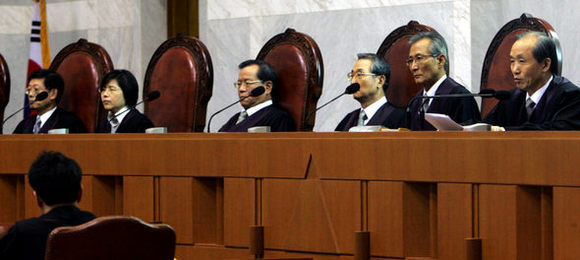
South Korean Court Rules Trans People Can Change Gender Markers Without SRS

1 comments
Some positive news on the international trans human rights front coming out of South Korea.

On March 15 the Seoul Western District Court ruled in a case brought by five trans masculine individuals that trans individuals could change their legal gender status without undergoing genital surgery


With court ruling, surgery to alter genitals is no longer necessary to change one’s legal gender status By Um Ji-won, Park Hyun-jung, staff reporters of hankyoreh 

A court ruled on Mar. 15 that transgender individuals can change their legal gender status without undergoing genital surgery.

Seoul Western District Court ruled in favor of accepting requests from five female-to-male transgender individuals to have their family register listing altered to be classified as male. None of the five has undergone operations to surgically alter their sex organs.

The five filed their request in December, arguing that the demand for surgery to conform to the changed gender status constituted the main barrier to approvals and violated the spirit of the legal gender modification system, which is to guarantee the Constitutional rights of transgender people.

One of the five, identified by the initial "K," was born with a female body, but started identifying as male when he was a teenager. In the 1990s, he underwent surgery to remove his breasts and uterus and began taking male hormones, leaving him with a thick beard, deep voice, and stocky build. He has lived with his wife for the past two decades, but he has not gone through the final step of the sex change, namely surgery on his genitals. Not only is the procedure dangerous, with a high risk that it will require multiple operations, but it also costs the equivalent of tens of thousands of dollars.

K looks like a regular male, but his resident registration number begins with a "2," which indicates legal female status (male registration numbers start with 1). He cannot go to work at companies that demand a career history with a resident number, so he does deliveries and other temporary jobs. When he has gone to hospitals and government offices in the past, the employees there have looked at his ID and said, "This can't be you." Going to vote is out of the question. He and his wife have not filed a marriage notice.

K and others like him ended up left out in the cold even after the Supreme Court rule in 2006 that transgender people could alter their legal gender status. According to guidelines for approval the Court drafted the following year, individuals have to possess "external genitalia of the opposite sex" from their biological one.

According to the Sexual Orientation and Gender Identity Legal Research Association, an organization of attorneys and activists for the human rights of sexual minorities, no country but Japan is known to require genital surgery as a condition for altering one's legal gender status. Countries like Great Britain, Germany, Spain, and Argentina do not even require surgery to remove reproductive capabilities. The US federal government does not demand any operations at all for gender status changes on passports and immigration documents.

Last January, the World Professional Association for Transgender Health sent an opinion to Seoul Western District Court arguing that genital surgery should not be a requirement because it is not medically necessary and is a difficult procedure with a strong risk of side effects and other negative consequences.

On hearing the news that the request was granted, an excited K said it was "almost revolutionary for members of sexual minorities like us."

"Once I've altered the gender on my family registration, the first thing I'm going to do is announce mine and my wife's marriage," he added.

Han Ga-ram, an attorney with Korean Lawyers for Public Interest and Human Rights, which represented K and the other transgender individuals, said that with no Supreme Court rulings or laws existing to reflect the latest decision, calls for changes to the law were likely to intensify.

Thursday, March 14, 2013

The European Parliament wants to outlaw homophobic crime and speech in the EU

0 comments
Today the European Parliament adopted a non-binding resolution on strengthening the fight against racism, xenophobia and hate crime


The text calls on the European Commission to add homophobia and transphobia to the list of EU-sanctioned hate speech and violence.


Viviane Reding, Vice-President of the European Commission in charge of Justice, discussing the resolution

Since a 2008 Framework Decision, the European Union foresees specific, higher penalties for racist and xenophobic speech and crime. These measures are now in force in all 27 Member States and Croatia, due to join the EU on 1st July this year.

The European Parliament has today repeated previous calls to include homophobia and transphobia in the list of grounds covered by the next version of the 2008 Framework Decision, due for review this year.

Today’s resolution was exceptionally authored by all six main political groups, who agreed that ”expressions and acts of anti-Semitism, religious intolerance, anti‑Gypsyism, homophobia and transphobia” should be punished by EU law, something the Parliament had already asked for.

The final text also calls on the Council to unblock the anti-discrimination Directive, blocked by Germany and conservative Member States for the past five years.

Raül Romeva i Rueda MEP, Vice-President of the European Parliament’s LGBT Intergroup, commented: “Lesbian, gay, bisexual and transgender people face the same type of threats, violence and crimes across the EU. Racist and xenophobic crimes deserve specific punishment, and so do homophobic and transphobic ones: they target an entire group, rather than individuals.”

Sophie in ‘t Veld MEP, also Vice-President of the LGBT Intergroup, added: “Together with the Commission, we’re waiting for the results of the largest-ever survey on LGBT people’s lives in the EU and Croatia. Once these results are published, it will be up to Viviane Reding to translate them into effective change across EU policies.”

“I’m expecting the survey’s 93,000 respondents will have underlined how much hate they face, encouraged in some countries by political and religious leaders.”

The Fundamental Rights Agency will publish the results of its LGBT survey on 17th May, the International Day Against Homophobia.


Tuesday, March 12, 2013

Should prisoners have conjugal visits?

0 comments


Continuing a conversation I was in on Facebook with persons about a Star News story a couple days ago I am still on the fence with this issue on one hand it would be ideal for the sake of lessening the rage in our culture of violence but given a recent story that female warders are also allegedly granting sexual favours to selected members of the male prison populations albeit conjugal visits are not only for sexual contact but also enhancing family life and personal contact.


Chad Bryan, STAR Writer penned this story below given the recent controversy with a man who reported got a woman pregnant while allegedly in custody but it has turned out that the time that the supposed intimate contacts were to have occurred he was not incarcerated.

Prisoners should be allowed to have conjugal visits or, by extension, have sex with their spouse, noted attorney Dr Paul Ashley believes.

It is a view shared by head of the Department of Correctional Services Lieutenant Colonel Sean Prendergast.

Ashley posited that there is a well-known fact that homosexual men in some penal institutions are separated from heterosexual males.

"Implicit in this is that sex takes place among homosexuals in prison. My view, therefore, is that there should be conjugal visits with specific guidelines," he said. "One is presumed to be innocent not celibate, and if you are clothed in the presumption that you are innocent awaiting trial, why should you be denied sex since you are innocent until proven guilty?"

Ashley also added, "enforced celibacy is not a part of one's punishment. Even if it was, what are you then saying to homosexuals in prison who are given condoms?"

Prendergast explained that, as it stands, a conjugal visit for the purpose of sex is not allowed, but he would welcome the idea.

"Currently, the policy is that it is not allowed. My personal view is that I would like to see the day that it can be allowed. I would use it as a tool of control just like family visit. If we allowed conjugal visit, we would have well-behaving inmates. At current, the department does not have the facilities for that," he said.

Corporate Area pastors Reverend Peter Garth and Bishop Rowan Edwards dismissed the idea of allowing prisoners the right to sex while incarcerated.

"I am not certain that that should happen. It is a part of the punishment and, as such, should not happen," Garth said.

Echoing Garth's sentiments, Edwards said, "no, totally wrong. If they have violated the law, that's a part of their freedom they have given up. I'm not in agreement with that."

However, Pastor Carla Dunbar advanced another opinion.

"I would not have a problem with it, because of the reality in our society. That can be used to influence behaviour. If they are going to be there for a long period of time, that can be allowed once per month," she said.


ENDS

however the homosexual contact or behavioural bisexuality in prisons is of concern and the present ban on condoms listed as contraband thought they do find their way in via various means and men have been found to be HIV positive after entering the prison system which begs the question what is really going on behind closed bars in this case?

For the sake of bisexuals I would imagine sexual contact with the opposite sex may help relieve sexual tension (my unqualified opinion) but as for same sex urges maybe the system if ever getting to forward thinking consenting adults could be allowed time together with condoms supplied but the correctional services may never let this happen and we would never hear the end of it.

In an older post from sister blog Gay Jamaica Watch on Male Rape I hinted to the then correctional figureheads and their unease with the suggestion of male rape in prison. There was a story in 2011 also that spoke to molestation in a bathroom of a male prisoner by other prisoners, see HERE there was a short documentary on the issue of male rape as well but the issue has since died down somewhat.


In 1997, Lieutenant Colonel John Prescod(left in photo), then Commissioner of Corrections, suggested that condoms be distributed in the prisons as a means of stopping the spread of HIV. The suggestion sparked a riot that claimed the lives of 16 prisoners, some of whom were accused of being homosexuals and as it turns out many who died weren't actually gay but prior rivalry and a golden opportunity for a disturbance led the way to the attacks. The National AIDS Committee had recommended again in 2000 to the then Peoples National Party administration launch Mandatory medical examinations for all inmates, segregation of HIV positive inmates, legal conjugal visits, a health education programme for the prison, and permission for terminally ill patients to be allowed to die at home, were also among the recommendations made to the Government which were ignored.

Dr. Raymoth Notice (right in photo above) medical expert then in the penal system had said at the time, "...We recognize that the incidence of HIV is increasing in the general population and not only that, studies have shown that the incidence of AIDS in prison is six to 10 times greater in prisons than in the general population," also he continued "the level of homophobia and ignorance as well as the lack of resources have hampered the education process a whole lot. Before we even get to the condom issue it is important first and foremost to educate the population about AIDS. But everyone has been too afraid to do anything since the riots. There is no analysis being done, no reliable data, inmates are leaving with the disease and taking it back to their communities."


Lambert Brown, the UAWU's the then first vice-president, had said that although he was still opposed to condom distribution in prisons, he had nothing against the other recommendations made.

"The fight against AIDS is not based solely on condom distribution," Mr. Brown said. "Those who are promoting condoms in prison are using the back door to promote homosexuality which is illegal." here suggesting fear.

see the 1996 documentary here:


The prison wife phenomenon, multiple partner and the religious issues are looked at in the clip.


Peace and tolerance

H

Monday, March 11, 2013

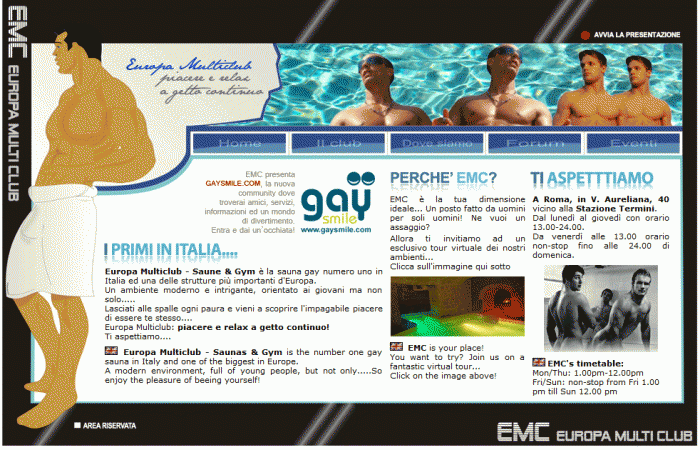
Vatican embarrassed as €23 million property investment includes Europe’s biggest gay sauna

0 comments
by Joseph Patrick McCormick of the Pink News wrote the following piece and I find it funny but given how much land the church also holds in Jamaica as was revealed in recent times since the call of churches to start paying property taxes one wonders why these holier than though institutions find themselves owning so much assets yet the poor need assistance. 

Makes us wonder what the church is really all about as an absolute monarchy?

The church bought a €23 million share of the apartment block housing the gay sauna, back in 2008

Following several recent scandals, it has now emerged that the Catholic church has bought a €23 million (£21 million) share of an apartment block in Rome which houses the biggest gay sauna in Europe.

Just a day ahead of the papal conclave to elect the next Pope, this latest development has caused embarrassment to senior Vatican figure Cardinal Ivan Dias, who stays in a 12-room apartment on the first floor of the building, just above the ground-floor entrance to the sauna.

The 76-year-old is due to take part in the election at the Sistine Chapel tomorrow, but has been left red-faced following the revelation that the entrance to his apartment is just yards from the entrance to Europe’s biggest gay sauna, Europa Multiclub.


As well as Dias, who is widely considered particularly conservative, there are 18 other apartments in the block, many of which house priests.

An Independent report questioned whether the former archbishop of Bombay may have offered spiritual guidance to attendees of the sauna, given that in the past he has said that gay and lesbian people can be “cured” of their “unnatural tendencies” through the “sacrament of penance”.

Since resigning on 28 February, Italian daily newspaper La Repubblica published an article claiming that Pope Benedict XVI’s decision to quit was in part finalised by a Vatican report showing that the Holy See was affected by outside influences, including a “gay lobby”.

La Repubblica newspaper has now noted that the presence of “Italy’s best known gay sauna in the premises [as] an embarrassment”.

In other embarrassment for the church, in a statement issued by the Catholic church in Scotland, Cardinal Keith O’Brien addressed allegations made against him by five priests within the church, and admitted that his “sexual conduct” has been “below the standards expected” of him.

The sauna’s website promotes a bear night, with a video in which a man strips down before changing into a priest’s outfit. It says Bruno, “a hairy, overweight pastor of souls, is free to the music of his clergyman, remaining in a thong, because he wants to expose body and soul”.

Readers on Italian gay websites made jokes at the cardinal’s expense. One person said: “’Oops, I took the wrong door, I thought it was the chapel.’…If you can’t go to the gay sauna for fear of being seen what do you do if you have millions of Euros stolen from Italians? You buy the apartment block with the sauna inside.”

The purchase of 2 Via Carduccio reportedly went through in 2008.
Related Posts with Thumbnails

AddThis

Podcasts You may have missed or want to re-listen


A look at the fear of the feminine (Effemophobia) by Jamaican standards & how it drives the homo-negative perceptions/homophobia in Jamaican culture/national psyche.


and


After catching midway a radio discussion on the subject of Jamaica being labelled as homophobic I did a quick look at the long held belief in Jamaica by anti gay advocates, sections of media and homophobes that several murders of alleged gay victims are in fact 'crimes of passion' or have jealousy as their motives but it is not as simple or generalized as that.

Listen without prejudice to this and other podcasts on one of my Soundcloud channels

More uploads


Aphrodite’s PRIDE JA tackles gender identity, transgender misconceptions .....


Nationwide New Network, NNN devoted some forty five minutes of prime time yesterday evening to discuss the issue and help listeners to at least begin to process some of the information coming from the most public declaration exercise as done by Jenner. Guests on the show were Dr Karen Carpenter Board Certified Clinical Sexologist and Psychologist, ‘Satiba’ from Aphrodite’s P.R.I.D.E Jamaica of which I am affiliated and Lecturer (Sociologist) and host of Every Woman on the station Georgette Crawford Williams (sister of PNP member of parliament Damian Crawford); one of the first questions thrown at Satiba by host Cliff Hughes was why has Jenna waited so long at 65 years old to make such a life changing decision?

Satiba responded that many transwomen have to hide their true identity in life .... given her life when she was younger she was a star athlete she would have been under tremendous precious to stay in from the expectations by the public and her team etc, also owing to the fact that she had a family as a man with children one may not want to upset the flow at that time until the kids are old enough. There is a lot of burden of guilt that some persons carry in weighing the decisions of coming out or transitioning so suppression of one’s true self is the modus operandi.

Dr Carpenter cautioned after a heated exchange:

“We really must remember as professionals we must stay in our lane I will never pronounce as a Sociologist cause I am not a Sociologist ............When we have an opportunity to speak publicly we must be careful of what we say unless it is extremely well informed......”


Aphrodite's P.R.I.D.E Jamaica, APJ launched their website


Aphrodite's P.R.I.D.E Jamaica, APJ launched their website on December 1 2015 on World AIDS Day where they hosted a docu-film and after discussions on the film Human Vol 1


audience members interacting during a break in the event


film in progress

visit the new APJ website HERE

See posts on APJ's work: HERE (newer entries will appear first so scroll to see older ones)

Dr Shelly Ann Weeks on Homophobia - What are we afraid of?


Former host of Dr Sexy Live on Nationwide radio and Sexologist tackles in a simplistic but to the point style homophobia and asks the poignant question of the age, What really are we as a nation afraid of?


It seems like homosexuality is on everyone's tongue. From articles in the newspapers to countless news stories and commentaries, it seems like everyone is talking about the gays. Since Jamaica identifies as a Christian nation, the obvious thought about homosexuality is that it is wrong but only male homosexuality seems to influence the more passionate responses. It seems we are more open to accepting lesbianism but gay men are greeted with much disapproval.

Dancehall has certainly been very clear where it stands when it comes to this issue with various songs voicing clear condemnation of this lifestyle. Currently, quite a few artistes are facing continuous protests because of their anti-gay lyrics. Even the law makers are involved in the gayness as there have been several calls for the repeal of the buggery law. Recently Parliament announced plans to review the Sexual Offences Act which, I am sure, will no doubt address homosexuality.

Jamaica has been described as a homophobic nation. The question I want to ask is: What are we afraid of? There are usually many reasons why homosexuality is such a pain in the a@. Here are some of the more popular arguments MORE HERE

also see:
Dr Shelly Ann Weeks on Gender Identity & Sexual Orientation


Sexuality - What is yours?

Promised conscience vote was a fluke from the PNP ........


SO WE WERE DUPED EH? - the suggestion of a conscience vote on the buggery law as espoused by Prime Minister (then opposition leader) in the 2011 leadership debate preceding the last national elections was a dangling carrot for a dumb donkey to follow.

Many advocates and individuals interpreted Mrs Simpson Miller's pronouncements as a promise or a commitment to repeal or at least look at the archaic buggery law but I and a few others who spoke openly dismissed it all from day one as nothing more than hot air especially soon after in February member of parliament Damian Crawford poured cold water on the suggestion/promise and said it was not a priority as that time. and who seems to always open his mouth these days and revealing his thoughts that sometimes go against the administration's path.

I knew from then that as existed before even under the previous PM P. J. Patterson (often thought to be gay by the public) also danced around the issue as this could mean votes and loss of political power. Mrs Simpson Miller in the meantime was awarded a political consultants' democracy medal as their conference concludes in Antigua.


War of words between pro & anti gay activists on HIV matters .......... what hypocrisy is this?


War of words between pro & anti gay activists on HIV matters .......... what hypocrisy is this?

A war of words has ensued between gay lawyer (AIDSFREEWORLD) Maurice Tomlinson and anti gay activist Dr Wayne West (supposed in-laws of sorts) as both accuse each other of lying or being dishonest, when deception has been neatly employed every now and again by all concerned, here is the post from Dr West's blog

This is laughable to me in a sense as both gentleman have broken the ethical lines of advocacy respectively repeatedly especially on HIV/AIDS and on legal matters concerning LGBTQ issues

The evidence is overwhelming readers/listeners, you decide.


Fast forward 2015 and the exchanges continue in a post from Dr Wayne West: Maurice Tomlinson misrepresents my position on his face book page and Blog 76Crimes

Tomlinson's post originally was:


Urgent Need to discuss sex & sexuality II


Following a cowardly decision by the Minister(try) of Education to withdraw an all important Health Family Life, HFLE Manual on sex and sexuality

I examine the possible reasons why we have the homo-negative challenges on the backdrop of a missing multi-generational understanding of sexuality and the focus on sexual reproductive activity in the curriculum.

also see:

and


Calls for Tourism Boycotts are Nonsensical at This Time


(2014 protests New York)

Calling for boycotts by overseas based Jamaican advocates who for the most part are not in touch with our present realities in a real way and do not understand the implications of such calls can only seek to make matters worse than assisting in the struggle, we must learn from, the present economic climate of austerity & tense calm makes it even more sensible that persons be cautious, will these groups assist when there is fallout?, previous experiences from such calls made in 2008 and 2009 and the near diplomatic nightmare that missed us; especially owing to the fact that many of the victims used in the public advocacy of violence were not actual homophobic cases which just makes the ethics of advocacy far less credible than it ought to be.

See more explained HERE from a previous post following the Queen Ifrica matter and how it was mishandled

Newstalk 93FM's Issues On Fire: Polygamy Should Be Legalized In Jamaica 08.04.14


debate by hosts and UWI students on the weekly program Issues on Fire on legalizing polygamy with Jamaica's multiple partner cultural norms this debate is timely.

Also with recent public discourse on polyamorous relationships, threesomes (FAME FM Uncensored) and on social.

Some Popular Posts

Are you ready to fight for gay rights and freedoms?? (multiple answers are allowed)

Did U Find This Blog Informative???

Blog Roll

What do you think is the most important area of HIV treatment research today?

Do you think Lesbians could use their tolerance advantage to help push for gay rights in Jamaica??

Violence & venom force gay Jamaicans to hide


a 2009 Word focus report where the history of the major explosion of homeless MSM occurred and references to the party DVD that was leaked to the bootleg market which exposed many unsuspecting patrons to the public (3:59), also the caustic remarks made by former member of Parliament in the then JLP administration.

The agencies at the time were also highlighted and the homo negative and homophobic violence met by ordinary Jamaican same gender loving men.

The late founder of the CVC, former ED of JASL and JFLAG Dr. Robert Carr was also interviewed.

At 4:42 that MSM was still homeless to 2012 but has managed to eek out a living but being ever so cautious as his face is recognizable from the exposed party DVD, he has been slowly making his way to recovery despite the very slow pace.

Thanks for your Donations

Hello readers,

Thank you for your donations via Paypal in helping to keep this blog going, my limited frontline community work, temporary shelter assistance at my home and related costs. Please continue to support me and my allies in this venture that has now become a full time activity. When I first started blogging in late 2007 it was just as a pass time to highlight GLBTQ issues in Jamaica under then JFLAG's blogspot page but now clearly there is a need for more forumatic activity which I want to continue to play my part while raising more real life issues pertinent to us.

Donations presently are accepted via Paypal where buttons are placed at points on this blog(immediately below, GLBTQJA (Blogspot), GLBTQJA (Wordpress) and the Gay Jamaica Watch's blog as well. If you wish to send donations otherwise please contact: glbtqjamaica@live.com or lgbtevent@gmail.com


Activities & Plans: ongoing and future
  • Work with other Non Governmental organizations old and new towards similar focus and objectives

  • To find common ground on issues affecting GLBTQ and straight friendly persons in Jamaica towards tolerance and harmony

  • Exposing homophobic activities and suggesting corrective solutions

  • Continuing discussion on issues affecting GLBTQ people in Jamaica and elsewhere

  • Welcoming, examining and implementing suggestions and ideas from you the viewing public

  • Present issues on HIV/AIDS related matters in a timely and accurate manner

  • Assist where possible victims of homophobic violence and abuse financially, temporary shelter(my home) and otherwise

  • Track human rights issues in general with a view to support for ALL
Thanks again for your support.

Tel: 1-876-841-2923


Peace

Information & Disclaimer


Individuals who are mentioned or whose photographs appear on this site are not necessarily Homosexual, HIV positive or have AIDS.

This blog contains pictures that may be disturbing. We have taken the liberty to present these images as evidence of the numerous accounts of homophobic violence meted out to alleged gays in Jamaica.

Faces and names withheld for the victims' protection.

This blog not only watches and covers LGBTQ issues in Jamaica and elsewhere but also general human rights and current affairs where applicable.

This blog contains HIV prevention messages that may not be appropriate for all audiences.

If you are not seeking such information or may be offended by such materials, please view labels, post list or exit.

Since HIV infection is spread primarily through sexual practices or by sharing needles, prevention messages and programs may address these topics.

This blog is not designed to provide medical care, if you are ill, please seek medical advice from a licensed practitioner

Thanks so much for your kind donations and thoughts.

As for some posts, they contain enclosure links to articles, blogs and or sites for your perusal, use the snapshot feature to preview by pointing the cursor at the item(s) of interest. Such item(s) have a small white dialogue box icon appearing to their top right hand side.

Recent Homophobic Cases

CLICK HERE for related posts/labels and HERE from the gayjamaicawatch's BLOG containing information I am aware of. If you know of any such reports or incidents please contact lgbtevent@gmail.com or call 1-876-841-2923

Peace to you and be safe out there.

Love.


What to do if you are attacked (News You Can Use)


First, be calm: Do not panic; it may be very difficult to maintain composure if attacked but this is important.

Try to reason with the attacker: Establish communication with the person. This takes a lot of courage. However, a conversation may change the intention of an attacker.

Do not try anything foolish: If you know outmaneuvering the attacker is impossible, do not try it.

Do not appear to be afraid: Look the attacker in the eye and demonstrate that you are not fearful.

This may have a psychological effect on the individual.

Emergency numbers

The police 119

Kingfish 811

Crime Stop 311

Steps to Take When Contronted or Arrested by Police


a) Ask to see a lawyer or Duty Council

b) Only give name and address and no other information until a lawyer is present to assist

c) Try to be polite even if the scenario is tensed) Don’t do anything to aggravate the situation

e) Every complaint lodged at a police station should be filed and a receipt produced, this is not a legal requirement but an administrative one for the police to track reports

f) Never sign to a statement other than the one produced by you in the presence of the officer(s)

g) Try to capture a recording of the exchange or incident or call someone so they can hear what occurs, place on speed dial important numbers or text someone as soon as possible

h) File a civil suit if you feel your rights have been violated. When making a statement to the police have all or most of the facts and details together for e.g. "a car" vs. "the car" represents two different descriptions

j) Avoid having the police writing the statement on your behalf except incases of injuries, make sure what you want to say is recorded carefully, ask for a copy if it means that you have to return for it

What to do


a. Make a phone call: to a lawyer or relative or anyone

b. Ask to see a lawyer immediately: if you don’t have the money ask for a Duty Council

c. A Duty Council is a lawyer provided by the state

d. Talk to a lawyer before you talk to the police

e. Tell your lawyer if anyone hits you and identify who did so by name and number

f. Give no explanations excuses or stories: you can make your defense later in court based on what you and your lawyer decided

g. Ask the sub officer in charge of the station to grant bail once you are charged with an offence

h. Ask to be taken before a justice of The Peace immediately if the sub officer refuses you bail

i. Demand to be brought before a Resident Magistrate and have your lawyer ask the judge for bail

j. Ask that any property taken from you be listed and sealed in your presence

Cases of Assault:An assault is an apprehension that someone is about to hit you

The following may apply:

1) Call 119 or go to the station or the police arrives depending on the severity of the injuries

2) The report must be about the incident as it happened, once the report is admitted as evidence it becomes the basis for the trial

3) Critical evidence must be gathered as to the injuries received which may include a Doctor’s report of the injuries.

4) The description must be clearly stated; describing injuries directly and identifying them clearly, show the doctor the injuries clearly upon the visit it must be able to stand up under cross examination in court.

5) Misguided evidence threatens the credibility of the witness during a trial; avoid the questioning of the witnesses credibility, the tribunal of fact must be able to rely on the witness’s word in presenting evidence

6) The court is guided by credible evidence on which it will make it’s finding of facts

7) Bolster the credibility of a case by a report from an independent disinterested party.

Sexual Health / STDs News From Medical News Today

VACANT AT LAST! SHOEMAKERGULLY: DISPLACED MSM/TRANS PERSONS WERE IS CLEARED DECEMBER 2014


CVM TV carried a raid and subsequent temporary blockade exercise of the Shoemaker Gully in the New Kingston district as the authorities respond to the bad eggs in the group of homeless/displaced or idling MSM/Trans persons who loiter there for years.

Question is what will happen to the population now as they struggle for a roof over their heads and food etc. The Superintendent who proposed a shelter idea (that seemingly has been ignored by JFLAG et al) was the one who led the raid/eviction.

Also see:
the CVM NEWS Story HERE on the eviction/raid taken by the police

also see a flashback to some of the troubling issues with the populations and the descending relationships between JASL, JFLAG and the displaced/homeless GBT youth in New Kingston: Rowdy Gays Strike - J-FLAG Abandons Raucous Homosexuals Misbehaving In New Kingston

also see all the posts in chronological order by date from Gay Jamaica Watch HERE and GLBTQ Jamaica HERE

GLBTQJA (Blogger): HERE

see previous entries on LGBT Homelessness from the Wordpress Blog HERE

May 22, 2015 update, see: MP Seeks Solutions For Homeless Gay Youth In New Kingston


THE BEST OF & Recommended Audioposts/Podcasts


THE BEST OF & Recommended Audioposts/Podcasts 


The Prime Minister (Golding) on Same Sex Marriages and the Charter of Rights Debate (2009)


Other sides to the msm homeless saga (2012)


Rowdy Gays Matter 21.08.11 more HERE


Ethical Professionlism & LGBT Advocates 01.02.12 more HERE


Portia Simpson Miller - SIMPSON MILLER DEFENDS GAY COMMENT 23.12.11


2 SGL Women lost, corrective rape and virtual silence from the male dominated advocacy structure


Al Miller on UK Aid & The Abnormality of Homosexuality 19.11.11


Homosexuality is Not Illegal in Jamaica .... Buggery is despite the persons gender 12.11.11 MORE HERE 


MSM Homelessness 2011 ...my two cents


Black Friday for Gays in Jamaica More HERE


Bi-phobia by default from supposed LGBT advocate structures?


Homeless MSMs Saga Timeline 28.08.11 (HOT!!!) see more HERE


A Response to Al Miller's Abnormality of Homosexuality statement 19.11.11


UK/commonwealth Aid Matter & The New Developments, no aid cuts but redirecting, ethical problems on our part - 22.11.11


Homophobic Killings versus Non Homophobic Killings 12.07.12


Big Lies, Crisis Archiving & More MSM Homlessness Issues 12.07.12


More MSM Challenges July 2012 more sounds HERE


GLBTQ Jamaica 2011 Summary 02.01.12 more HERE


Homosexuality Destroying the Family? .............. I Think Not!


Lesbian issues left out of the Jamaican advocacy thrust until now?


Club Heavens The Rebirth 12.02.12 and more HERE


Should gov't provide shelter for homeless msm?


National attitudes to gays survey shows 78% of J'cans say NO to buggery repeal


1st Anniversary of Homeless MSM civil disobedience (Aug 23/4) 2012 more HERE


JFLAG's rejection of rowdy homeless msms & the Sept 21st standoff .........


Atheism & Secularism may cloud the struggle for lgbt rights in Jamaica more HERE


Urgent Need to discuss sex & sexuality II and more HERE


MSM Community Displacement Concerns October 2012


The UTECH abuse & related issues


Beenieman's hypocrisy & his fake apology in his own words and more HERE


Guarded about JFLAG's Homeless shelter


Homophobia & homelessness matters for November 2012 ................


Cabinet delays buggery review, says it's not a priority & more ...........................(November 2012) prior to the announcement of the review in parliament in June 2013 More sounds HERE


"Dutty Mind" used in Patois Bible to describe homosexuals


Homeless impatient with agencies over slow progress for promised shelter 2012 More HERE


George Davis Live - Dr Wayne West & Carole Narcisse on JCHS' illogical fear


Homeless MSM Issues in New Kgn Jan 2013 .......


Homeless MSM challenges in Jamaica February 2013 more HERE


JFLAG Excludes Homeless MSM from IDAHOT Symposium on Homelessness 2013


Poor leadership & dithering are reasons for JFLAG & Jamaica AIDS Support’s temporary homelessness May 2013 more HERE


Response To Flagging a Dead Horse Free Speech & Gay Rights 10.06.13