Do you think the Buggery Law should be?

The Safe House Homeless LGBTQ Project 2009 a detailed look & more


In response to numerous requests for more information on the defunct Safe House Pilot Project that was to address the growing numbers of displaced and homeless LGBTQ youth in Kingston in 2007/8/9, a review of the relevance of the project as a solution, the possible avoidance of present issues with some of its previous residents if it were kept open.
Recorded June 12, 2013; also see from the former Executive Director named in the podcast more background on the project: HERE also see the beginning of the issues from the closure of the project: The Quietus ……… The Safe House Project Closes and The Ultimatum on December 30, 2009

Saturday, August 27, 2016

Jealousy leads to fight at strip club (yet again)

0 comments


An accused lesbian damned as being jealous was held by cops recently at a strip club in St Catherine on Friday night last as she became furious that a girlfriend of hers who performs at the establishment was too close to a male patron. The old issue of women who work in these clubs who also are same sex attracted or involved in liaisons or otherwise has raised its ugly head again. The woman in question who became the center of the tussle between the man and the disgruntled lover works at the club as a performer but is alleged to be just that and not a commercial sex worker as well.

The job does require some light intimate contact with patrons mostly men even though some females also pas through and also patronise the ladies with tips and such as evidenced with cash thrown on or drinks being sent to the particular dancer who is the subject of attention. The subject was in the arms allegedly of a male patron who was also drinking at the time in a too romantic position when her female love interest walked in; she did not act at the time but waited until the woman was off duty to confront her at the dressing room throughway, a problem of access by non-staff that seems to linger these days. What started as an argument steadily became louder to the other dancers and staff and according to some of them questioned things got really ugly when the butch identified woman offered several blows to the face of her love interest.

Several minutes into the melee as the night’s proceedings continued outside the dressing room, the women fought as tempers flared; a wig was soon seen on floor and blood was running down the left side of the dancer’s face as the butch woman unleashed her fury on her. She complained that the love interest was too close to the male patron (of course dotted with colourful Jamaican parlance and expletives) and she proceeded to remind her that she was the ‘man’ in her life and that she was to only dance on stage and not get so close to men almost to the point of sex.

The management of the club was eventually alerted as the music was halted why the DJ announced of the situation over the microphone. Patrons were spooked by the impromptu halt of their enjoyment and when it became apparent as to the reasons why, many were not pleased, to include the male patron in question who wanted a go at the butch woman. Many other male patrons were up in arms declaring that they would harm any lesbian or man royal (the colloquial term for butch identified women), some men went as far as to declare that the club should ban female patrons who look like lesbians and went on to compare another popular strip club where lesbians also congregate in larger numbers and openly flirt with each other and dancers; in disdain the men suggested the lesbians should go there for their entertainment. One man even suggested another spot where male dancers are also a part of the line-up as he related his surprise when he went there and complained that too much gays are about these days.

The fight between the women was stopped by other staff in the dressing rooms and the security detail with the manager present. The aggrieved woman (butch) was escorted outside and a plain clothes policeman allegedly warned her not to cause anymore trouble; which led to another near clash, he identified himself and reached for what appeared to be a firearm on his waist under his shirt. Things calmed and the music resumed with the dancers and waiters serving. The injured young lady had a cut on her left side of her forehead and the aforementioned blood was cleaned off. The butch woman asked to leave the premises a request she took up and told that if she persists and the lady reports the matter to the police further action will be taken.

The phenomenon of lesbian relations with so called go-go dancers outside of their jobs when said job requires interactions sometimes very close intimate contact with male patrons has been a challenge for many years since I have been observing it from HIV prevention activities. It would seem to me that if one’s woman is in such a job then it may not be normative to expect some physical connection, given the nature of the beast. Although she may not have had sex as other dancers may also get involved in commercial sex with patrons and depending on the club rules, lovers need to be cognisant of that fact. To simply get jealous as it were because one’s love interest is in the arms of a man is foolhardy and also suggest there is no trust in that union. If one felt that their love interest will not stray as it were then one should not be worried about the fickle nature of the job sexually speaking. Some have also asked why a lover would come to a club to watch their love interest if not spy on them if not by being insecure. A similar incident occurred at another club in January of this year but was quickly diffused by other male patrons and security and the woman chased away but the aftermath for the woman in question was evident the next week when a healing face wound was the outcome.

Such are the challenges of same gender relations, intimate partner violence and role playing for that matter.

Peace & tolerance

H

also see:

Lesbians clash in car park outside popular strip club

Thursday, August 11, 2016

Belize’s ruling on gay sex supports access to HIV services — UNAIDS

0 comments

As we await the written judgement on the concluded case of the buggery law constitutional challenge in Belize here is a position from UNAIDS


Dr Cesar Nuñez


KINGSTON, Jamaica — The United Nations Programme on HIV/AIDS (UNAIDS) today welcomed Belize’s Supreme Court decision to overturn a portion of the small Central American country's criminal code that outlawed gay sex.

This development, UNAIDS said in a release today, reinforces human rights and supports access to HIV services.

Yesterday, Chief Justice of Belize Kenneth Benjamin ruled that Section 53 of the Belize Criminal Code is inconsistent with the Constitution. The law criminalised “carnal intercourse against the order of nature”, including anal sex between consenting adults. 

The chief justice ruled that this provision violated the rights to human dignity, privacy, freedom of expression, non-discrimination and equality before the law

This development, according to UNAIDS, comes at a critical juncture in the HIV response. Through the Sustainable Development Goals the world has committed to end the AIDS epidemic as a public health threat by 2030. In order to do so member states have pledged to ensure that no one is left behind.

For gay, bisexual and other men who have sex with men in most of the English-speaking Caribbean, discriminatory and punitive laws regarding sex between men hamper access to HIV and STI prevention and treatment and other social services by reinforcing discriminatory attitudes, UNAIDS said.

The organisation explained that many people are reluctant to reveal their same sex behaviour due to fear of discrimination, harassment and violence. This ruling removes a key stumbling block to gay, bisexual and other men who have sex with men accessing HIV testing and treatment services.

UNAIDS advocates for the removal of punitive laws which are detrimental to the AIDS response. This must be combined with strategies to increase testing, treatment and treatment retention rates, particularly among young people, sex workers, transgender people, gay, bisexual and other men who have sex with men and other key populations, the release said.

Additionally, UNAIDS said the move is an encouraging step forward for a country that has already demonstrated a relatively high level of positive attitudes regarding homosexuals.

A 2013 poll commissioned by UNAIDS found that two out of every three Belizeans were either accepting or tolerant of homosexuals (68 per cent). In addition, three of four respondents agreed that people should not be treated differently on the basis of their sexual orientation (75 per cent).

“The ruling of the Belize High Court echoes the widespread public opinion in Belize that people should be treated with dignity and equality, regardless of who they love,” said UNAIDS Director of the Latin America and Caribbean Regional Support Team, Dr Cesar Nuñez.


also see from GJW:


Suggestions that court victory in Belize could set precedent for decriminalisation in region

Anti-Sodomy Laws Across The Region Should Now Tumble - UN, Human Rights Groups 

Belize Supreme Court overturns sodomy law for consenting adults

meanwhile:

leading antigay voice Dr Wayne West upon realising now that he and others may not get their way in keeping antiquated laws wants to play on the public's ignorance to go the route of an obvious uninformed referendum of buggery while ignoring the chief way of the interpretation of law.

West says such an important change in societal norm should have the input of Jamaicans.

West says he believes that any change to Jamaica’s law criminalising anal sex should come from a vote by Jamaicans in a referendum and not from a court.

West notes that courts in the US overturned matrimonial laws legalising same sex marriages despite citizens voting in referenda against gay marriage.

He says Jamaica should seek to avoid such a situation, stressing that a national consensus, through a referendum on buggery, is the right way to go.

Monday, August 8, 2016

WHO set to declassify trans identity as mental disorder…but is it enough?

0 comments


It has recently been announced that the World Health Organisation is proposing – finally – to remove transgender identity and gender dysphoria from its list of mental health disorders.

The list, known as the ICD-10, describes gender dysphoria as “the urge to belong to the opposite sex that may include surgical procedures to modify the sex organs in order to appear as the opposite sex”.

Calls for the WHO to revisit this have increased in recent years and most recently since new research has confirmed that transgender and non-binary people experience disproportionately high rates of social rejection and are more likely to be victims of violence. One such study, published in the medical periodical The Lancet, argued that “the conceptualisation of transgender identity as a mental disorder has contributed to precarious legal status, human rights violations, and barriers to appropriate health care among transgender people.” The psychiatrists behind the study recommended removing “categories related to transgender identity from the classification of mental disorders, in part based on the idea that these conditions do not satisfy the definitional requirements of mental disorders…[after considering] whether distress and impairment, considered essential characteristics of mental disorders, could be explained by experiences of social rejection and violence rather than being inherent features of transgender identity” they concluded that there was a need to declassify gender dysphoria and transgender identity as mental disorders and to instead seek ways to “increase access to appropriate services and reduce the victimisation of transgender people.”

The human cost of conflating identity with disorder

Professor Geoffrey Reed, the study’s senior author, said: ““The definition of transgender identity as a mental disorder has been misused to justify denial of health care and contributed to the perception that transgender people must be treated by psychiatric specialists, creating barriers to health care services.

“The definition has even been misused by some governments to deny self-determination and decision-making authority to transgender people in matters ranging from changing legal documents to child custody and reproduction.”

Dr Rebeca Robles, the study’s lead investigator, added: “Rates of experiences related to social rejection and violence were extremely high in this study, and the frequency with which this occurred within participants own families is particularly disturbing.”

The WHO is reportedly considering declassification when it next reviews its list of mental and behavioural disorders in two years’ time. Work on this – which will be known as the ICD-11, has taken some time and the list has not been updated since the 1980s. There have so far been no objections from within the WHO to the calls to change the classification of transgender identity. There appears to be recognition that the existing classification reinforces stigma while doing nothing to alleviate the problems of rejection and distress many transgender and non-binary people experience. All this is naturally positive.

“A diagnosis – but not a mental health diagnosis”Does tackling discrimination require a change of language and culture, especially in medical circles?

Perhaps less positive is the suggestion that ICD-11 will declassify transgender identity will as a mental disorder but will list it in a different part of the document, potentially under conditions related to sexual health. New York psychiatrist Dr Jack Drescher, a member of the ICD-11 working group, explains: “So they’ll be diagnoses, but they won’t be mental disorder diagnoses.” Glad that’s been cleared up.

It is proposed that the new ICD-11 will refer to “gender incongruence” as “characterized by a marked and persistent incongruence between an individual´s experienced gender and the assigned sex, which often leads to a desire to ‘transition’, in order to live and be accepted as a person of the experienced gender, through hormonal treatment, surgery or other health care services to make the individual´s body align, as much as desired and to the extent possible, with the experienced gender. The diagnosis cannot be assigned prior the onset of puberty.” So while it’s been declassified as a mental health condition, it is still likely to remain a clinical diagnosis.

While declassification will be welcome, not to mention overdue, it will represent the beginning of a process rather than signify an end in itself. There can be little doubting that being rendered mentally disordered will always be stigmatising and dehumanising; however, it’s not only the ICD-11 categorisations that need to be challenged but also the culture of medicalisation behind it. It’s not enough to declassify the “mental disorder” element in a well-meaning but misguided attempt to strip away stigma that speaks volumes about the way mental health continues to be treated, when the same identity issue is continued to be perceived as something that is in some way “wrong”. We need to move away from the language of “disorder” altogether.

This is vitally important, especially as many transgender and non-binary people receive deficient treatment in the NHS. If we’re serious about tackling discrimination, we need a change of language – and a corresponding change in culture.

Medicalisation – part of the problem?

Are overly medical approaches doing trans people a disservice?

There is also a tendency in our scientific world to over-medicalise everything, and consequently there will be those who feel that transgender people are actually best served through a system that provides them with psychological care and institutional support. One such voice, American psychiatrist Paul McHugh, goes so far as to suggest transgender people’s real difficulty is “underlying psycho-social troubles”, which constitute “a mental disorder that deserves understanding, treatment and prevention”. He is not alone.

These voices may be arguing against a growing consensus, but they underline the reality that the arguments must move away from medical. After all, it wasn’t long ago that homosexual people were seen as being mentally disordered and it wasn’t the intellectual medical arguments that brought about greater social acceptance for our gay and lesbian brothers and sisters. Yes, declassifying transgender people as mentally disordered will, at a stroke, cease to mark them in the way they have for decades. It will also mean governments who have used the WHO’s inadvertent support for their denial of rights and protections to transgender and non-binary people may have to reconsider their actions.

The medical arguments label, analyse, consider data and seek to offer scientific explanations. All that can be helpful. But what they’re less good at is recognising that transgender experiences are incredibly varied, as are the “treatments” transgender people want. They don’t generally treat individuals as individuals, but as some kind of homogenous group with a shared identity. Ultimately, why should it be up to the medical profession to decide who has a valid gender identity and who doesn’t?

And that’s the real issue – who has the right to determine who is and who isn’t a particular gender? Who has the right to deny people the right to identify with any gender or none? While declassifying gender dysphoria as a mental health condition represents a powerful statement and an overdue step forward, the real solution lies in improving social awareness, with education rooted in the experiences of transgender and non-binary people.

Transgender experience

Lesley Stafford: “I had to put my hand up to a ‘mental health disorder’ to be allowed certain treatment, but I was never convinced of the correctness of this.”

Lesley has often been asked when she knew she first felt like a girl, a woman, and she can’t answer the question. She explains: “I have never felt like a girl or a woman; I simply was a girl, and, later, a woman. Nor can I explain how a child, albeit a very bright child, can get their head around the way I was and live comfortably with the dichotomy of being a girl while living as a boy.

“I had problems enough as a child and this wasn’t one of them. My father had a problem with my problem, and he had a drink problem, and the toxic mixture would bubble into regular physical violence, intimidation, and humiliation for me. I was clever too, I knew it, I wasn’t shy about it and that was a problem; I liked “snob music” and that was a problem. I was a problem. I would “end up a bloody pervert, like that one on the telly”, and I have no idea which pervert I was destined to be like. I never worried myself about that. My mother exploited my strange malady in another more sinister and sickening way, and that remains a problem for me.

“For a long time, my biggest issue was that I lived contentedly in a boys’ world while something in my manner seemed “girlish” to my parents, but I WAS a tomboy. I lived my boys’ life fully in character. I climbed trees better than any other child my age; I was up for every mad, crazy adventure going. I hung about the fringes of my older brother’s delinquent gang. I stole. I lied. I cheated. The police dragged me home from time to time, and I was charged with petty offences.

“The discovery that my conduct and my dilemma might be explained by my being a tomboy was a great relief. So I am a girl! That’s great!”

When Lesley first heard this expression, and discovered its meaning, a great weight was lifted from her shoulders. Puberty was hell, but she did all she could to survive, and be a girl in a boys’ life – not a boys’ body, or mans’ body. It annoys her still to hear to hear the phrase “a woman trapped in a man’s body”. She says: “I was a girl, a woman, and my body was my own. Don’t get me wrong; my body was pretty well screwed up, but it was mine, and my body and my psyche lived in joyous confusion together for most of my life. We still do. I don’t have a female body. Nor can I ever have one. My breast and genital surgeries were deeply moving experiences for me, but I don’t have a new body. I have my body, the same body I always had – altered but still me, still a woman, still the same woman I always was. I had to put my hand up to a ‘mental health disorder’ to be allowed certain treatment, but I was never convinced of the correctness of this.”Andrew: “I was concerned that anything I said would be connected to my mental health problem.”

Andrew, who is non-binary, admits they’ve “never felt particularly male…from as young as I can remember I always wanted to do ‘girly’ things and struggled to adapt to societal gender roles. In my teens, things happened to my body physically that don’t really happen to boys. So while I didn’t have a woman’s body I certainly didn’t have a typically male one either. For all the arguments about gender being a psycho-social expression of identity or a social construct, in my case there was an undoubtedly a biological basis.

“The picture was complicated further by my sexual orientation (Andrew is bisexual) and the fact that in the Hebrides during the 1990s there were few opportunities to openly and positively discuss my gender identity. Seeing a doctor about this was difficult to say the least – I was also concerned about anything I said being connected to my mental health problem (Andrew experienced depression at this time). So I hid it, tried to make sense of it alone, sometimes even ashamed of who I was. Later, working in mental health, I became more aware of non-binary and transgender identities but also discovered the stigma behind them…there’s no doubt that revisiting the ICD and reclassifying gender dysphoria can help tackle this. But it isn’t enough by itself.”

The new ICD-11 is expected to change the status of transwomen like Lesley. She says: “I will no longer be seen to suffer from ‘gender dysphoria’ – a very vague mental health condition. It would seem that I have had it exchanged for a ‘condition related to sexual health’ – namely ‘gender incongruence’ . . . Hm! At least I’m not crazy! I still have ‘a condition’ and I am still suitable for treatment.

“When I first engaged in gender politics and activism, I met women like me who hated the term transsexual. It was the use of “sexual” that was a problem. We didn’t have a “sexual problem”; we had a “gender issue” and I remain conflicted about that. Transgender is a dreary term, and I have never liked it. Is it an umbrella term? Am I trangender(ed)? My feeling is that I am transsexual. My body, my own woman’s body, clearly bore the evidence of male sexual characteristics. I lived my life as a man. I have children to whom I am a father. My gender, my certainty that I am a woman, has never changed.

“I emerged from hiding. I nailed my colours to the mast. I am the woman I always was. I have neverchanged gender. My body is my own, it is a woman’s body; it always was.

“When my original GP read a few sections of the letter she had received from Dr David Gerber at theSandyford Clinic in Glasgow, I felt the need to quip – ‘You have a letter that says I’m not mad?’

“Not in this respect.”


source

Saturday, August 6, 2016

Historical distortions, achievements & claims of firsts

0 comments


While it is not LGBT history month yet as carried on this blog and sister blog GLBTQJA I was forced in a sense to address this issue of ‘firsts’ by some of my older readers who are reading such claims made elsewhere and are asking where are the previous achievements? Persons have been picking their memories on occurrences prior. Whenever we are not interested in being guided by our history we are bound to make mistakes repeatedly and make claims of first in ignorance or misnaming said claims; how many times have we heard the old adage a people who do not know their past are doomed in the future or should use said past to inform their future. While it is commendable to a certain extent to see the push for visibility and continued work the recent claims of firsts is where I am going in terms of the pride week activities by our good friends JFLAG, someone placed on Facebook and elsewhere the claim that they hosted the first ever LGBT sports day which as it turns out is not necessarily true. In the nineteen year history of the entity of which I was apart for over some 16 years we have had some sort of sports days involving lesbian football teams, a table tennis tournament with cash prizes paid out to winners, male netball teams who play in parish tournaments with the combined teams playing overseas as well, interest also came from the Sunshine Girls in a previous dispensation of not only playing with the boys but also training with them as it aided the ladies in tightening their game.

Trouble is we are not very good at properly documenting our journey, an issue I have always had a problem with and continue to, hence this entry. It flies in the face of the aforementioned participants and their role in the slow raising of the visibility of LGBT people in Jamaica; I can recall the backlash the male netballers received when the major dailies paid some attention to them; upon winning a major championship in Trinidad the press did not want to interview them, the local parish championships at the arena fields had it share of issues, there was no social media around then to do their own press so the photos and cut outs of articles were archived somewhere are near lost or forgotten. Speaking of archives to show the lack of appreciation of journeys past and how we got here just think back to the Gay Freedom Movement archives and how they were (mis)treated; after much quarrels they were finally reposed to the co founder Larry Chang, who is also a co-founder of JFLAG. Sadly when requested of previous members of the netball teams or even the cheerleaders they either cannot find the photos or cannot be bothered to go hunting them down; then we wonder why their own legacies are being effectively white washed.


also see:
LGBT History Month: Gay Freedom Movement archives properly re-posited overseas
from the archives Gareth Henry (left) in the male netball team uniform at the Stadium east field with members of the public and LGBT populations watching


some male netballers note that all are gay in this photo

The infamous matches at the Lela Robinson netball courts or the national arena east field courts back in the day were legendary as neighbouring basketball matches would come to a stop in some instances to watch, tease, throw homophobic remarks or just express surprise at men playing netball and doing it damned good. Even school coaches would join in, in recruiting players to guide their young female teams and some former players also sojourn into coaching with one main face that is almost a fixture on quality netballing in Jamaica. The contributions of the late Steve Harvey to the coaching aspect of the sport is also not to be outdone

art display from Pridefest 2011

Then there is the issue of the claim of first Pride in 2015, a claim that rubbed some folks the wrong way in the community as what should have been the clarification is the first ‘public’ pride; to say first pride ever suggests no such activity took place prior and is a slap in the face to event planners and even JFLAG itself when previous programs managers such as Emily Paul had pride events though low keyed were marketed to the LGBT populations with various events. Under Gareth Henry’s tenure the legendary Harmonica Sunbeam performed in Jamaica to a sold out crowd in 2004 during the gaycipation weekend as we termed it then. Then there was the Pridefest initiative by the now defunct Couture Elements team of which loads of photos are available thankfully. Pridefest combined business alongside the arts and identity themes successfully; JFLAG ironically was invited to set up a booth there to which they snubbed much to the surprise of many including the organizers.

It is important that folks claiming firsts do their research ever so carefully and not end up distorting the journey as if only their tenure matters and everyone else’s part is of no moment, with heightened visibility also via social media platforms older individuals need to also tell their stories which is not being done in a large scale. The separation of community based events versus publicly done events must be defined carefully so as to present the movement of the journey if not struggle. But with bloggers with older blogs deleting said blogs as well they clearly do not understand their own contribution by that act to the distortion and only attaching themselves to present activities as if nothing happened before. We better think on these things, what timeline do we want to leave behind, one of embellishments or one of truth?

Peace & tolerance

H

also see:

Thursday, August 4, 2016

Pray the Gay Away from Tell Me Pastor yet again, this time to a lesbian or bi woman

0 comments

Here comes the latest in the long line of Pastor Aaron Dumas' take on homosexuality in his column and blog, although he is a psychologist and also a pastor he simply refuses to stick to the Diagnostic Statistical Manual's DSM guide on such matters. Again I think the latest letter and response were embellished as well.

Here is the letter and his response:


I have been fighting with the church and my feelings and it has been going on for a while now.

I am the daughter of a pastor and I have dated a number of guys in the past, but I have fallen in love with a young lady.

All my life I have seen couples being happy and so in love, and I have been searching for that kind of love in my previous relationships, but always ended up feeling empty inside, until this girl came along.

This love happened in the span of less than two days and it has caused me to wonder if this is really love, obsession or infatuation.

She and I have been praying fervently about the situation, but each day we grow to love each other more and more. It has gotten to a stage where she has given up a promising future with an affluent man and is being rejected by her family and friends because of me.

We have been planning our lives and futures together. However, we are very concerned about our Christian lives, and indeed, our afterlives.


DEPRESSING

The situation is quite stressful and depressing, as we are confused as to why God would allow us to have such strong feelings for each other if it is such an abomination unto Him.

Why is it that we can get no concrete answer to our prayers? We really need an answer from you, Pastor.

A.R.

Pastor's answer:

Dear A.R.,

Are you blaming God for allowing you and your friend to be doing something which the Bible describes as unnatural?

Before you started to pray and became intimate with this young woman, you were aware that the Bible condemns all form of homosexuality, whether it is between two men or two women.

I know that whenever I quote the Bible in dealing with a matter such as yours, some people curse me and accuse me of condemning gays.

I am not condemning you, but I have to tell you that I cannot encourage you to do what you have written to me about.

Therefore, I must remind you that God is not pleased with such a conduct.

20 For since the creation of the world God's invisible qualities - his eternal power and divine nature - have been clearly seen, being understood from what has been made, so that people are without excuse. 21 For although they knew God, they neither glorified him as God nor gave thanks to him, but their thinking became futile and their foolish hearts were darkened. 22 Although they claimed to be wise, they became fools 23 and exchanged the glory of the immortal God for images made to look like a mortal human being and birds and animals and reptiles.

24 Therefore, God gave them over in the sinful desires of their hearts to sexual impurity for the degrading of their bodies with one another. 25 They exchanged the truth about God for a lie, and worshipped and served created things rather than the Creator - who is forever praised. Amen.

26 Because of this, God gave them over to shameful lusts. Even their women exchanged natural sexual relations for unnatural ones. 27 In the same way the men also abandoned natural relations with women and were inflamed with lust for one another. Men committed shameful acts with other men, and received in themselves the due penalty for their error." (Romans 1:20-32 NIV)

DELIVERANCE

I want to assure you that nothing is impossible with God and I believe that if you were to cry out to God and ask others to help you pray, God can deliver you. You were not born gay, you loved men, but they have hurt you. Yes, my exhortation to you may sound stupid to some, but I believe in a powerful God. Nothing is impossible with him. If you lay your life on the altar and turn away from your girlfriend, you will be delivered.

You say that you and your girlfriend are praying about the situation in which both of you are involved. Continue to pray, but separate yourself from her.

You may consider making an appointment to see a Christian family counsellor or psychologist who would help you to deal with your depression. I am sure that what you are suffering is a result of the relationship that you are having with this young woman. God knows what you are going through, but remember you cannot do whatever you please and expect God to bless you.

Pastor

ENDS

When oh when is this an going to get the message on his head and also follow the guidelines of the DSM whilst it is so difficult to bring him to account on his pronouncements it seems.

Peace & tolerance

H

also see:

Monday, August 1, 2016

News From the 2016 International AIDS Conference

0 comments


The 21st International AIDS Conference in Durban, South Africa (AIDS 2016), held July 18 to 22, featured numerous pivotal presentations on HIV science. Conference goers absorbed cutting-edge information about antiretrovirals (ARVs), including treatment for the virus, treatment as prevention (TasP) and pre-exposure prophylaxis (PrEP), as well as the effort to test and treat the global HIV population, HIV among women, and the search for a vaccine and a cure.

Below is a recap of the major scientific findings presented at the conference. To read more about any of these studies, click the hyperlinks. To see a newsfeed of all AIDS 2016 reporting from POZ, click here or on the #AIDS2016 hashtag at the bottom of any article, including this one.

Vaccine:

Following a pilot study’s promising findings of an HIV vaccine’s ability to spur the immune system, researchers intend to begin enrolling participants into the Phase IIb/III HVTN 702 vaccine trial in southern Africa this fall. This will be the seventh major HIV vaccine efficacy trial. The vaccine under investigation is a retooled version of the one that in 2009 showed some success in preventing HIV among Thai participants.

Long-Acting HIV Treatment:

A long-acting injectable version of the ARVs cabotegravir and Edurant (rilpivirine), dosed every four weeks, will enter Phase III trials during the latter half of 2016, with initial results coming two years later. The Phase IIb LATTE-2 trial tested injections of the treatment given every four and eight weeks and found that the more frequent dosing schedule suppressed HIV more effectively.

Treatment as Prevention (TasP):

Three major studies underlined the considerable power of HIV treatment to prevent the spread of the virus, adding greater scientific heft to the notion that it may in fact be impossible to transmit HIV with a fully suppressed viral load.

In 2011, interim results from the HPTN 052 trial found that starting HIV treatment early rather than delaying was associated with a 96 percent reduced risk of transmission among mixed-HIV-status heterosexual couples. Now, final results from the study have showed that there were no transmissions within couples when the HIV-positive member was on ARVs and had a fully suppressed virus.

Interim results from the PARTNER study, which included both heterosexual and male-male mixed-HIV-status couples, also found no transmissions between partners when the virus was fully suppressed.

Also, the Partners PrEP study examined the effect of providing mixed-HIV-status heterosexual couples Truvada (tenofovir/emtricitabine) as pre-exposure prophylaxis (PrEP) for the HIV-negative partner as a “bridge” to the HIV-positive partner being on ARVs for at least six months. This protocol slashed HIV risk by 95 percent.

PrEP:

Gilead Sciences, manufacturer of Truvada, conducted an analysis of data from 80 percent of U.S. retail pharmacies and found that nearly 80,000 people had filled at least one prescription for the drug’s use as PrEP between January 2012 and December 2015. (If all sources of PrEP prescriptions could be accounted for, this number would likely be quite a bit greater.) Between the fourth quarters of 2012 and 2015, quarterly new PrEP prescriptions rose 738 percent, from 1,671 to 14,000, largely among men. This upward trend shows no signs of abating.

The IPERGAY study of an intercourse-based PrEP dosing protocol among men who have sex with men (MSM) in France and Canada found that the participants used condoms less frequently after they shifted from the trial’s placebo-controlled phase to its open-label portion in which everyone knew they were receiving Truvada. Despite such a shift in sexual risk taking, the men’s HIV rate was low during the open-label phase. The study’s researchers believe they now have enough evidence to support the notion that the dosing protocol itself was indeed responsible for reducing the risk of HIV among the men, rather than the mere fact that men were on average taking Truvada about four times a week. (Previous research has shown that taking Truvada that often offers maximum protection.)

Researchers found that teenagers given PrEP may need monthly monitoring to adhere well to a daily Truvada regimen. (PrEP is not currently approved for minors in the United States, and current guidelines stipulate monitoring every three months.) A separate studyfound that Truvada-related bone loss is reversible after young men stop PrEP and that the drug was not associated with fractures during the study’s follow-up period.

Another study found that among black MSM receiving PrEP, men were more likely to adhere to the regimen if they were older than 25, had more than a two-year advanced degree, did not use multiple medications that they were not prescribed and had a primary partner.

Women:

A follow-up of the previously reported MTN-020/ASPIRE study of an ARV-containing vaginal ring found that HIV-negative women who used the monthly ring well had a 56 percent reduced risk of contracting the virus compared with women receiving a placebo ring. Those who used the ring at the highest level cut their HIV risk by 75 percent or greater.

Two studies provided excellent news regarding the prevention of mother-to-child transmission of HIV. A nationally representative study found that just 4 percent of children born to HIV-positive women in South Africa contracted the virus by 18 months of age. Another trial found that HIV treatment could practically halt the transmission of HIV through breast feeding.

A collection of three studies provided new insight into why HIV rates among young women in South Africa are so high. In one study, researchers found that HIV transmission among adolescent girls and young women is driven by their sexual relations with men who are an average of eight years older. Two other studies suggest that particular bacteria in women’s vaginas may facilitate transmission.

Cure:

Researchers have developed a consortium to help develop and study stem-cell transplant cures for HIV that would replicate the success of the pair of such transplants that cured the famed Berlin Patient while also treating his leukemia. They already have a few transplant recipients who, while still taking HIV treatment, show very small amounts of the virus in their viral reservoirs. These individuals would need to stop taking ARVs for researchers to determine whether they may have been cured of the virus.

A study found that treating HIV within 15 days of infection prevented the development of antibodies to the virus among a group of South African women. Such early treatment also preserved their immune function. The study’s ethics committee believes the women should remain on treatment for two to three years before researchers may discuss with the participants the possibility of taking them off treatment to see whether the virus rebounds.

On the subject of viral rebound after a treatment interruption, an experimental treatment with the HDAC inhibitor (a kind of cancer drug) vorinostat, the immunosuppressant hydroxychloroquine and the ARV Selzentry (maraviroc) had no effect on viral rebound after an HIV treatment interruption.

90-90-90:

The Joint United Nations Programme on HIV/AIDS (UNAIDS) has called for, by 2020, getting 90 percent of the world’s HIV population diagnosed, 90 percent of that group on treatment for the virus, and 90 percent of that group virally suppressed. Achieving the 90-90-90 targets would mean that, of all people living with the virus, 90 percent would know their status, 81 percent would be treated and 73 percent would be virally suppressed.

Research suggests that nations are advancing toward these targets, with 17 million people on treatment in 2015. One intervention in particular has surpassed the targets in certain rural Ugandan and Kenyan communities. But UNAIDS executive director Michel Sidibé raised serious concerns at AIDS 2016 that a retreat of major donor commitments from paying for HIV care and treatment worldwide could stymie such progress.

An analysis of spending by the U.S. President’s Emergency Plan for AIDS Relief (PEPFAR) found that foreign aid dollars go disproportionately to epidemics more generalized across a national population than to those concentrated among MSM or injection drug users (IDUs).

In another wrinkle, the first major study of the public-health effects of programs to aggressively test and treat HIV found that, in South African communities receiving such an intervention, providing immediate treatment rather than following national guidelines was not associated with any difference in the rate of new HIV cases.

Sunday, July 31, 2016

8 Commandments for dating BTQIA+ peson

0 comments

more so suggestions than commandments but I like!


1. Remember that your partner doesn’t represent the whole of their community.

Often when allies come into discussions about their partner’s sexuality/gender, they use their partner as the sole example and source for various topics and issues. While this is okay because personal experience does have a lot of influence, it can be detrimental to the others in the community. If your partner defines their label with a personal definition, that in no way means the community as a whole defines the same label that way. Approaching various issues this way can be harmful to some important discussions.

For example, your partner may be okay with you using certain language (slurs, phobic and abrasive remarks, etc.) but the rest of the community won’t always be comfortable with that. As a partner of a BTQIA+ individual, understand that you still need to listen to other members of their communities on how to approach topics, issues, and language use.

2. Ask questions, but do your own research, too.

When you have questions about the LGBTQIA+ community, it’s okay to ask your partner. Then can often tailor answers in a way that will make it easier for you to understand. But realize that your partner may not always have the energy to answer these questions or address certain issues. This is when it becomes your job to research independently. Not only will this bring you one step closer to being able to more effectively communicate with your partner, but it will show your partner that you have a willingness to learn more about them.

3. Correct and educate your friends and family members.

This step is one of the hardest, especially in families that are not exceptionally friendly to LGBTQIA+ individuals. It may result in a few uncomfortable conversations, and you could lose some friends, but it’ll be worth it for you and your relationship. Whenever a friend or family member makes an ignorant/prejudiced statement, or uses a slur, or uses the incorrect pronouns (only correct this with your partner’s permission), simply correct them. Your family and friends may not mean ill by it, they may just not understand what they are saying, so take the opportunity to educate them on why what they’ve said is wrong.

This also applies to any friends and family that are LGTBQ+ themselves. A surprising amount of prejudice towards BTQIA+ identities come from within the community. Just because your aunt is a lesbian, doesn’t mean she should be excluded from being called and corrected on her biphobic remarks. You may feel awkward and fearful about correcting family and friends, but keep in mind how awkward and fearful your partner might feel around them because of the ignorant/prejudiced things they say.

4. Go to Pride events with them if they ask you to, but respect them if they would rather go alone.

Many of the BTQIA+ community will date people who are considered allies (straight, cisgender people). If you are considered an ally, you need to understand that pride events could prove to be stressful for your partner. It’s often hard for BTQIA+ people to find acceptance at pride events when bringing their ally partner, and because of that, they may choose not to bring you — which is a sad reality many of us are still fighting today.

Another reason your BTQIA+ partner may opt out of bringing you to pride is the idea of having a safe space for them to validate themselves, experience their community, or simply have fun with those that share their experiences. Some may feel more comfortable doing this without their ally-partner coming along with them. You may feel excluded, but respect that pride holds a lot of meanings and a lot of special places in the hearts of LGBTQIA+ people. If your partner wants to experience it alone, or with their fellow LGBTQIA+ support groups, try to accept that this isn’t a dig at you or your relationship. It can be an attempt to hold on to their BTQIA+ identity, to laugh and love with their fellow LGBTQIA+ community, or, unfortunately, an attempt to “prove” that just because they’re dating an ally/cisgender and heterosexual person they still belong in the community.

If your partner DOES make it clear that they want you to go to Pride/Pride events with them do your part and look into the history of pride. Keep the focus of the event on them. Show them how supportive you are of their identity, and how much you value their identity.

5. Show them support and solidarity, even if they aren’t out.

Your partner may only be out to you, and that’s okay. You need to do what you can to show them that you stand with them, no matter what. If they decide to come out to more people and expand their support system, help them troubleshoot various methods of coming out. If they are out to other people, continue to stand by them and support their pride in who they are. Use their pronouns, listen to their complaints and frustrations, help them combat dysphoria/dyspmorphia, and take part in online discourse when you can — without over-stepping the voices of those within the community.

Keep in mind that some issues may cause extreme stress (shootings targeting LGBTQIA+ people, laws that take away rights from the community, etc) and your partner will need extra support and nurture to get them through. A good rule of thumb; support your partner like you would support any partner, in everything they do.

6. Learn the specific problems of their community.

This is a big one. Every different part of the LGBTQIA+ community has smaller sections: lesbian, gay, bisexual, transgender, queer/questioning, intersex, asexual and many more. All of these sections have their own issues that they must face every day. Many sections have overlapping issues but still require a different approach.

Here are some well-known issues:

Lesbian and Homosexual individuals experience homophobia and lesbophobia.

Bisexual/Biromantic individuals experience homophobia AND biphobia/erasure.

Transgender individuals experience transphobia.

Questioning individuals experience invalidation from outside and within the community.

Asexual individuals experience erasure and acephobia.

Pansexual individuals experience homophobia, erasure, panphobia, and can experience a lot of biphobia as well.

Note: There are many, MANY identities that experience erasure, phobia, and invalidation. Take time to find out exactly what your partner deals with.

These issues can overlap, creating unique situations for each individual:

A transgender lesbian will experience homophobia, transphobia, and sexism.

A bisexual, fem presenting, nonbinary will experience nonbinary erasure, biphobia, homophobia, and sexism.

Queer People of Color will experience racism as well as any phobias/sexism surrounding their sexual orientation and gender.

And there are even more combinations than that, all resulting in unique crossroads that can promote diverse dialogues, but also create mentally and physically unsafe environments for the individual in question. The more you learn about what your partner and other BTQIA+ people go through, the more you’ll be ready to correct your friends and family and help them understand as well.

7. Promote and take part in open dialogue.

In a BTQIA+ relationship, dialogue is especially important. Open dialogues are particularly essential when dating people with fluctuating sex drives, mental illnesses/traumatic disorders, fluctuating genders, asexuals, or agender individuals. This dialogue will help you understand your BTQIA+ partner’s boundaries, pronouns, symptoms/“triggers”, and allow your partner to communicate with you during any identity changes/moments of self-doubt.

While it may take two, you can help build the trust your partner will have to have in you and begin nurturing the perfect environment for your partner to start opening up. Once you and your partner achieve this, in any way, navigating the relationship will become much easier. Let your partner know that they have the ability to communicate with you on topics like sexual intimacy, mental health, and a continued exploration of their sexual and gender identity. It all may be confusing at first, but if you have a solid grasp of Commandment 2 then your knowledge will grow alongside your partner’s. It will also make self-exploration for your partner easier and your relationship will be less stressful.

8. Understand that they may still be finding themselves, and that’s okay.

Don’t look at this as a verification of the stereotype that all BTQIA+ people are confused. It’s normal for everyone to go through periods of self-discovery throughout their lives. For some people, that might mean a change of opinion on politics, social issues, and lifestyle choices. For LGTBQIA+ individuals self-discovery includes an exploration of identity. If your partner uses certain labels when you are first dating them, and begins to question those labels during your relationship, jump back to Commandment 5 because they’ll need all the support and solidarity you can give. If you have open dialogue, your partner should feel comfortable expressing their exploration with you.

Do your best to show them that you are with them during all of their exploration. You can do this by learning more about the identities they are exploring, and by voicing all concerns and hesitations you might have. It’s better to do this when they first come up, rather than waiting until the last minute and dropping a surprise on them later in the relationship. We know that our explorations may cause stress on our relationships, and we need to know that you will be there for us throughout this. If you can’t be there for your partner, or don’t agree with the direction they are going in, make it clear. Don’t hold anything over their heads, and understand that changes to their identities might lead to changes in your partnership

Saturday, July 30, 2016

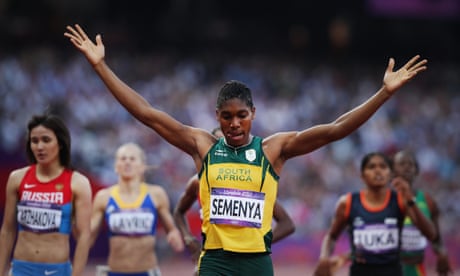
What is an intersex athlete? Explaining the case of Caster Semenya

0 comments

 Caster Semenya’s recent form can in part be attributed to the removal of an upper limit for women’s testosterone levels. Photograph: Tiziana Fabi/AFP/Getty Images

A sensitive and complicated issue has arisen many times, with the reversal of an IAAF rule on testosterone levels bringing it to the fore again

The return of Caster Semenya: Olympic favourite and ticking timebomb

The term “intersex” is used to describe variations in sex characteristics in someone who does not fit typical binary notions of male or female bodies. In sport the issue centres on verifying the eligibility of an athlete to compete in an event that is limited to a single sex. It is unquestionably a sensitive and complicated issue and one that has arisen many times at the Olympics and other sporting competitions where it has been alleged that male athletes have attempted to compete as women or, in Semenya’s case, that a woman has an intersex condition, which provides an alleged unfair advantage.

Over the years numerous sex or gender tests have been used to verify athletes’ eligibility, ranging from physical examinations to chromosome testing and more recently hormone testing. In the wake of Semenya’s case in 2009, testosterone testing was introduced to identify cases where testosterone levels were elevated above an arbitrary level, termed hyperandrogenism.


In April 2011, the IAAF announced it was adopting new rules and regulations governing the eligibility of females with hyperandrogenism, effectively meaning that there was an upper limit for women athletes’ testosterone levels – set at 10nmol/L – with anyone above it required to take hormones to lower them to more “normal” levels to compete.

That rule was in force until July 2015 and its reversal is among one of the key reasons why Semenya has returned to form in such emphatic fashion. The Indian sprinter Dutee Chand, who was dropped from the 2014 Commonwealth Games at the last minute, successfully appealed to the court of arbitration for sport who ruled that there was insufficient evidence that testosterone increased female athletic performance, suspended the practice of testosterone regulation and challenged the IAAF to present better evidence by July 2017.

Chand’s lawyers insisted she was not to blame for her genetic advantages, that the existing law was discriminatory against women – because men are not screened for high natural testosterone levels – and were able to demonstrate that the threshold set by the IAAF was arbitrary, hence the need to present better evidence within two years. In the meantime, it allows Semenya, Chand and other intersex athletes to compete without needing to take hormones to lower their testosterone levels.

Tuesday, July 26, 2016

First field trial supports removing transgender diagnosis from mental disorders chapter within WHO classification

0 comments


New evidence suggests that it would be appropriate to remove the diagnosis of transgender from its current classification as a mental disorder, according to a study conducted in Mexico City. The study is the first field trial to evaluate a proposed change to the place of the diagnosis within the WHO International Classification of Diseases (ICD).

The research, published in The Lancet Psychiatry journal today and led by the National Institute of Psychiatry Ramón de le Fuente Muñiz, involved interviewing 250 transgender people and found that distress and dysfunction were more strongly predicted by experiences of social rejection and violence than by gender incongruence itself. The study is the first of several field trials and is currently being replicated in Brazil, France, India, Lebanon and South Africa.

"Stigma associated with both mental disorder and transgender identity has contributed to the precarious legal status, human rights violations and barriers to appropriate care among transgender people," says senior author Professor Geoffrey Reed, National Autonomous University of Mexico. "The definition of transgender identity as a mental disorder has been misused to justify denial of health care and contributed to the perception that transgender people must be treated by psychiatric specialists, creating barriers to health care services. The definition has even been misused by some governments to deny self-determination and decision-making authority to transgender people in matters ranging from changing legal documents to child custody and reproduction." [1]

"Our findings support the idea that distress and dysfunction may be the result of stigmatization and maltreatment, rather than integral aspects of transgender identity," says lead investigator Dr Rebeca Robles, Mexican National Institute of Psychiatry. "The next step is to confirm this in further studies in different countries, ahead of the approval of the WHO revision to International Classification of Diseases in 2018." [1]

Transgender identity is currently classified as a mental disorder in both of the world's main diagnostic manuals, the WHO's ICD-10 and the American Psychiatric Association's DSM-5. A major component of the definition of mental disorders is that they are associated with distress and impairment in functioning. The classification of transgender identity as a mental disorder is increasingly controversial and a WHO Working Group has recommended that transgender identity should no longer be classified as a mental disorder in ICD-11, but should instead come under a new chapter on conditions related to sexual health.

The study is the first field trial to evaluate the applicability of the proposed re-classification. It was conducted in collaboration with the Condesa Specialized Clinic, the only publicly funded specialized clinic providing transgender health care services in Mexico City. Researchers interviewed 250 transgender people aged 18-65 who were receiving health care services at the Condesa Clinic. Most participants were transgender women, assigned male sex at birth (199 participants, 80%).

Participants reported first becoming aware of their transgender identity during childhood or adolescence (ages 2-17) (table 1). During the study, they completed a detailed interview about their experience of gender incongruence in adolescence (e.g, discomfort with secondary sex characteristics, changes performed to be more similar to the desired gender, and asking to be referred to as the desired gender), and recalled related experiences of psychological distress, functional impairment, social rejection and violence.

Most participants experienced psychological distress related to gender incongruence during their adolescence (208, 83%), with depressive symptoms being the most common. Family, social, or work or academic dysfunction during adolescence related to their gender identity was reported by nearly all participants (226, 90%).

More than three-quarters of participants (191, 76%) reported experiencing social rejection related to gender incongruence, most commonly by family members, followed by schoolmates/co-workers and friends. A majority of participants (157, 63%) had been a victim of violence related to their gender identity (table 3) - in nearly half of these cases, violence was perpetrated by a family member. Psychological and physical violence were the most commonly reported, and some experienced sexual violence.

The researchers then used statistical models to examine whether distress was related to gender incongruence per se or if it was related to experiences of social rejection and violence. They found that none of the gender incongruence variables predicted psychological distress or dysfunction, except in one case where asking to be referred to as the desired gender predicted school/work dysfunction. On the other hand, social rejection and violence were strong predictors of distress and all types of dysfunction (table 4).

Although the study includes a relatively large sample of transgender people, the authors warn of some important limitations. For example, the study was a volunteer sample, so was not representative of the population and participants' experiences were based on their recollection of events, which can be subject to bias. However, the authors note that a similar study would be difficult to conduct prospectively as this would involve children.

"Rates of experiences related to social rejection and violence were extremely high in this study, and the frequency with which this occurred within participants own families is particularly disturbing. Unfortunately, the level of maltreatment experienced in this sample is consistent with other studies from around the world. This study highlights the need for policies and programs to reduce stigmatization and victimization of this population. The removal of transgender diagnoses from the classification of mental disorders can be a useful part of those efforts," says Dr Robles. [1]

Writing in a linked Comment, Dr Griet De Cuypere, University Hospital, Ghent, Belgium and Dr Sam Winter, Curtin University, Perth, WA, Australia, say: "A prominent UN advocate has put it this way: 'Transphobia is a health issue'. This study prompts primary caregivers and psychiatrists to be aware of a 'slope leading from stigma to sickness' for transgender individuals, and to contribute to their mental health by a gender-affirmative approach." They also note that although the study provides evidence to support moving health-related categories related to transgender identity out of the classification of mental disorders in ICD-11, it does not address where in ICD would be the most appropriate place for the diagnosis, which should be a topic for future research.

###

NOTE TO EDITORS:
The study was funded by the National Institute of Psychiatry "Ramón de la Fuente Muñiz", Mexico.
[1] Quote direct from authors and cannot be found in text of Article.

NOTE: THE ABOVE LINKS ARE FOR JOURNALISTS ONLY; IF YOU WISH TO PROVIDE A LINK TO THIS PAPER FOR YOUR READERS, PLEASE USE THE FOLLOWING, WHICH WILL GO LIVE AT THE TIME THE EMBARGO LIFTS: http://www.thelancet.com/journals/lanpsy/article/PIIS2215-0366(16)30165-1/abstract

Sunday, July 24, 2016

Brexit Implications for 79 ACP Countries Yet Unknown

0 comments


By Robert Johnson

LONDON (IDN) - The outcome of the Brexit referendum on June 23, 2016 has set the UK on a path to leave the European Union (EU) that will also result in an end to its membership of the bloc’s Economic Partnership Agreements (EPAs) the free trade deals between the European Union (EU) and the 79 countries of the African, Caribbean and Pacific (ACP) group.

According to experts, while Brexit will have consequences for the UK, its impact on the ACP countries could be far reaching. Precisely how and in what ways was the subject of a brainstorming session of leading experts organized by the Ramphal Institute on July 15.

Named after Shridath "Sonny" Ramphal, second Commonwealth Secretary-General (1975-1990), the Ramphal Institute’s mandate is to tackle development issues and the wider world. So the focus was on Brexit and the Economic Partnership Agreements (EPAs).

The EPA deal had been Europe’s first step, under World Trade Organisation (WTO) guidelines, to wean ACP countries off their special trade relationships with the EU towards freed-up trade deals.

The EPAs had been negotiated in a spirit of support, taking into account the colonial history of the ACP countries, the EU (led very much by the UK, France and Spain) had arrived at the Cotonou agreement – aimed at getting the ACP towards free trade without crippling their growing but fragile post-independence economies.

The Cotonou agreement (which expires in 2020), included a mix of trade, aid development and political co-operation to support the ACP in its changing relationship with Europe.


ACP-EU EPAs have been negotiated since 2002 to facilitate free trade between the EU and ACP regions. The Caribbean region has ratified and is implementing a full EPA, while negotiations have concluded for the West African region, East African Community, and Southern African Development Community.

The Central African, Pacific and greater Eastern and Southern African regions are still addressing outstanding issues. Meanwhile, several states have signed interim individual agreements with the EU while the regional negotiations continue.

In his opening remarks, ACP Secretary General Dr. Patrick Gomes said: "The ACP Group’s relationship with UK lies in the fact that the latter is a member of the EU, and as long as it remains a member (at least until 2019) is therefore bound by all ACP-EU agreements – including the Cotonou Partnership Agreement, EPAs, Everything But Arms agreement and others. There are no bilateral agreements between the UK and ACP as a group," said Dr. Gomes.

"Once the UK’s exit from the EU is completed, will the UK honour the EPAs to which it has attached its signature, or will the UK launch a process of negotiation of bilateral trade arrangements with the countries which make up the ACP?"

He added: “[Brexit] has compelled us at the ACP to address a number of major issues related to the implications of the referendum.” He suggested that systematic analyses will be needed to look at post-Brexit deals – a theme echoed throughout the session as global trade and services experts outlined the hurdles, and also the opportunities, in a post-Brexit world.

The UK has no bilateral agreements with the ACP and, according to Dr Gomes, the UK contributed around 15% of the European Development Fund (EDF) in 2014, which accounted for Euro 4.5bn.

The ACP head and other officials pointed out that, whether the UK chooses to continue making such commitments in its post-Brexit world will be another of those many questions needing answers as government and officials establish a new-look, independent Britain.


Dr Gomes said that the ACP has already started to look at the Brexit impact on EPA follow-up discussions in the future as the Cotonou agreement The Cotonou Agreement is a treaty between the European Union and the African, Caribbean and Pacific Group of States ("ACP countries"). It was signed in June 2000 in Cotonou, Benin's largest city, by 78 ACP countries (Cuba did not sign) and the then fifteen Member States of the European Union. It 
is due to expire in 2020. He said that the aim of the ACP would be “to minimise the losses and to enhance new areas of co-operation”.

The trade, aid and investment experts at the Ramphal Institute’s post-Brexit discussion outlined both the hurdles and opportunities for a new-look Britain – from remittances and tourism to trade and aid.

Dr Mohammad Razzaque, the Head of International Trade Policy at the Commonwealth Secretariat, predicted a $4bn fall in the value of remittances in the next year. Other speakers outlined dangers of changes in tariffs, preferential arrangements and trade quotas as the UK and Europe set out to negotiate their brave new world.

Director of the Ramphal Institue, Edwin Laurent, told The Round Table: The Commonwealth Journal of International Affairs after the session that “Commonwealth ACP countries that export to the UK under an Economic Partnership Agreement with the EU could be greatly affected by Brexit.

“To ensure that their trade flourishes rather than being damaged, appropriate trade policies will have to be implemented by all concerned parties, the UK, the EU, the WTO, the rest of the international community and these ACP countries themselves.” [IDN-InDepthNews – 24 July 2016]

Note: This report is part of a joint project of the Secretariat of the ACP Group of States and IDN, a flagship agency of the International Press Syndicate.

also see previous posts from related blogs:

Tuesday, July 5, 2016

Lesbophobic landlord clash with woman after illegal eviction attempt

0 comments


The Hagely Park Road area nearing Lewis Villa Drive was the scene of a clash between a woman who had been renting a single bedroom flat on April 23, 2016. The expletives from both sides were what greeted the other tenants and the small cul-de-sac on what would have been a quiet Sunday morning. The landlord has been known to be troublesome overall as he has had clashes before with tenants in general as he is accused of using the proximity of the property to most major business points and shopping zones as he tries to capitalize on the advantage with adhoc rental increases and sometimes impromptu rules and guidelines including demanding two months deposit prior to handing over the keys according to the woman and arguments from others including another former tenant who moved out and is now residing in another house on the same avenue.

The impacted woman had rented the flat from December of last year as she said it aided her to get to school, the area is quiet relatively and the flat was cute given the area it is in; I should know I too used to live near the same avenue for two and a half years. The landlord of the woman would make unannounced visits and asking questions with inane subject matter, then he advised her that the flat water rate she was paying would be increased whilst an electrical problem with an outside light socket having a short-out she had complained about was not fixed as she comes in from work under dark at times and needs light to see, a repair the landlord had promised to address prior to her moving in. The relationship had been slipping slowly over time as the woman became irritated she expressed her displeasure to the man’s unannounced visits when it was not time for rent payments. The landlord according to her did not take kindly to the boundaries she wanted set and it allegedly became the subject of gossip with another woman next door who allegedly told the man the impacted woman did not have a ‘man’

Despite the fact that the woman’s rent was on time save and except for March 2016 which she settled later in the month as it was due of the 3rd of each month she was floored with a surprise notice to quit with no proper explanation as to why she was being asked to quit. The landlord had only had another nasty argument and eviction of a long time tenant of some ten years who hardly was at home given the type of job the man was in yet he too was served with a notice to quit. Many suspect that he is capitalising on the aforementioned proximity to business areas and raising the rent at every cycle with a new tenant. But in this case lesbophobia was clearly a part of the reason as evidenced during the shouting match the man referenced repeatedly with disparaging remarks of the ‘lesbian’ and that fact that she did not have a man; as if to suggest a single woman is an anathema. But the landlord is a senior man estimated in his seventies or older so he may not be ofe with the new dispensation, sinically many surmise that maybe the landlord was trying to make the moves on the woman but he resoluteness and insistence on boundaries was what turned him off.

Interestingly the other residents nearby came in large part to the woman’s defence as the quarrel spilled over onto the avenue; especially from a group of persons who occasionally play dominoes under a tree regularly at the end of the road. The landlord felt justified but it turns out the notice to quit was too short in the required by law as it allotted below the thirty day minimum as the standard. The breach was discovered by the woman and as she showed it to others in the uproar it caused a backlash from the supportive persons who demanded she must not move and if necessary let him take her to court; the courts normally would give an additional thirty days and owing to the fact she has two deposits paid she may be entitled to live them out.

The woman is hunting for a new spot after the argument cooled and a tense calm is now in effect, she has been encouraged to peacefully make her way out of the flat and by extension the situation, the stigmatizing landlord has been bitter ever since as reported back-handed comments have been rumoured but the woman is not perturbed and says she intends to live out her deposit until it expires before moving and is prepared to go to court and explain her situation in fairness.

I wished her all the best in her endeavours and encouraged her to report the matter if it gets out of control to the relevant bodies namely the rent board and other LGBT related outlets if needed.

Peace & tolerance

H
Related Posts with Thumbnails

AddThis

Podcasts You may have missed or want to re-listen


A look at the fear of the feminine (Effemophobia) by Jamaican standards & how it drives the homo-negative perceptions/homophobia in Jamaican culture/national psyche.


and


After catching midway a radio discussion on the subject of Jamaica being labelled as homophobic I did a quick look at the long held belief in Jamaica by anti gay advocates, sections of media and homophobes that several murders of alleged gay victims are in fact 'crimes of passion' or have jealousy as their motives but it is not as simple or generalized as that.

Listen without prejudice to this and other podcasts on one of my Soundcloud channels

More uploads


Aphrodite’s PRIDE JA tackles gender identity, transgender misconceptions .....


Nationwide New Network, NNN devoted some forty five minutes of prime time yesterday evening to discuss the issue and help listeners to at least begin to process some of the information coming from the most public declaration exercise as done by Jenner. Guests on the show were Dr Karen Carpenter Board Certified Clinical Sexologist and Psychologist, ‘Satiba’ from Aphrodite’s P.R.I.D.E Jamaica of which I am affiliated and Lecturer (Sociologist) and host of Every Woman on the station Georgette Crawford Williams (sister of PNP member of parliament Damian Crawford); one of the first questions thrown at Satiba by host Cliff Hughes was why has Jenna waited so long at 65 years old to make such a life changing decision?

Satiba responded that many transwomen have to hide their true identity in life .... given her life when she was younger she was a star athlete she would have been under tremendous precious to stay in from the expectations by the public and her team etc, also owing to the fact that she had a family as a man with children one may not want to upset the flow at that time until the kids are old enough. There is a lot of burden of guilt that some persons carry in weighing the decisions of coming out or transitioning so suppression of one’s true self is the modus operandi.

Dr Carpenter cautioned after a heated exchange:

“We really must remember as professionals we must stay in our lane I will never pronounce as a Sociologist cause I am not a Sociologist ............When we have an opportunity to speak publicly we must be careful of what we say unless it is extremely well informed......”


Aphrodite's P.R.I.D.E Jamaica, APJ launched their website


Aphrodite's P.R.I.D.E Jamaica, APJ launched their website on December 1 2015 on World AIDS Day where they hosted a docu-film and after discussions on the film Human Vol 1


audience members interacting during a break in the event


film in progress

visit the new APJ website HERE

See posts on APJ's work: HERE (newer entries will appear first so scroll to see older ones)

Dr Shelly Ann Weeks on Homophobia - What are we afraid of?


Former host of Dr Sexy Live on Nationwide radio and Sexologist tackles in a simplistic but to the point style homophobia and asks the poignant question of the age, What really are we as a nation afraid of?


It seems like homosexuality is on everyone's tongue. From articles in the newspapers to countless news stories and commentaries, it seems like everyone is talking about the gays. Since Jamaica identifies as a Christian nation, the obvious thought about homosexuality is that it is wrong but only male homosexuality seems to influence the more passionate responses. It seems we are more open to accepting lesbianism but gay men are greeted with much disapproval.

Dancehall has certainly been very clear where it stands when it comes to this issue with various songs voicing clear condemnation of this lifestyle. Currently, quite a few artistes are facing continuous protests because of their anti-gay lyrics. Even the law makers are involved in the gayness as there have been several calls for the repeal of the buggery law. Recently Parliament announced plans to review the Sexual Offences Act which, I am sure, will no doubt address homosexuality.

Jamaica has been described as a homophobic nation. The question I want to ask is: What are we afraid of? There are usually many reasons why homosexuality is such a pain in the a@. Here are some of the more popular arguments MORE HERE

also see:
Dr Shelly Ann Weeks on Gender Identity & Sexual Orientation


Sexuality - What is yours?

Promised conscience vote was a fluke from the PNP ........


SO WE WERE DUPED EH? - the suggestion of a conscience vote on the buggery law as espoused by Prime Minister (then opposition leader) in the 2011 leadership debate preceding the last national elections was a dangling carrot for a dumb donkey to follow.

Many advocates and individuals interpreted Mrs Simpson Miller's pronouncements as a promise or a commitment to repeal or at least look at the archaic buggery law but I and a few others who spoke openly dismissed it all from day one as nothing more than hot air especially soon after in February member of parliament Damian Crawford poured cold water on the suggestion/promise and said it was not a priority as that time. and who seems to always open his mouth these days and revealing his thoughts that sometimes go against the administration's path.

I knew from then that as existed before even under the previous PM P. J. Patterson (often thought to be gay by the public) also danced around the issue as this could mean votes and loss of political power. Mrs Simpson Miller in the meantime was awarded a political consultants' democracy medal as their conference concludes in Antigua.


War of words between pro & anti gay activists on HIV matters .......... what hypocrisy is this?


War of words between pro & anti gay activists on HIV matters .......... what hypocrisy is this?

A war of words has ensued between gay lawyer (AIDSFREEWORLD) Maurice Tomlinson and anti gay activist Dr Wayne West (supposed in-laws of sorts) as both accuse each other of lying or being dishonest, when deception has been neatly employed every now and again by all concerned, here is the post from Dr West's blog

This is laughable to me in a sense as both gentleman have broken the ethical lines of advocacy respectively repeatedly especially on HIV/AIDS and on legal matters concerning LGBTQ issues

The evidence is overwhelming readers/listeners, you decide.


Fast forward 2015 and the exchanges continue in a post from Dr Wayne West: Maurice Tomlinson misrepresents my position on his face book page and Blog 76Crimes

Tomlinson's post originally was:


Urgent Need to discuss sex & sexuality II


Following a cowardly decision by the Minister(try) of Education to withdraw an all important Health Family Life, HFLE Manual on sex and sexuality

I examine the possible reasons why we have the homo-negative challenges on the backdrop of a missing multi-generational understanding of sexuality and the focus on sexual reproductive activity in the curriculum.

also see:

and


Calls for Tourism Boycotts are Nonsensical at This Time


(2014 protests New York)

Calling for boycotts by overseas based Jamaican advocates who for the most part are not in touch with our present realities in a real way and do not understand the implications of such calls can only seek to make matters worse than assisting in the struggle, we must learn from, the present economic climate of austerity & tense calm makes it even more sensible that persons be cautious, will these groups assist when there is fallout?, previous experiences from such calls made in 2008 and 2009 and the near diplomatic nightmare that missed us; especially owing to the fact that many of the victims used in the public advocacy of violence were not actual homophobic cases which just makes the ethics of advocacy far less credible than it ought to be.

See more explained HERE from a previous post following the Queen Ifrica matter and how it was mishandled

Newstalk 93FM's Issues On Fire: Polygamy Should Be Legalized In Jamaica 08.04.14


debate by hosts and UWI students on the weekly program Issues on Fire on legalizing polygamy with Jamaica's multiple partner cultural norms this debate is timely.

Also with recent public discourse on polyamorous relationships, threesomes (FAME FM Uncensored) and on social.

Some Popular Posts

Are you ready to fight for gay rights and freedoms?? (multiple answers are allowed)

Did U Find This Blog Informative???

Blog Roll

What do you think is the most important area of HIV treatment research today?

Do you think Lesbians could use their tolerance advantage to help push for gay rights in Jamaica??

Violence & venom force gay Jamaicans to hide


a 2009 Word focus report where the history of the major explosion of homeless MSM occurred and references to the party DVD that was leaked to the bootleg market which exposed many unsuspecting patrons to the public (3:59), also the caustic remarks made by former member of Parliament in the then JLP administration.

The agencies at the time were also highlighted and the homo negative and homophobic violence met by ordinary Jamaican same gender loving men.

The late founder of the CVC, former ED of JASL and JFLAG Dr. Robert Carr was also interviewed.

At 4:42 that MSM was still homeless to 2012 but has managed to eek out a living but being ever so cautious as his face is recognizable from the exposed party DVD, he has been slowly making his way to recovery despite the very slow pace.

Thanks for your Donations

Hello readers,

Thank you for your donations via Paypal in helping to keep this blog going, my limited frontline community work, temporary shelter assistance at my home and related costs. Please continue to support me and my allies in this venture that has now become a full time activity. When I first started blogging in late 2007 it was just as a pass time to highlight GLBTQ issues in Jamaica under then JFLAG's blogspot page but now clearly there is a need for more forumatic activity which I want to continue to play my part while raising more real life issues pertinent to us.

Donations presently are accepted via Paypal where buttons are placed at points on this blog(immediately below, GLBTQJA (Blogspot), GLBTQJA (Wordpress) and the Gay Jamaica Watch's blog as well. If you wish to send donations otherwise please contact: glbtqjamaica@live.com or lgbtevent@gmail.com


Activities & Plans: ongoing and future
  • Work with other Non Governmental organizations old and new towards similar focus and objectives

  • To find common ground on issues affecting GLBTQ and straight friendly persons in Jamaica towards tolerance and harmony

  • Exposing homophobic activities and suggesting corrective solutions

  • Continuing discussion on issues affecting GLBTQ people in Jamaica and elsewhere

  • Welcoming, examining and implementing suggestions and ideas from you the viewing public

  • Present issues on HIV/AIDS related matters in a timely and accurate manner

  • Assist where possible victims of homophobic violence and abuse financially, temporary shelter(my home) and otherwise

  • Track human rights issues in general with a view to support for ALL
Thanks again for your support.

Tel: 1-876-841-2923


Peace

Information & Disclaimer


Individuals who are mentioned or whose photographs appear on this site are not necessarily Homosexual, HIV positive or have AIDS.

This blog contains pictures that may be disturbing. We have taken the liberty to present these images as evidence of the numerous accounts of homophobic violence meted out to alleged gays in Jamaica.

Faces and names withheld for the victims' protection.

This blog not only watches and covers LGBTQ issues in Jamaica and elsewhere but also general human rights and current affairs where applicable.

This blog contains HIV prevention messages that may not be appropriate for all audiences.

If you are not seeking such information or may be offended by such materials, please view labels, post list or exit.

Since HIV infection is spread primarily through sexual practices or by sharing needles, prevention messages and programs may address these topics.

This blog is not designed to provide medical care, if you are ill, please seek medical advice from a licensed practitioner

Thanks so much for your kind donations and thoughts.

As for some posts, they contain enclosure links to articles, blogs and or sites for your perusal, use the snapshot feature to preview by pointing the cursor at the item(s) of interest. Such item(s) have a small white dialogue box icon appearing to their top right hand side.

Recent Homophobic Cases

CLICK HERE for related posts/labels and HERE from the gayjamaicawatch's BLOG containing information I am aware of. If you know of any such reports or incidents please contact lgbtevent@gmail.com or call 1-876-841-2923

Peace to you and be safe out there.

Love.


What to do if you are attacked (News You Can Use)


First, be calm: Do not panic; it may be very difficult to maintain composure if attacked but this is important.

Try to reason with the attacker: Establish communication with the person. This takes a lot of courage. However, a conversation may change the intention of an attacker.

Do not try anything foolish: If you know outmaneuvering the attacker is impossible, do not try it.

Do not appear to be afraid: Look the attacker in the eye and demonstrate that you are not fearful.

This may have a psychological effect on the individual.

Emergency numbers

The police 119

Kingfish 811

Crime Stop 311

Steps to Take When Contronted or Arrested by Police


a) Ask to see a lawyer or Duty Council

b) Only give name and address and no other information until a lawyer is present to assist

c) Try to be polite even if the scenario is tensed) Don’t do anything to aggravate the situation

e) Every complaint lodged at a police station should be filed and a receipt produced, this is not a legal requirement but an administrative one for the police to track reports

f) Never sign to a statement other than the one produced by you in the presence of the officer(s)

g) Try to capture a recording of the exchange or incident or call someone so they can hear what occurs, place on speed dial important numbers or text someone as soon as possible

h) File a civil suit if you feel your rights have been violated. When making a statement to the police have all or most of the facts and details together for e.g. "a car" vs. "the car" represents two different descriptions

j) Avoid having the police writing the statement on your behalf except incases of injuries, make sure what you want to say is recorded carefully, ask for a copy if it means that you have to return for it

What to do


a. Make a phone call: to a lawyer or relative or anyone

b. Ask to see a lawyer immediately: if you don’t have the money ask for a Duty Council

c. A Duty Council is a lawyer provided by the state

d. Talk to a lawyer before you talk to the police

e. Tell your lawyer if anyone hits you and identify who did so by name and number

f. Give no explanations excuses or stories: you can make your defense later in court based on what you and your lawyer decided

g. Ask the sub officer in charge of the station to grant bail once you are charged with an offence

h. Ask to be taken before a justice of The Peace immediately if the sub officer refuses you bail

i. Demand to be brought before a Resident Magistrate and have your lawyer ask the judge for bail

j. Ask that any property taken from you be listed and sealed in your presence

Cases of Assault:An assault is an apprehension that someone is about to hit you

The following may apply:

1) Call 119 or go to the station or the police arrives depending on the severity of the injuries

2) The report must be about the incident as it happened, once the report is admitted as evidence it becomes the basis for the trial

3) Critical evidence must be gathered as to the injuries received which may include a Doctor’s report of the injuries.

4) The description must be clearly stated; describing injuries directly and identifying them clearly, show the doctor the injuries clearly upon the visit it must be able to stand up under cross examination in court.

5) Misguided evidence threatens the credibility of the witness during a trial; avoid the questioning of the witnesses credibility, the tribunal of fact must be able to rely on the witness’s word in presenting evidence

6) The court is guided by credible evidence on which it will make it’s finding of facts

7) Bolster the credibility of a case by a report from an independent disinterested party.

Sexual Health / STDs News From Medical News Today

VACANT AT LAST! SHOEMAKERGULLY: DISPLACED MSM/TRANS PERSONS WERE IS CLEARED DECEMBER 2014


CVM TV carried a raid and subsequent temporary blockade exercise of the Shoemaker Gully in the New Kingston district as the authorities respond to the bad eggs in the group of homeless/displaced or idling MSM/Trans persons who loiter there for years.

Question is what will happen to the population now as they struggle for a roof over their heads and food etc. The Superintendent who proposed a shelter idea (that seemingly has been ignored by JFLAG et al) was the one who led the raid/eviction.

Also see:
the CVM NEWS Story HERE on the eviction/raid taken by the police

also see a flashback to some of the troubling issues with the populations and the descending relationships between JASL, JFLAG and the displaced/homeless GBT youth in New Kingston: Rowdy Gays Strike - J-FLAG Abandons Raucous Homosexuals Misbehaving In New Kingston

also see all the posts in chronological order by date from Gay Jamaica Watch HERE and GLBTQ Jamaica HERE

GLBTQJA (Blogger): HERE

see previous entries on LGBT Homelessness from the Wordpress Blog HERE

May 22, 2015 update, see: MP Seeks Solutions For Homeless Gay Youth In New Kingston


THE BEST OF & Recommended Audioposts/Podcasts


THE BEST OF & Recommended Audioposts/Podcasts 


The Prime Minister (Golding) on Same Sex Marriages and the Charter of Rights Debate (2009)


Other sides to the msm homeless saga (2012)


Rowdy Gays Matter 21.08.11 more HERE


Ethical Professionlism & LGBT Advocates 01.02.12 more HERE


Portia Simpson Miller - SIMPSON MILLER DEFENDS GAY COMMENT 23.12.11


2 SGL Women lost, corrective rape and virtual silence from the male dominated advocacy structure


Al Miller on UK Aid & The Abnormality of Homosexuality 19.11.11


Homosexuality is Not Illegal in Jamaica .... Buggery is despite the persons gender 12.11.11 MORE HERE 


MSM Homelessness 2011 ...my two cents


Black Friday for Gays in Jamaica More HERE


Bi-phobia by default from supposed LGBT advocate structures?


Homeless MSMs Saga Timeline 28.08.11 (HOT!!!) see more HERE


A Response to Al Miller's Abnormality of Homosexuality statement 19.11.11


UK/commonwealth Aid Matter & The New Developments, no aid cuts but redirecting, ethical problems on our part - 22.11.11


Homophobic Killings versus Non Homophobic Killings 12.07.12


Big Lies, Crisis Archiving & More MSM Homlessness Issues 12.07.12


More MSM Challenges July 2012 more sounds HERE


GLBTQ Jamaica 2011 Summary 02.01.12 more HERE


Homosexuality Destroying the Family? .............. I Think Not!


Lesbian issues left out of the Jamaican advocacy thrust until now?


Club Heavens The Rebirth 12.02.12 and more HERE


Should gov't provide shelter for homeless msm?


National attitudes to gays survey shows 78% of J'cans say NO to buggery repeal


1st Anniversary of Homeless MSM civil disobedience (Aug 23/4) 2012 more HERE


JFLAG's rejection of rowdy homeless msms & the Sept 21st standoff .........


Atheism & Secularism may cloud the struggle for lgbt rights in Jamaica more HERE


Urgent Need to discuss sex & sexuality II and more HERE


MSM Community Displacement Concerns October 2012


The UTECH abuse & related issues


Beenieman's hypocrisy & his fake apology in his own words and more HERE


Guarded about JFLAG's Homeless shelter


Homophobia & homelessness matters for November 2012 ................


Cabinet delays buggery review, says it's not a priority & more ...........................(November 2012) prior to the announcement of the review in parliament in June 2013 More sounds HERE


"Dutty Mind" used in Patois Bible to describe homosexuals


Homeless impatient with agencies over slow progress for promised shelter 2012 More HERE


George Davis Live - Dr Wayne West & Carole Narcisse on JCHS' illogical fear


Homeless MSM Issues in New Kgn Jan 2013 .......


Homeless MSM challenges in Jamaica February 2013 more HERE


JFLAG Excludes Homeless MSM from IDAHOT Symposium on Homelessness 2013


Poor leadership & dithering are reasons for JFLAG & Jamaica AIDS Support’s temporary homelessness May 2013 more HERE


Response To Flagging a Dead Horse Free Speech & Gay Rights 10.06.13